Test 17 (Lessons 33–34): Shapes of Polynomial Functions Solutions
Determine if the equation is a polynomial function. If so, state the end behavior.
a = positive
n = even = 2 + 4 = 6
This is not a polynomial function because the first term will have a fractional exponent.
For problems 3–4, use the polynomial
- Name all possible rational roots for the polynomial.
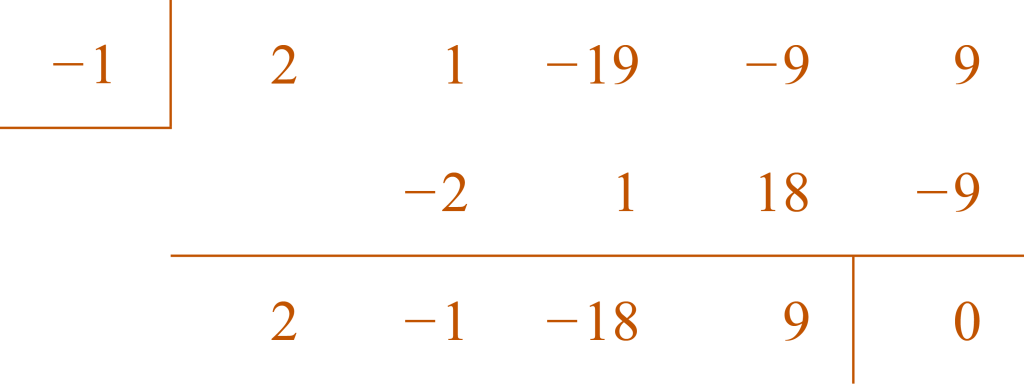
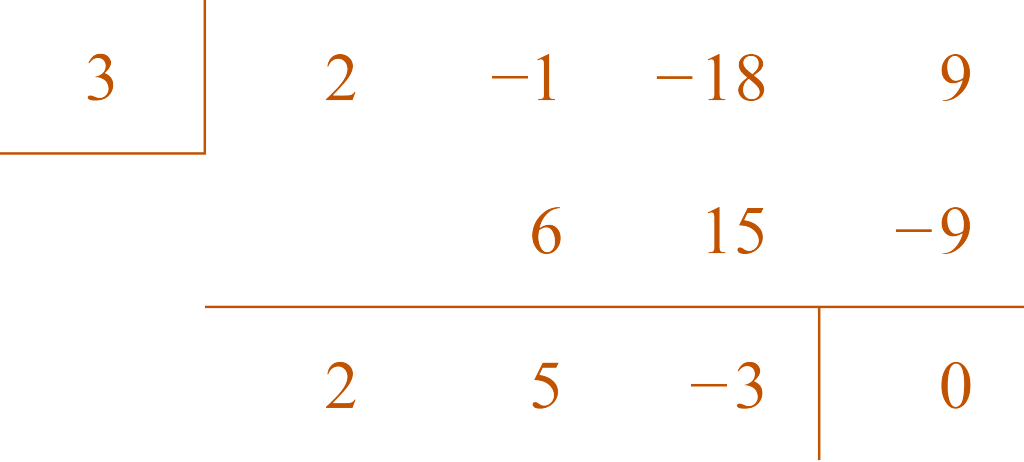
- Determine the exact roots. Write the answer as a product of its factors.
Note
Remember there are many ways to solve using the Rational Root Theorem and synthetic division. The solution remains the same regardless of the order in which the synthetic division is completed correctly.
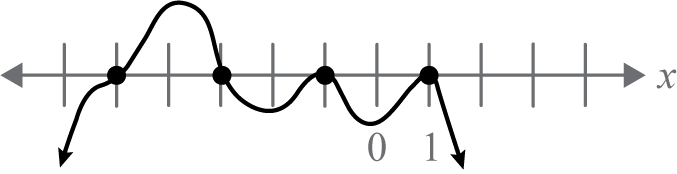
- Write a possible equation of the polynomial function as the product of factors.
For problems 6–7, use the equation .
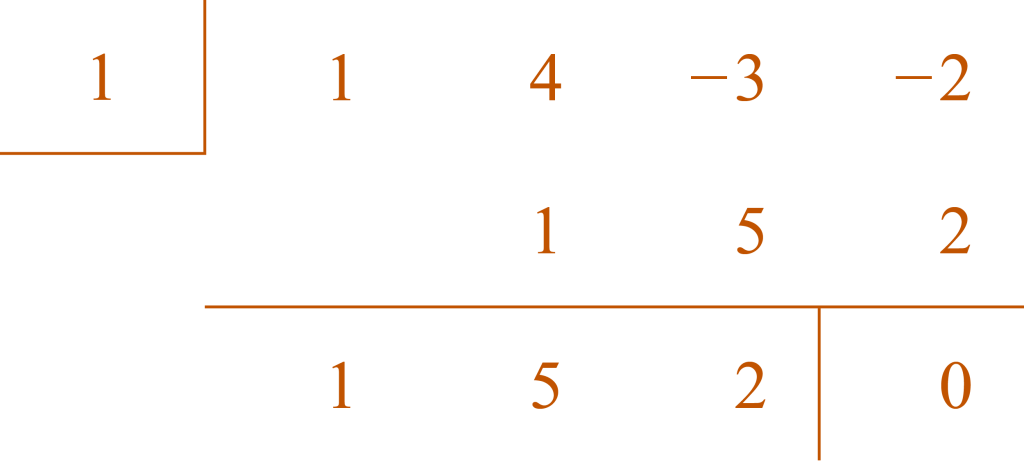
- Find all zeros.
Note
The quadratic trinomial is not factorable. Use the Quadratic Formula to find irrational roots.
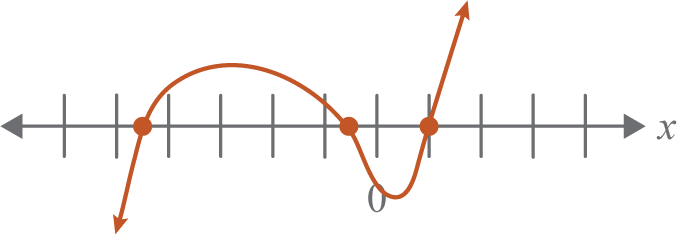
- Sketch your answer from problem 6.
For problems 8–9, use the polynomial function .
- Describe the multiplicities of the equation.
The equation has a multiplicity of one when x = 0, a multiplicity of three when x = 7, and a multiplicity of two when x = –5.
- Describe the end behavior of the equation. Explain.
Because and n is an even degree, the end behavior is
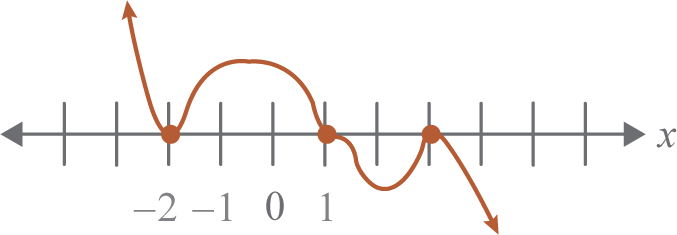
- Sketch the roots of a polynomial function. Name the degree.
2 + 3 + 2 = 7
This is a 7th degree polynomial.