
Algebra 2 Final (Units 4–6)
| # | Answer | Lesson Origin |
|
1A) |
40, 41, 43 | |
| 2A) | 5 possible roots | 35 |
| 2B) | 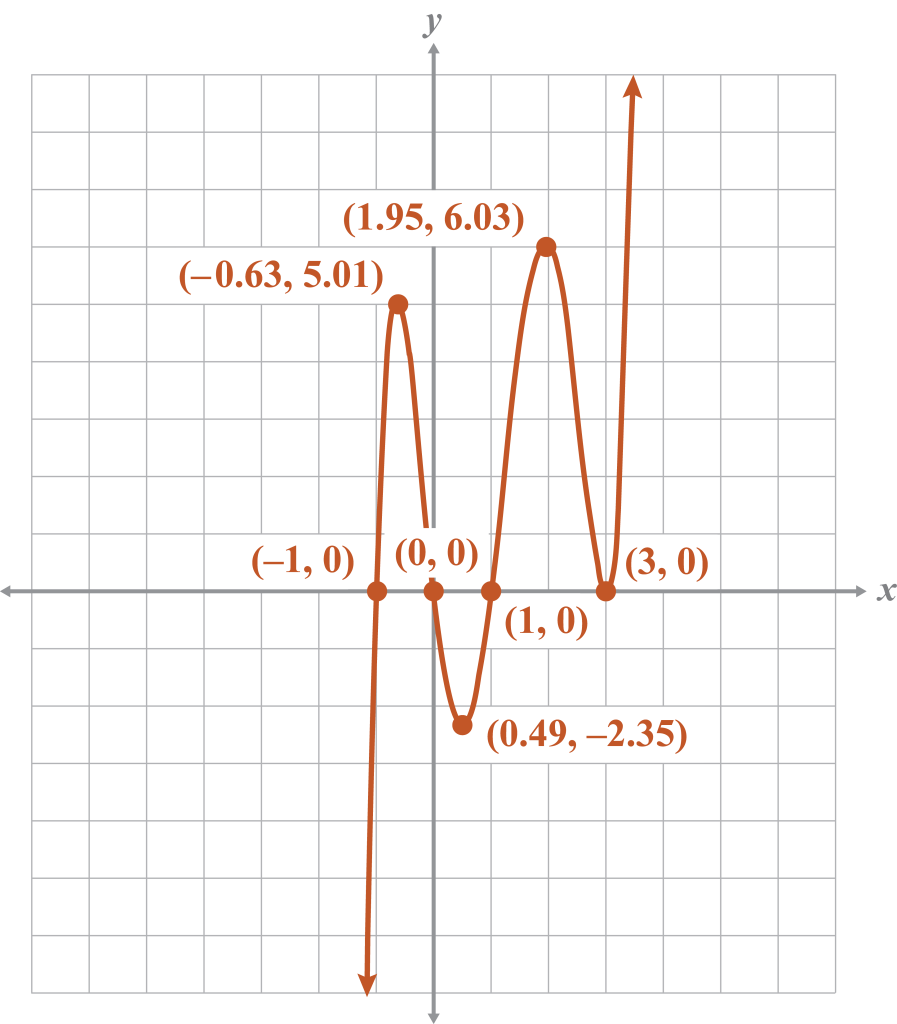 |
35 |
| 2C) |
Relative minimum: |
35 |
| 2D) |
The graph f(x) increases across the intervals: The graph f(x) decreases across the intervals: |
35 |
| 3) | D | 42 |
| 4) | A | 36 |
| 5) | A | 31 |
| 6) | B | 39 |
| 7) | D | 32 |
| 8) | C | 39, 40, 42, 44 |
| 9) | B | 31 |
| 10) | A | 33 |
| 11) | C | 38 |
| 12) | D | 39 |
| 13) | B | 36 |
| 14) | C | 33 |
| 15) | A | 38 |
| 16) | C | 42 |
| 17) | B | 33 |
| 18) | D | 40 |
| 19) | B | 37 |
| 20) | C | 39, 40 |
| 21) | B | 43 |
| 22) | A | 38, 44 |
| 23) | C | 32 |
| 24) | D | 6, 15, 34 |
| 25) | C | 37 |
| Unit 6 Solutions | ||
| 26) | C | 46 |
| 27) | D | 47 |
| 28) | C | 51, 52 |
| 29) | A | 55 |
| 30) | C | 48 |
| 31) | B | 45 |
| 32) | C | 53, 54 |
| 33) | D | 56 |
| 34) | B | 49 |
| 35) | C | 50 |
Answer all parts of the open response problem.
- Solve:
- Write your answer as a logarithm.
- Using technology, approximate the value of the logarithm to four decimal places.
- Name the properties you used to solve.
Answer all parts of the open response problem.
- Complete the problem using the polynomial function:
- Determine the number of roots with the Fundamental Theorem of Algebra (FTA).
According to the FTA, a total of 5 roots are possible.
- Sketch a graph of the function using technology. Include roots and turning points rounded to the hundredth place.
- Name the following points:
Relative minimum on the interval
Relative maximum on the interval
Real zeros
- Name the intervals in which the function is increasing and decreasing.
The graph f(x) increases across the intervals:
The graph f(x) decreases across the intervals:
Note
Remember that when using interval notation, you are representing the range of x-values.
Multiple Choice
D
- Write as an exponential function with base e.
Note
- This option incorrectly switches y for e. (e does not equal ln 5.)
B, C) The foundational property was not correctly applied.
Foundational property:
A
- The volume of a cylinder varies jointly with π, the radius squared, and the height. Solve for the height in terms of π when the radius is 2 units and the volume is 12 cubic units.
-
units
-
units
-
units
-
units
Note
- This option is the result when r is not squared.
- This option is the result when π is incorrectly moved to the numerator.
- This option is the result if you solve for V by making h equal 12.
A
- Given, determine
Note
- This option occurs when the binomial is not squared for the first term.
- This option occurs when the binomial is not correctly squared.
- This option occurs when the terms are incorrectly combined.
B
- If find x for
-
4
-
5
-
25
Note
- This option is the value of x in the first equation.
- This option is the value of b.
- This option ignores the value of b and takes the square root of 625.
D
- Select the functions that make the composition:
Note
- This option is .
B, C) Functions with unlike radicands cannot be combined.
C
- Customer First Credit Union ran a promotion 20 years ago for a savings account that earned continuously compounded interest using the formula: Jamie invested $8,000 and now has $28,000 in the account. What interest rate did Jamie earn? Round to the hundredth of a percent.
-
2.72%
-
0.06%
-
6.26%
-
6.3%
Note
- This option is an approximate value of e.
- This option did not convert the decimal to a percent.
- This option is not rounded correctly.
B
- Determine the domain for the combination of functions where and
Note
- This domain is missing the value that simplifies out of the problem.
- This option is the domain of each function before they are combined.
- The denominator cannot equal zero, but zero is not an excluded value for this combination of functions.
A
- Sketch the zeros of the function:
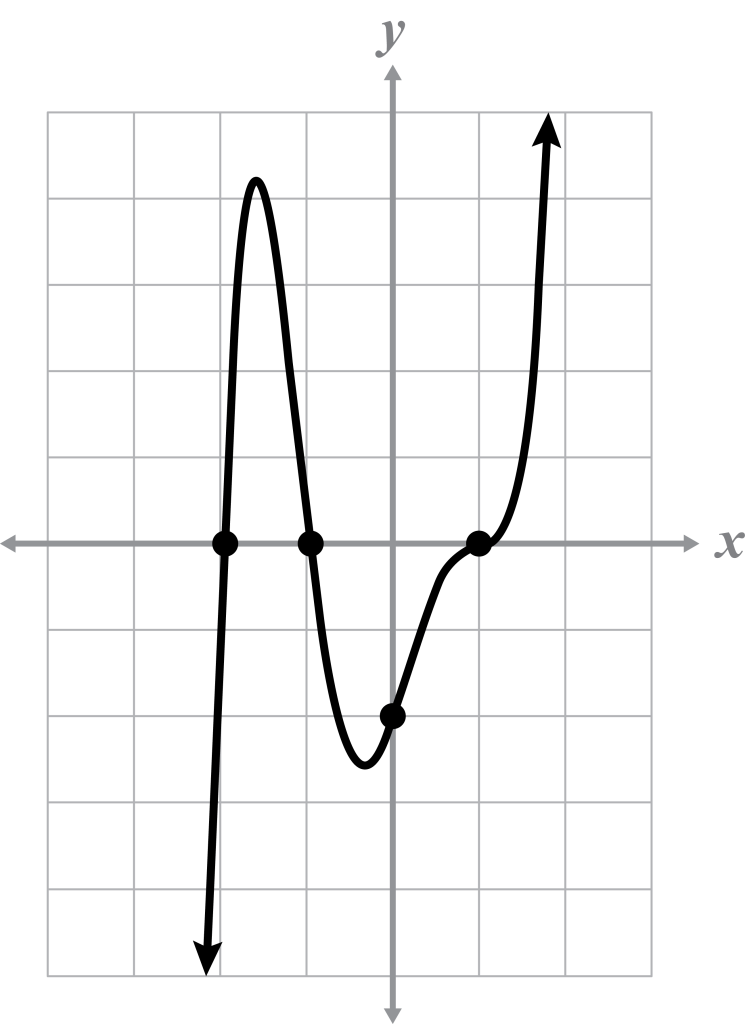
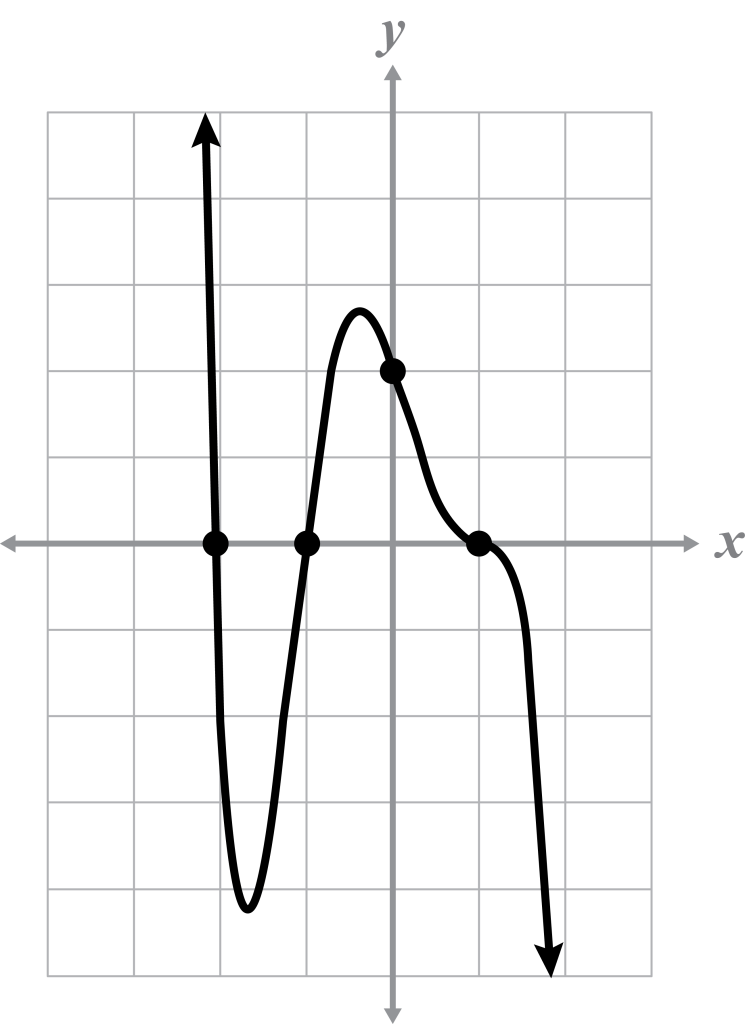
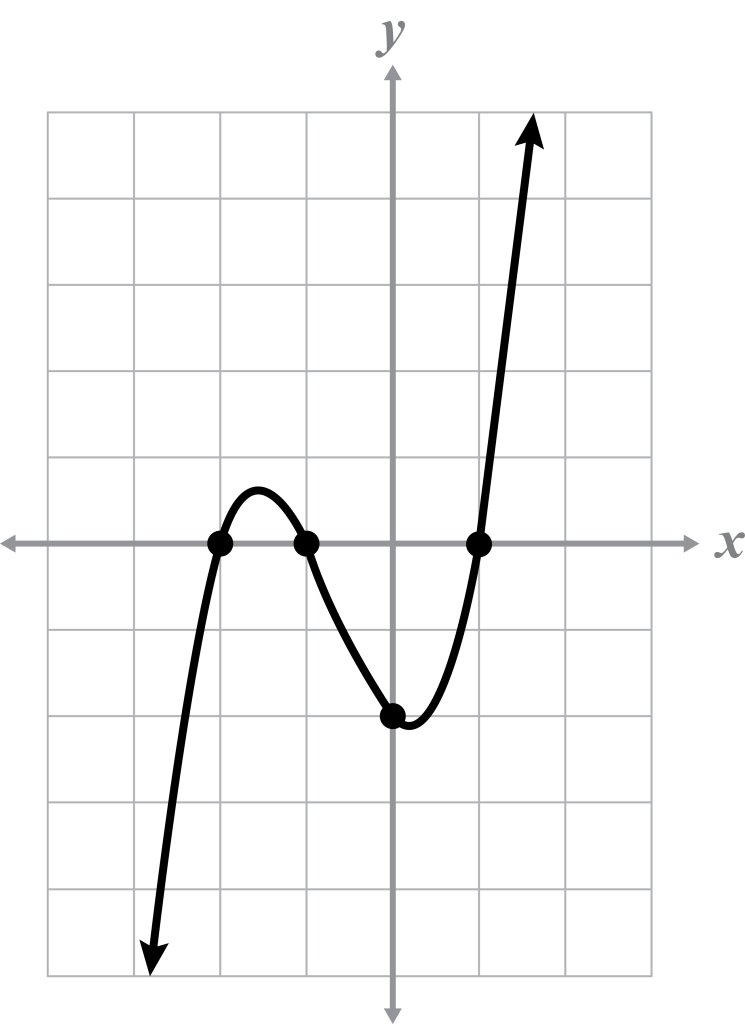
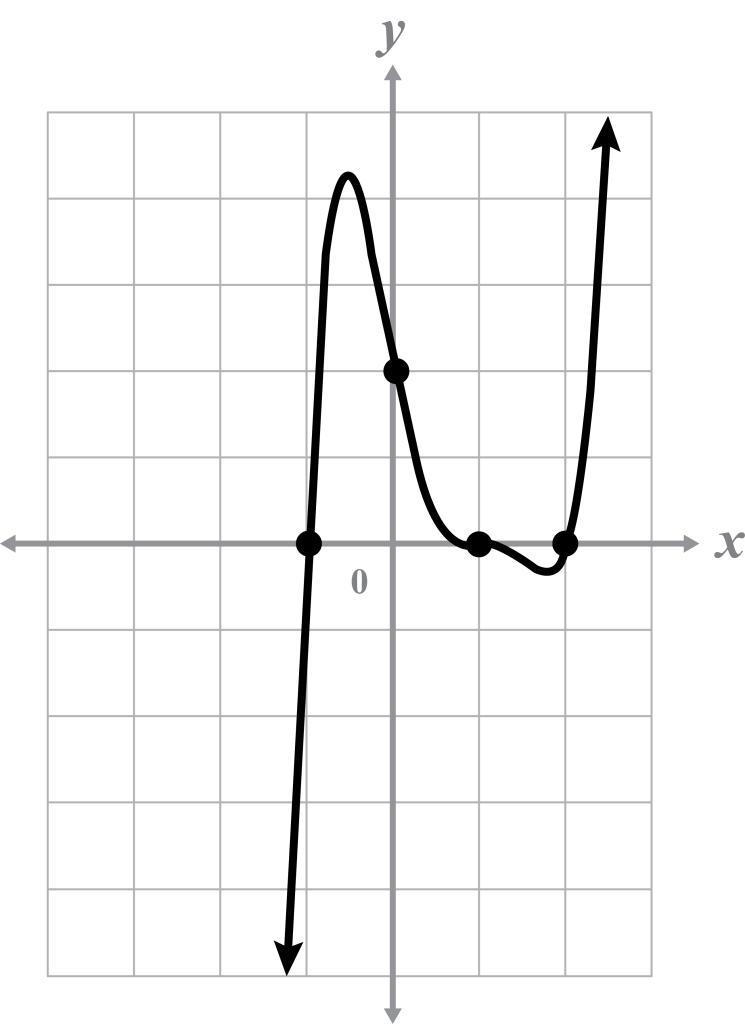
Note
- This option is the function when
- This option ignores the cubed binomial and only has cross-throughs.
- This option is the result when (instead of
C
- Solve:
-
7
-
11
-
16
-
no solution
Note
- This option is the solution if the exponents of the bases were ignored.
- This option is the solution if the distributive property is applied incorrectly on the left side of the equation.
D
- Write the equation in logarithmic form.
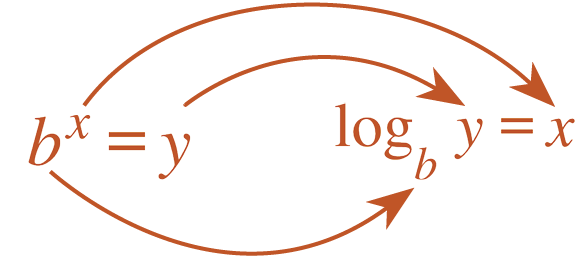
Note
A, B, C) These options incorrectly convert from an exponential equation to a logarithmic equation.
B
- If the distance varies directly as time in hours and and , determine the time when the distance is 425 miles.
-
0.11 hours
-
8.5 hours
-
2.13 hours
-
850 hours
Note
- This option is the result when k is divided by 425 (the fraction is flipped).
- This option is the result if 100 and 2 were multiplied, rather than divided, to determine the value of k.
- This option is the result if 2 was divided by 100 to determine the value of k.
C
- Which function is both a power and a polynomial function?
-
Power function: a monomial function with real number exponents
Polynomial function: a function with real number coefficients, excluding zero, and whole number exponents
Note
- This option is not a power function because it is not a monomial.
- This option is neither a power nor a polynomial function.
- Polynomial functions must have whole-number exponents.
A
- Solve:
-
no solution
Note
- The inequality symbol should be is less than or equal to.
- This option is the solution when 4, instead of is used to solve.
C
- Solve in terms of e.
Note
- This option multiplies five by two instead of squaring it.
- This option multiplies 25 and 3, but an argument and a constant cannot be combined.
- This option combines all of the numbers in the argument and the constant.
B
- Name the end behavior for the polynomial function.
-
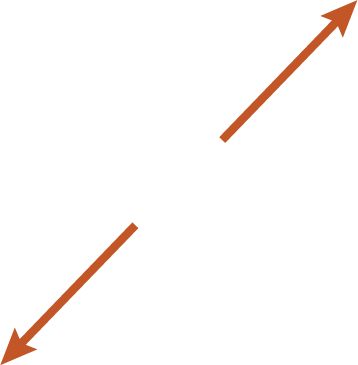 odd
odd
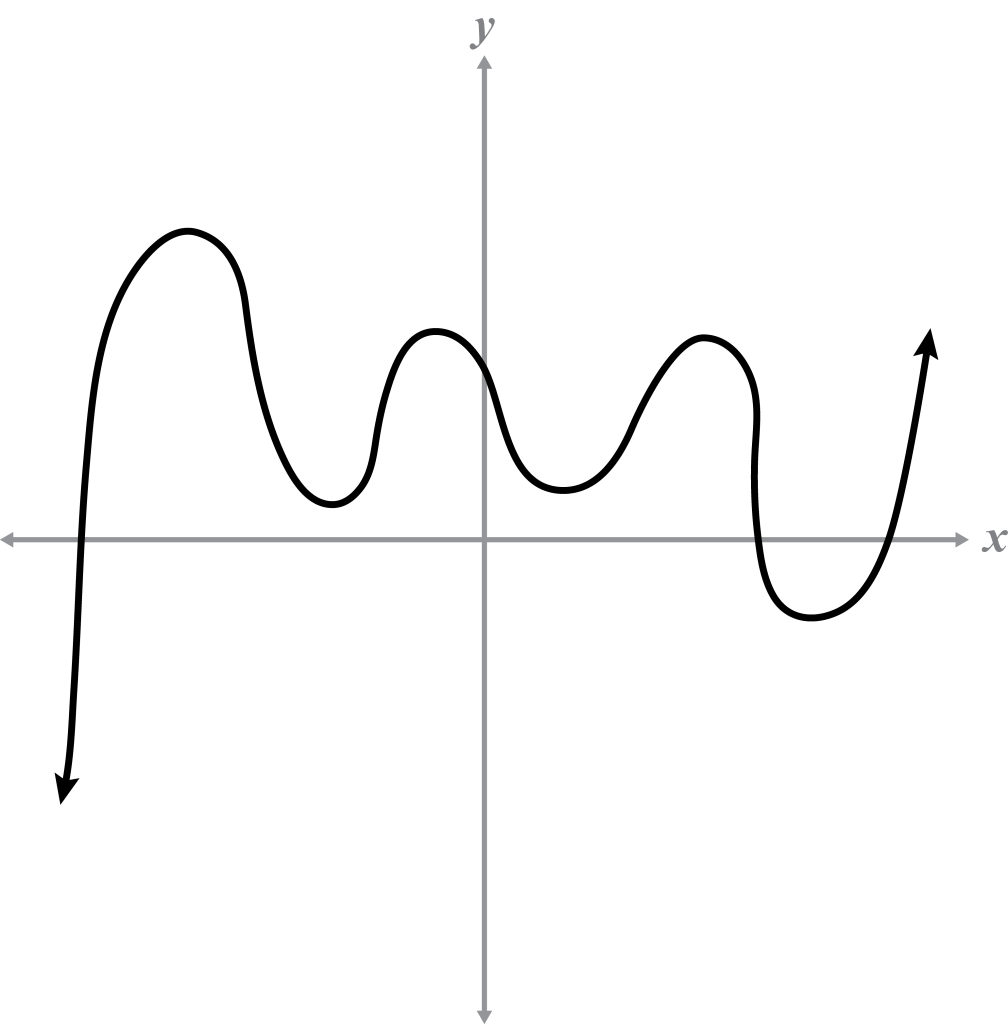
Note
- This option is the end behavior when the graph starts positive and ends negative.
C, D) These options represent the end behavior for an even function.
D
- Completely expand the expression with the logarithmic properties.
Note
- This option would be the answer for the expression
- This option incorrectly used x-squared instead of the square root of x.
- The variable x is missing from the second expression.
B
- Describe the transformation from f(x) to g(x) when and
-
g(x) is reflected across the y-axis, translated 7 units up, and 2 units left.
-
g(x) is reflected across the x-axis, translated 7 units up, and 2 units left.
-
g(x) is reflected across the y-axis, translated 7 units up, and 2 units right.
-
g(x) is reflected across the x-axis, translated 7 units up, and 2 units right.
| f(x) | g(x) | |
| b | 6 | 6 |
| a | 1 | –1 |
| h | 0 | –2 |
| k | 0 | 7 |
Note
A, C) The graph is not reflected over the y-axis.
C, D) The graph is translated left, not right, two units.
C
- Solve:
Note
A, D) These options would be solutions for the equation
A, B) It is not possible to have a negative solution because the argument of a log cannot be negative.
B
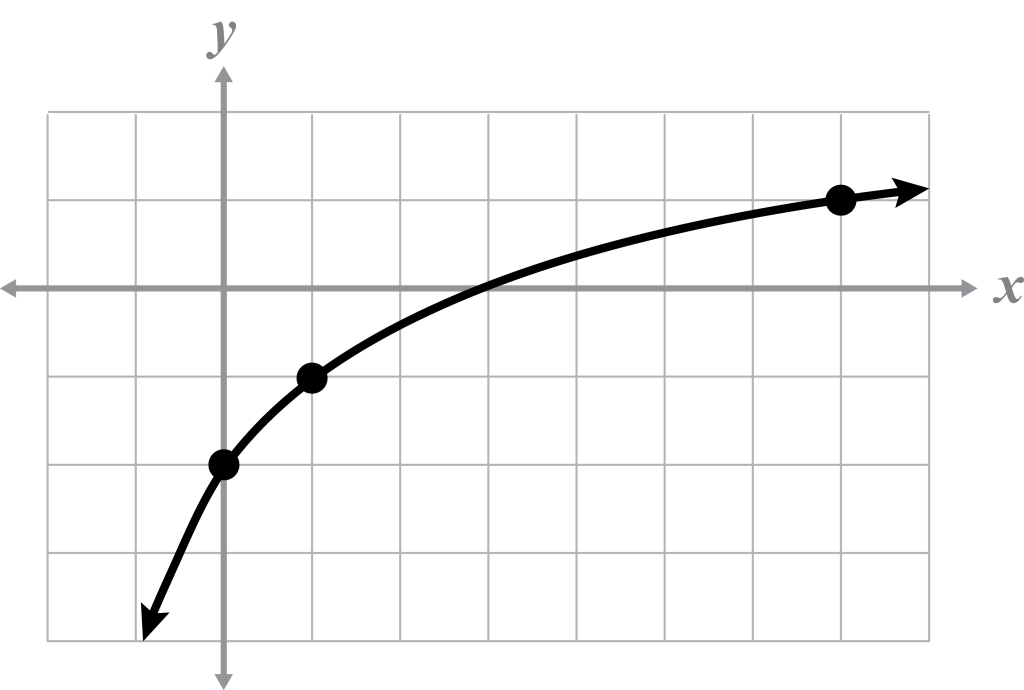
- The equationis transformed to the given graph. Select the equation that represents the graph.
-
The given graph shifts the x-intercept of left one unit and down two units.
The graph has values of
Note
- This option does not demonstrate the horizontal shift on the graph.
- This option would shift the graph right one and down two units.
- This option would shift the graph right seven units.
A
- Solve the problem using the formula:
A drink contains 200 milligrams (mg) of caffeine, and the half-life of caffeine, h, is 6 hours. How much caffeine, to the nearest whole milligram, would be in a person’s system after 7 hours?
-
89 mg
-
100 mg
-
110 mg
-
200 mg
Note
- This option is half of the amount of caffeine and ignores the time.
- This option is the solution when the exponent is .
- This option is the initial amount of caffeine in the problem.
C
- Find the composite function when and
Note
- This option is the combination .
- This option is .
- This option is missing a domain restriction.
D
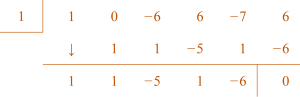
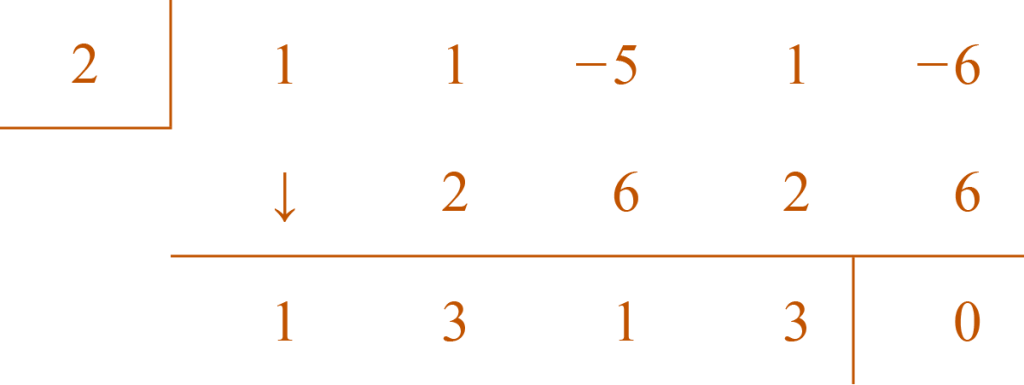
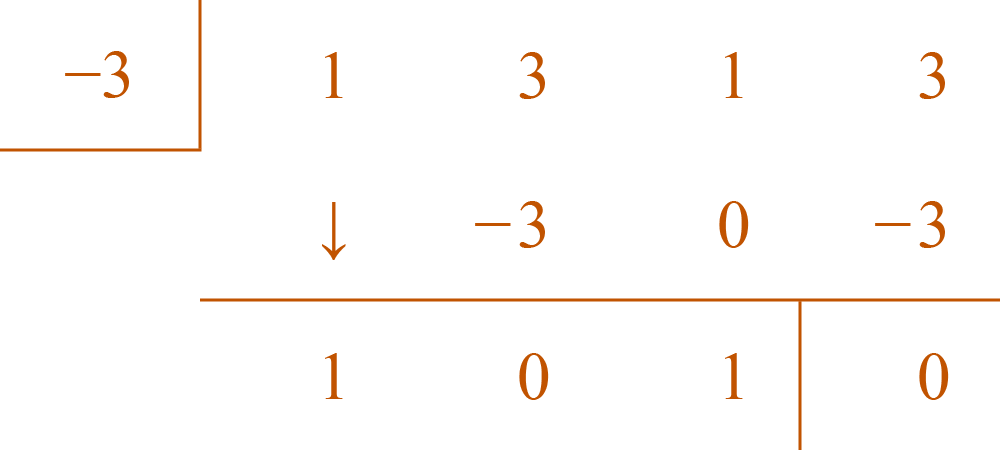
- Determine all roots of the function:
Note
- This option includes the possible rational roots.
- Imaginary numbers must come in conjugate pairs.
- This option does not include complex roots.
C
- Select the graph of f(x) that transforms by reflecting the function, and shifting the function three units right and four units up.
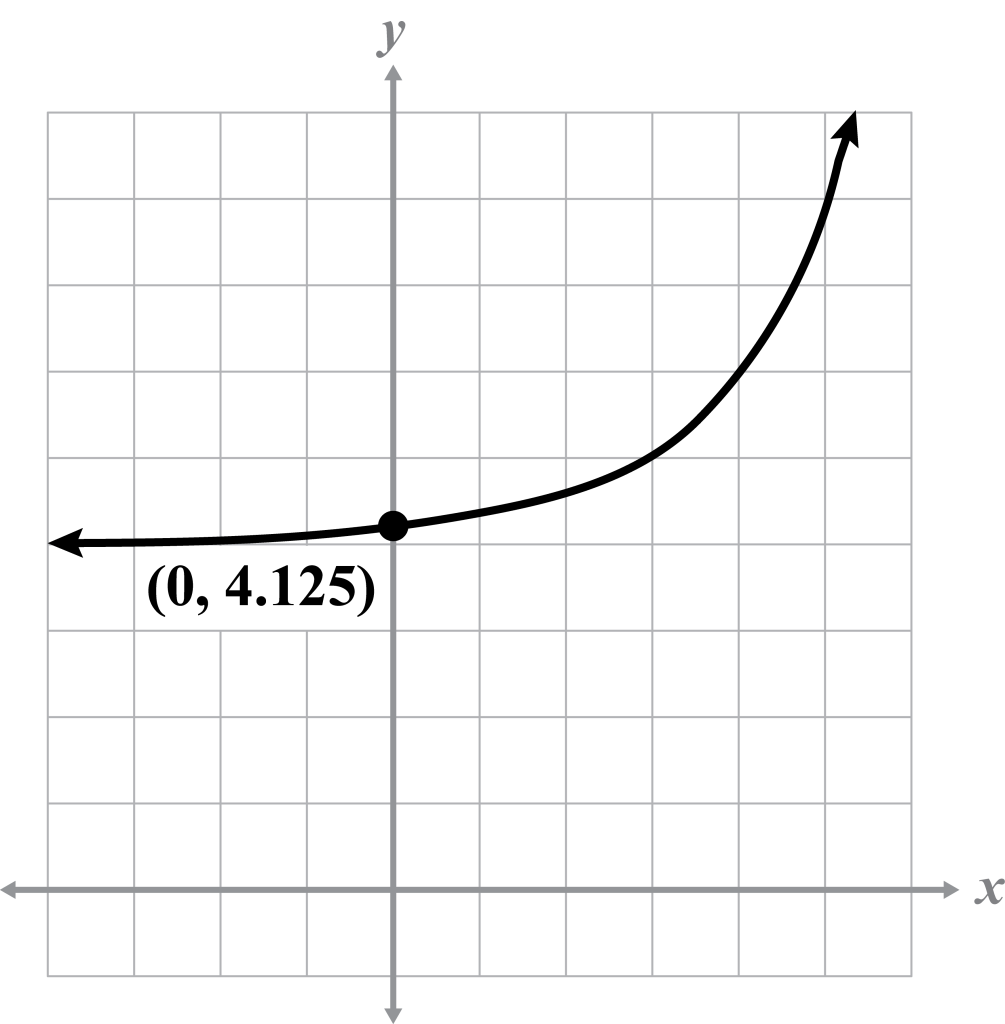
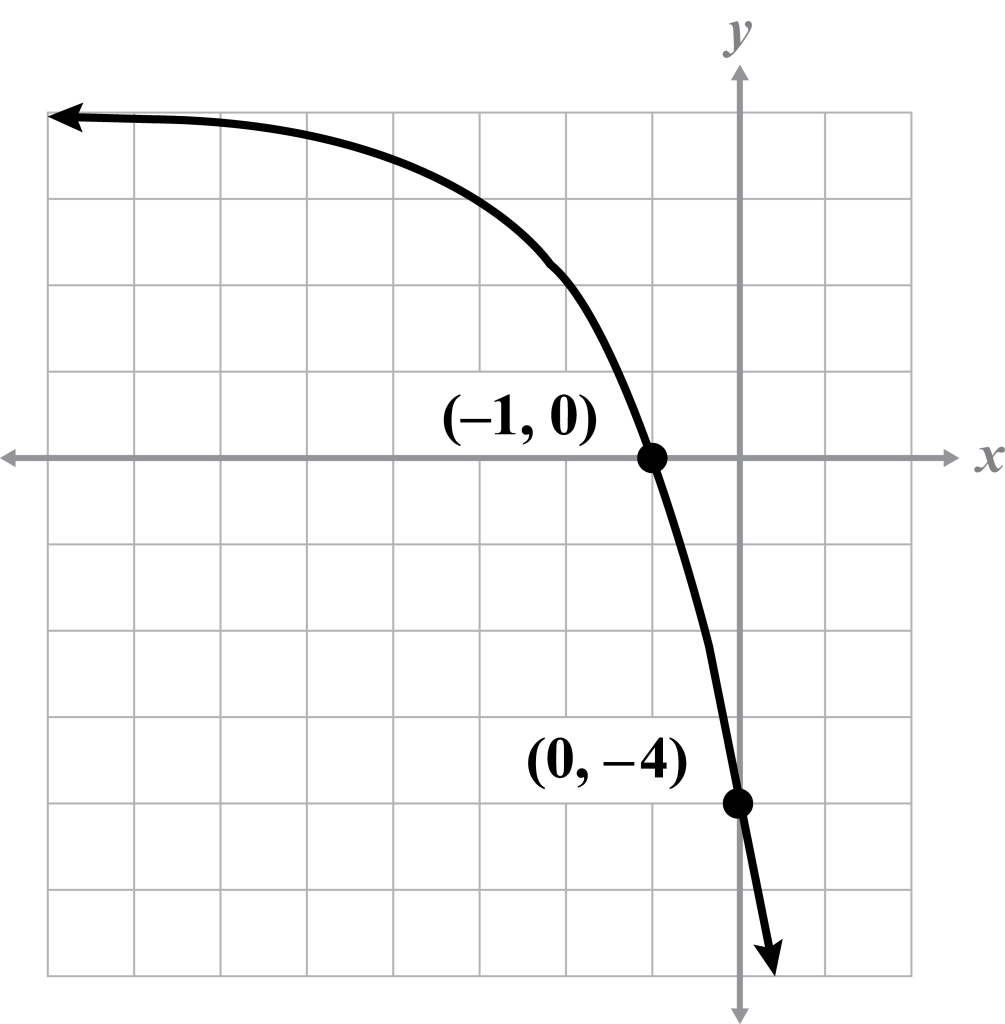
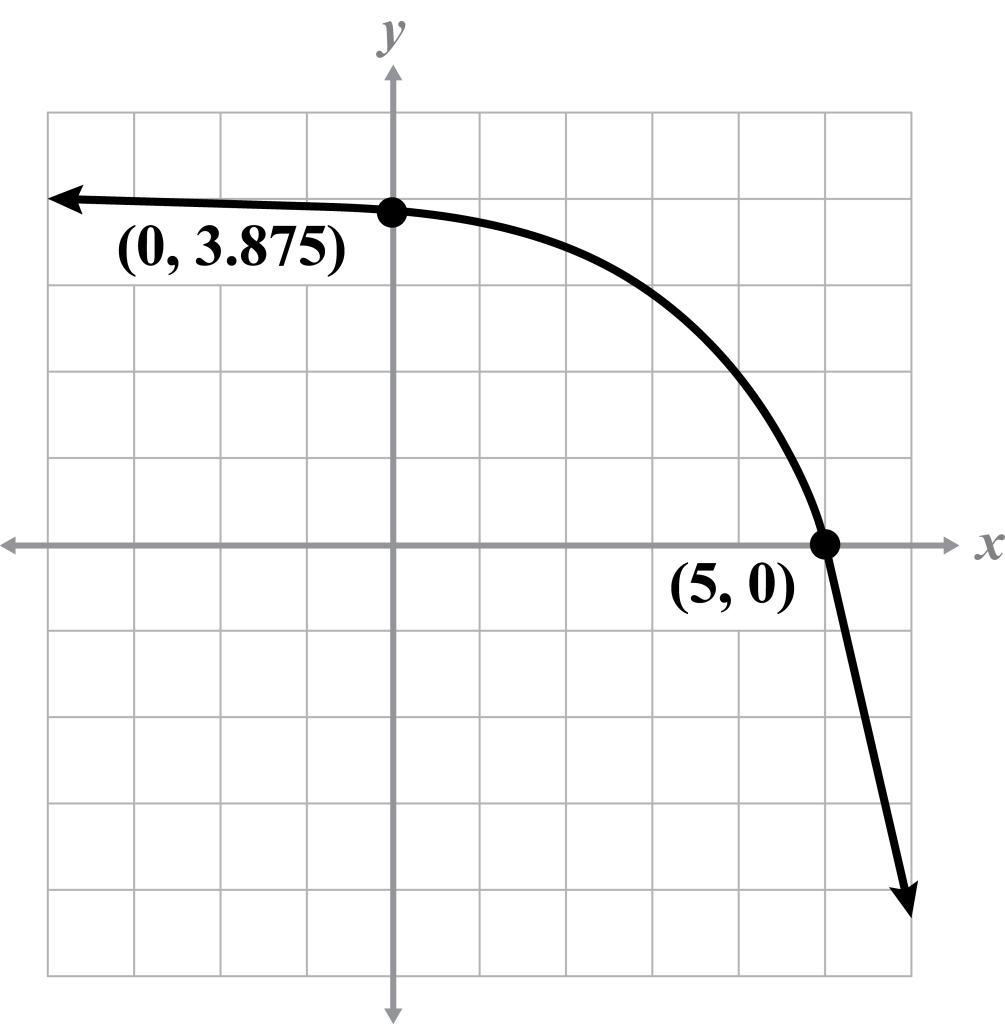
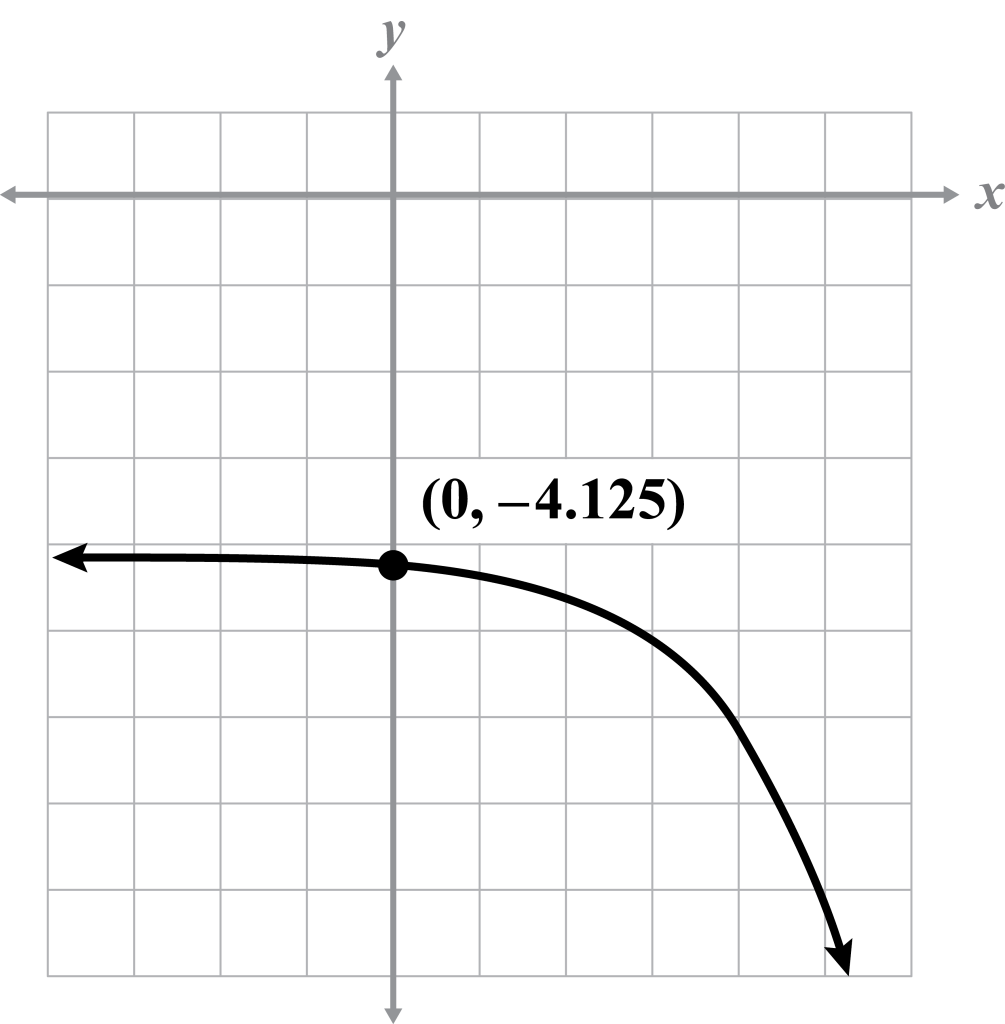
Note
- The graph is not reflected across the x-axis.
- This option is the transformation if h is –3.
- This option is the transformation if k is –4.
Unit 6 Multiple Choice
C
- What is the area in a standard normal distribution that falls between and
-
1.00
-
0.95
-
0.82
-
0.68
Note
- All data (100%) is not between the given z-values.
- This option is the data within two standard deviations of the mean.
- This option is the data within one standard deviation of the mean.
D
- Which type of variable will provide categorical data?
-
Height in inches
-
Weight in pounds
-
Age in years
-
Brand of car
Categorical data: characteristics or categories
Note
A, B, C) These options are all quantitative data.
C
- Calculate using Pascal’s Triangle.
-
8
-
28
-
56
-
336
Note
- This option is the row of Pascal’s Triangle to be referenced, not the calculation.
- This option is
- This option is
8th row of Pascal’s Triangle: 1, 8, 28, 56, 70, 56, 28, 8, 1
or
A
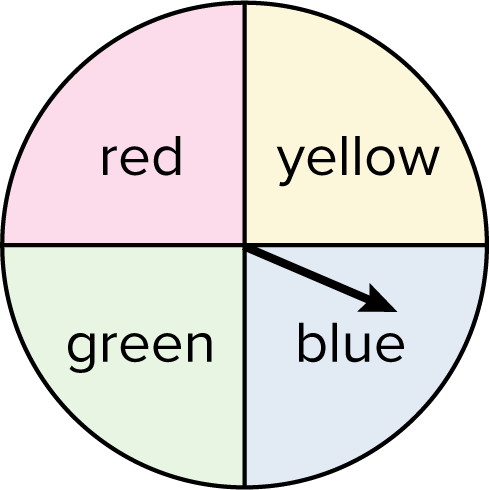
- The fair spinner has four equal sections. What is the probability of the arrow landing on blue twice in two spins?
Note
- This option is not possible with the given information.
- This option is the probability of landing on blue once.
- This option is the result when the probabilities are added.
C
- Ms. Malone plans to survey her statistics class. She puts all of her students’ names in a hat and draws 30 random names. Name the sampling method she used.
-
Cluster
-
Stratified
-
Simple random
-
Systematic
Simple random: Any individual in the population has an equal chance of being selected at random from the population.
Note
The scenario does not reflect the other types of sampling.
B
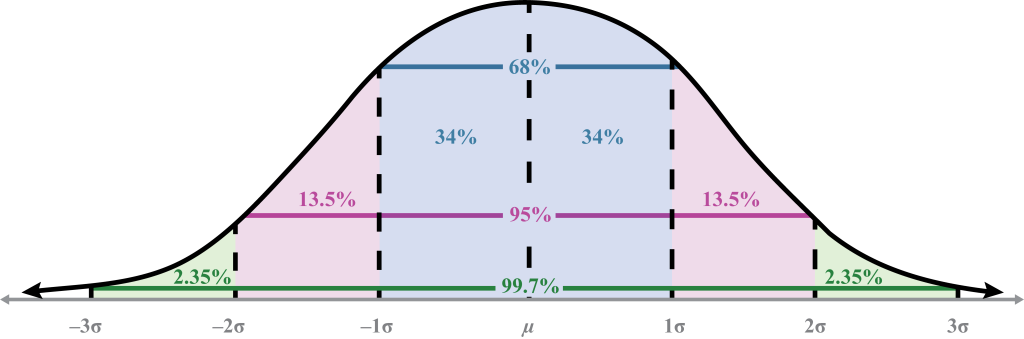
- In a normal distribution, what is the approximate percentage of data that lies within one standard deviation of the mean?
-
50%
-
68%
-
95%
-
99.7%
Note
- This option is the percentage of data below the mean.
- This option is the percentage of data within two standard deviations of the mean.
- This option is the percentage of data within three standard deviations of the mean.
C
- A set contains the numbers 1 through 20. Determine P(prime or even).
-
0
-
Note
- This option is the probability of selecting a number not contained in the set.
- This option is the probability of a number that is prime AND even.
- This option is the probability when an even prime number is counted twice.
D
- A bag contains seven red and five yellow marbles. What is the probability of selecting three yellow marbles in a row without replacement?
Note
- This option is the probability with replacement.
- This option did not decrease the numerators by one.
- This option did not decrease the denominators by one.
B
- Of the 123 patients surveyed about their doctor’s office, 14.7% reported a ‘neutral’ experience. Determine the interval for neutral ratings when the margin of error is ±9.8%.
-
Between 14.7% and 24.5% of patients reported a ‘neutral’ experience.
-
Between 4.9% and 24.5% of patients reported a ‘neutral’ experience.
-
Between 113.2% and 132.8% of patients reported a ‘neutral’ experience.
-
Cannot be determined.
Note
- This option is the upper half of the confidence interval.
- This option used the number of patients rather than the neutral percentage.
C
- A research organization conducted an experiment with 500 participants to reduce distracted driving. The participants were divided randomly into an experiment group and a control group.
Group Mean Score Control, 86 Treatment, 80 A simulation with 10,000 trials was conducted with a standard deviation of 2.5. Calculate the z-score at the 95% confidence level for the observed difference.
-
–2.0
-
1.96
-
2.40
-
3.06
Note
- This z-score is positive for the observed difference.
- This option is the z-score at the 95% confidence level.
- This option is the result when 1.96 is used instead of 2.5.