
Explore
The FUNdamental Theorem of Algebra Solutions
Note
We are only graphing or sketching intercepts on the real coordinate plane.
| Degree | Real | Non-Real, Complex | Sketch (with multiplicities of 1) |
| 5 | 5 | 0 | 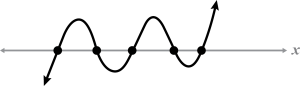 |
| 4 | 1 | not possible | |
| 3 | 2 | 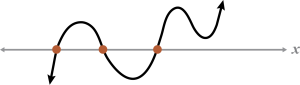 |
|
| 2 | 3 | not possible | |
| 1 | 4 | 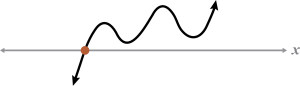 |
|
| 0 | 5 | not possible |
| Degree | Real | Non-Real, Complex | Sketch (with multiplicities of 1) |
| 4 | 4 | 0 |  |
| 3 | 1 | not possible | |
| 2 | 2 |  |
|
| 1 | 3 | not possible | |
| 0 | 4 |
|

Example 1
Given the sketch of a 2nd degree polynomial, determine if a is greater than or less than zero, and if the roots are real or non-real, complex.
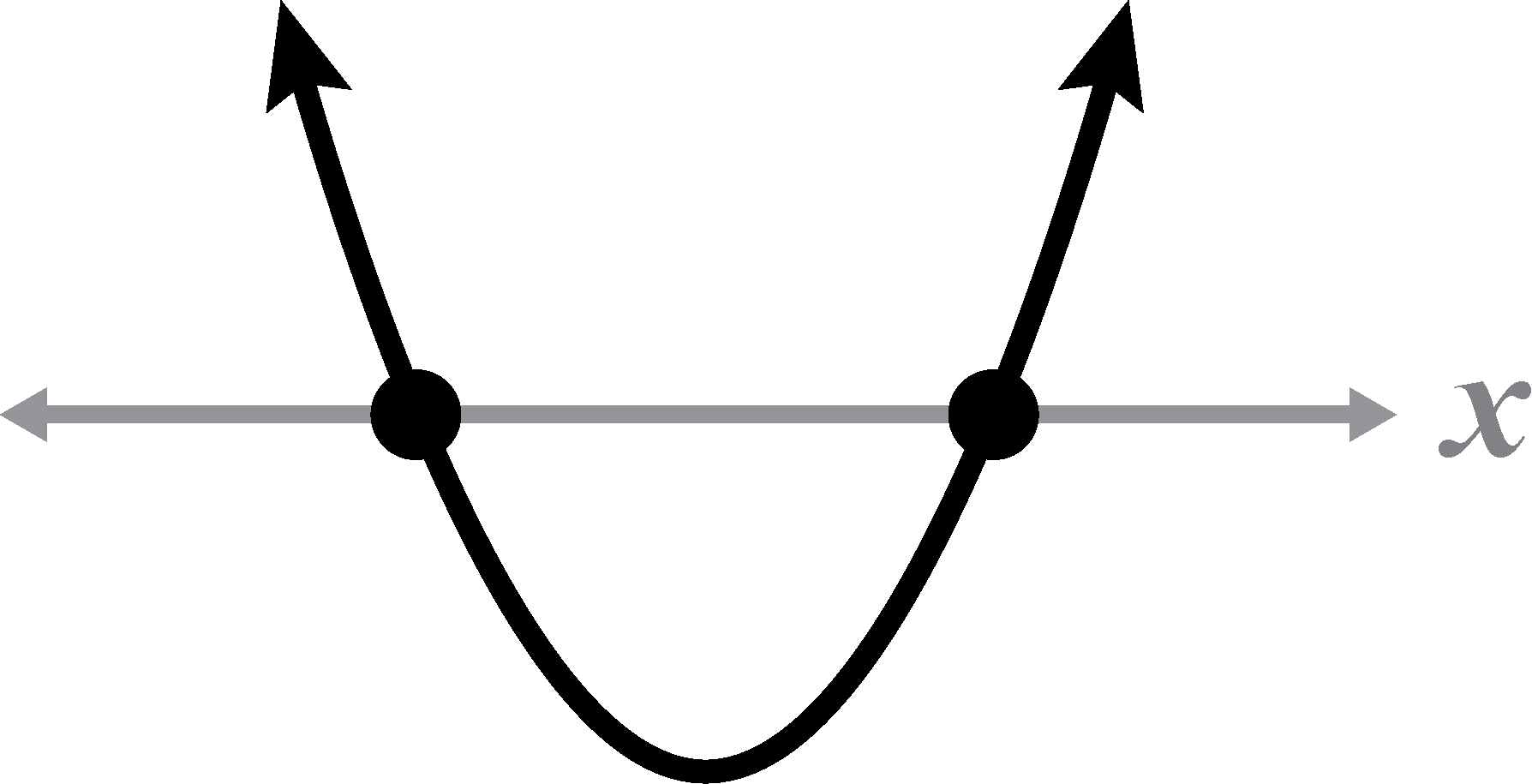
a < 0, 2 real roots
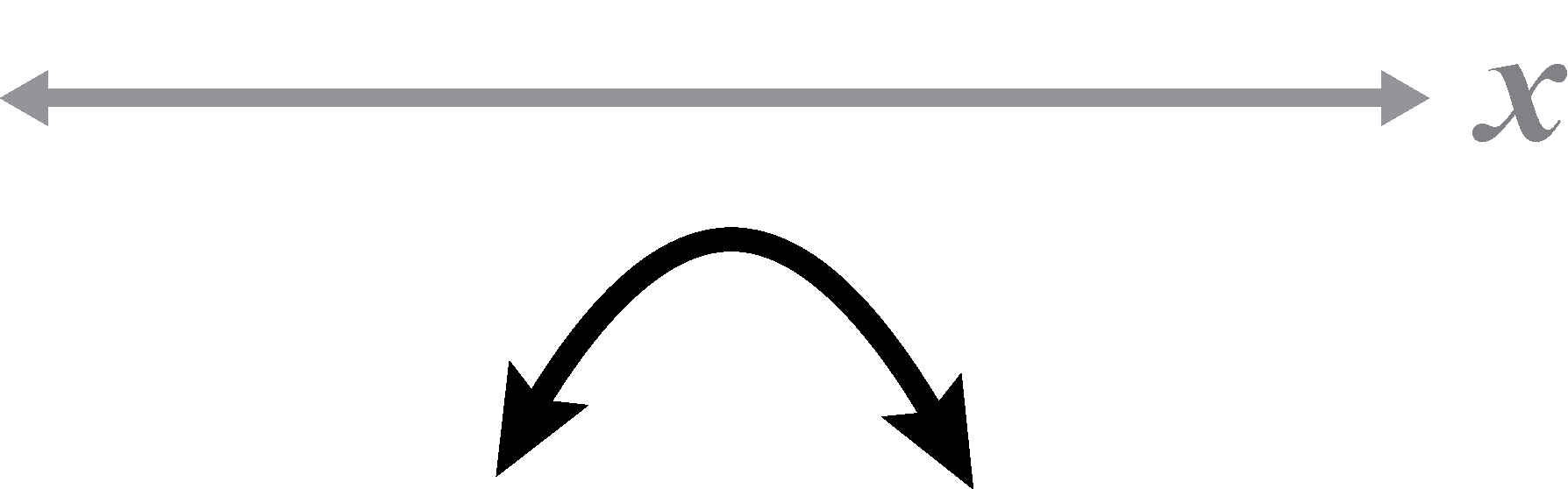
a < 0, 2 non-real, complex roots
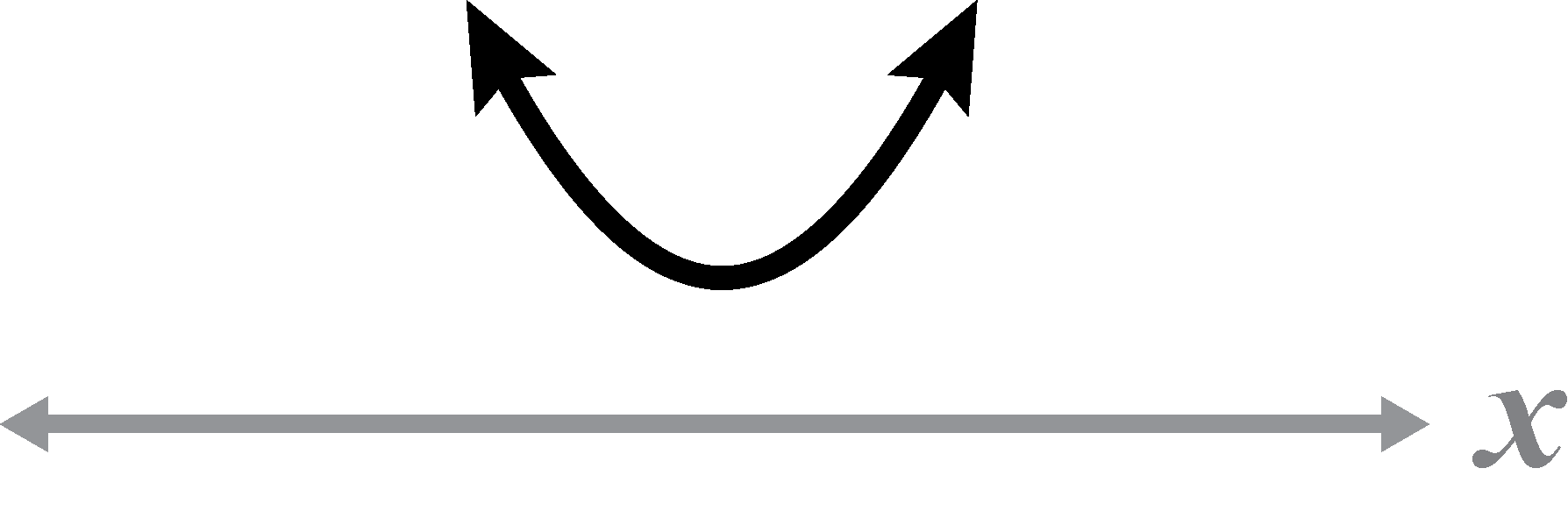
a > 0, 2 non-real, complex roots
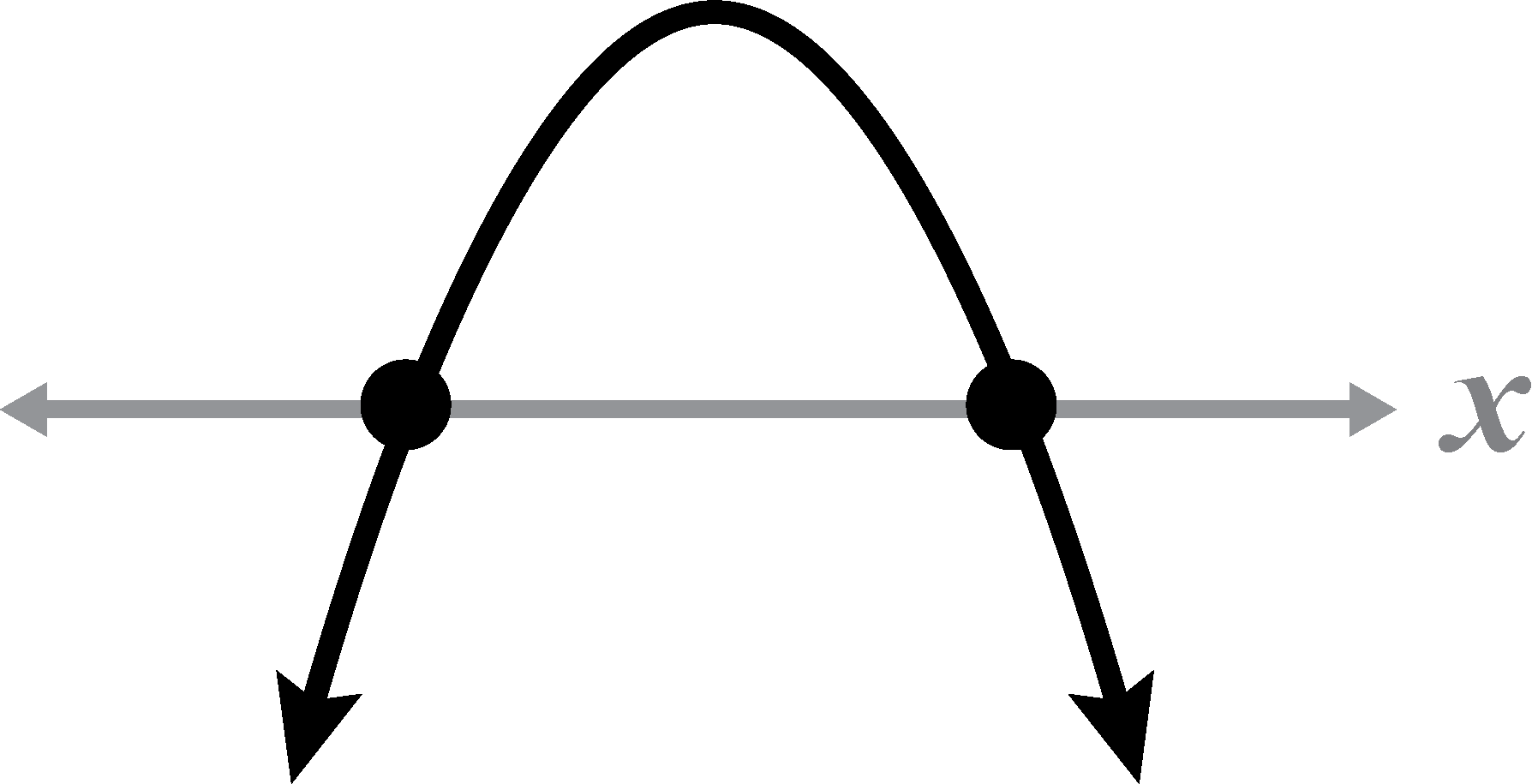
a < 0, 2 real roots
Example 2
Given a 4th degree polynomial where , identify the sketch(es) with 2 real roots with multiplicities of 1. If a sketch does not meet these criteria, explain why.
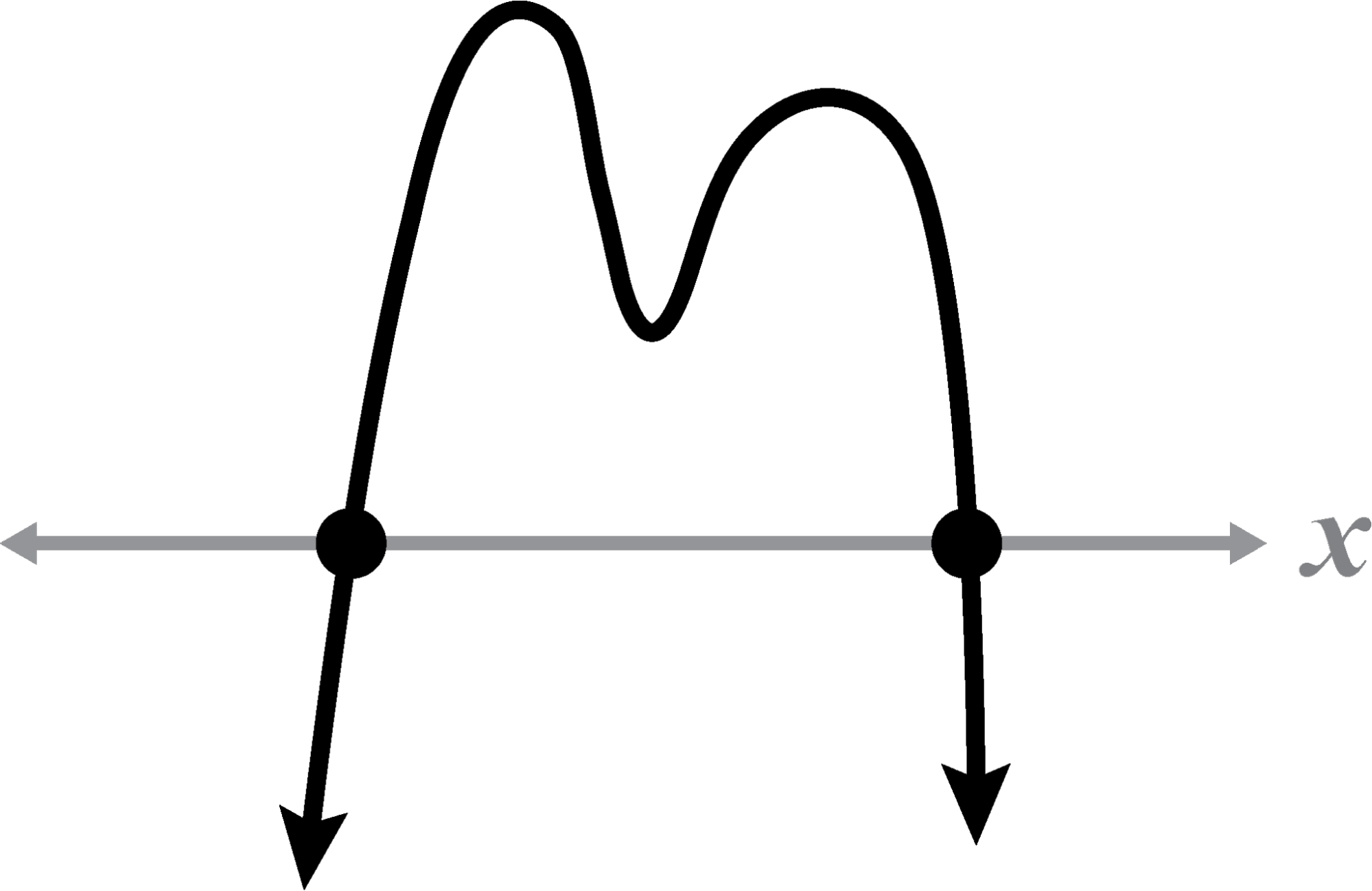
✓
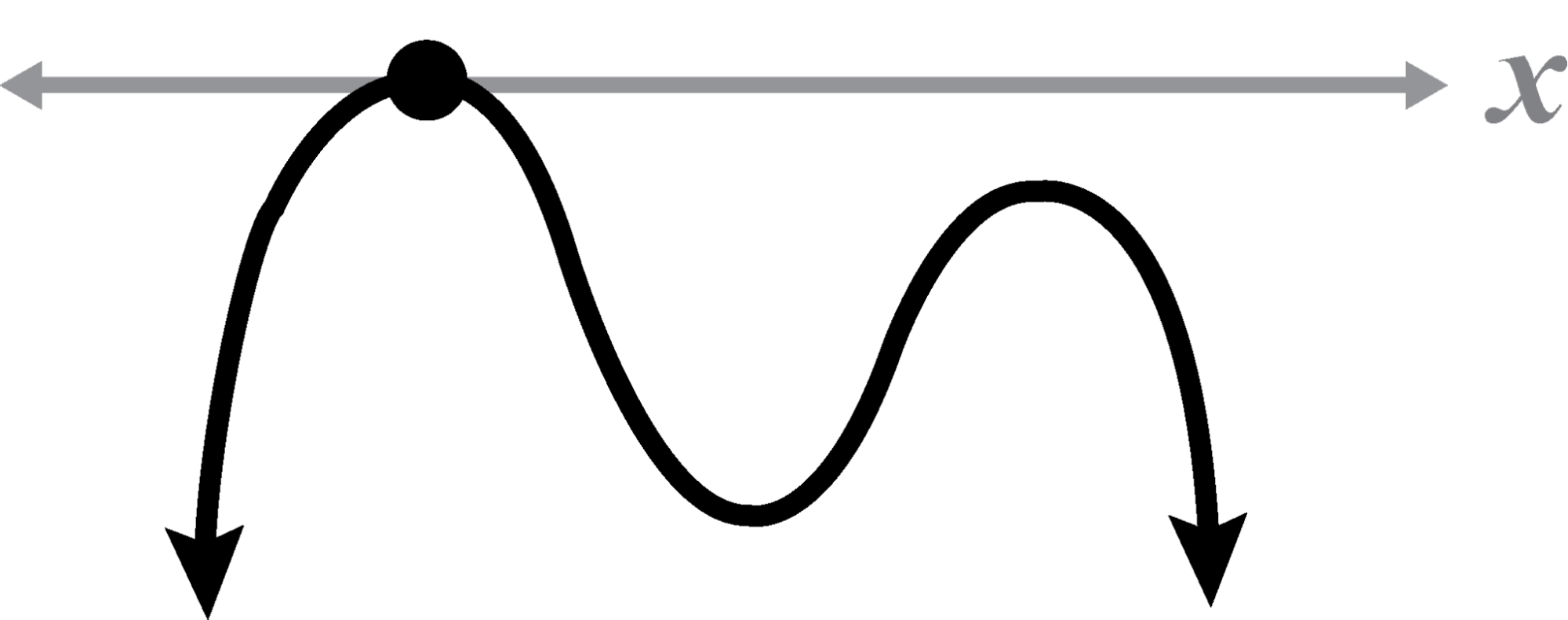
A bounce has a multiplicity of 2.
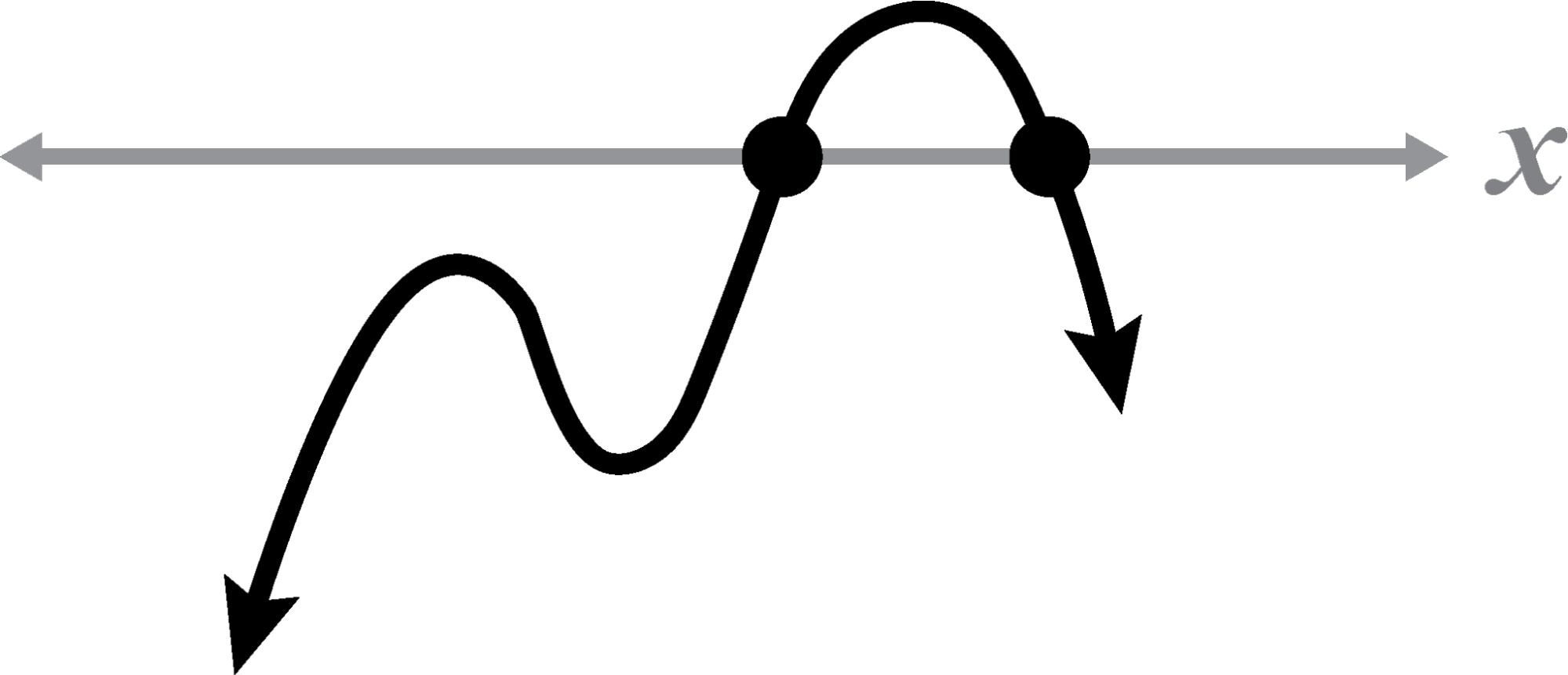
✓
Note
If the degree is 4 and there are only 2 real roots, then there are two (a conjugate pair) of non-real, complex roots.
Use a table if necessary to organize possible combinations of real and non-real, complex numbers.