
Algebra 2 Midterm (Units 1–3)
| # | Answer | Lesson Origin |
| 1A) | 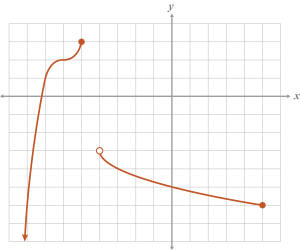 |
17, 18, 21 |
| 1B) |
|
18 |
| 1C) | 19 | |
| 1D) |
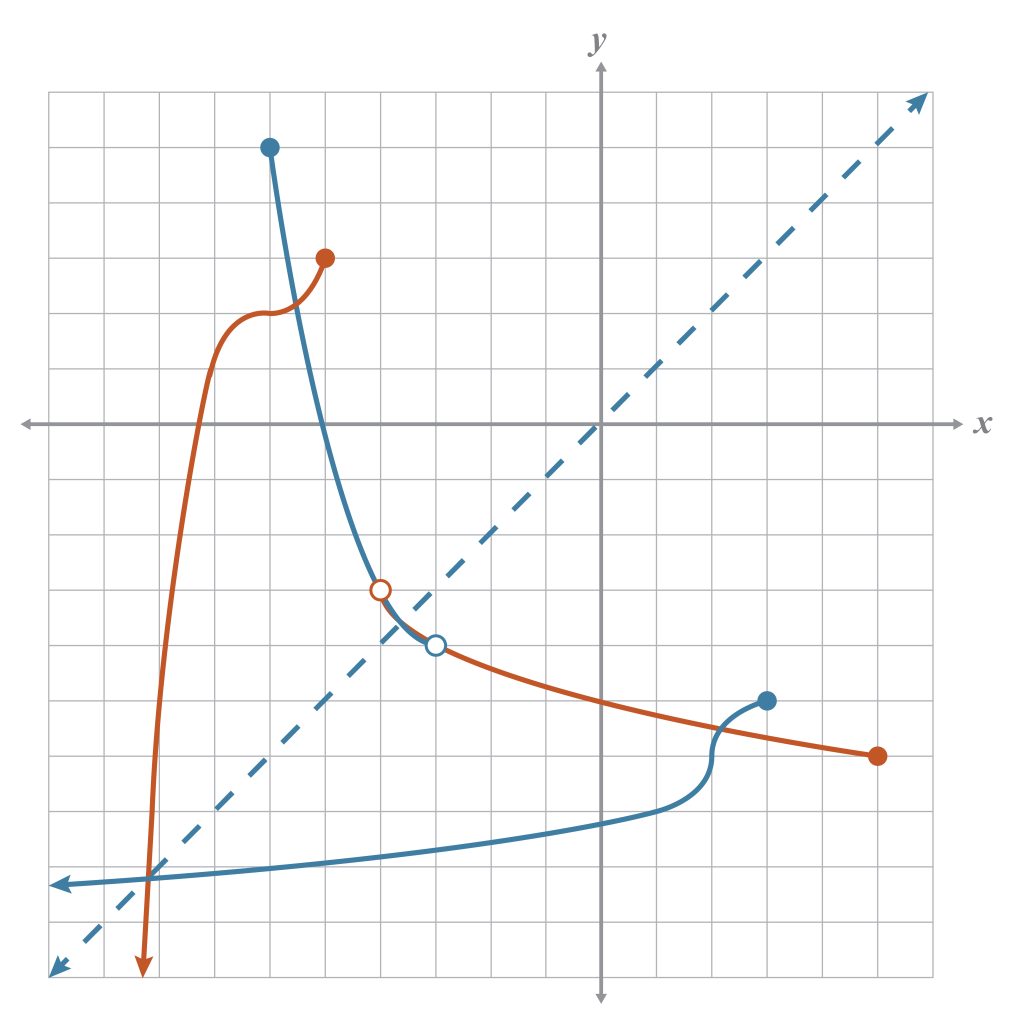
Sample: The inverse of the piecewise function will not also be a function because:
|
20, 21 |
| 2A) | 1, 27 | |
| 2B) | 24, 25 | |
| 2C) | 24, 27 | |
| 2D) | Sample: The equation is stretched by a factor of 3. The vertex is translated 2 spaces to the right and 1 space up from the origin. | 17, 18 |
| 3) | A | 1 |
| 4) | B | 4 |
| 5) | D | 3, 4, 7 |
| 6) | B | 14 |
| 7) | C | 10 |
| 8) | A | 15, 16 |
| 9) | C | 25 |
| 10) | C | 26 |
| 11) | B | 5 |
| 12) | D | 18 |
| 13) | C | 13 |
| 14) | A | 17, 18, 19, 20 |
| 15) | A | 27 |
| 16) | C | 2 |
| 17) | D | 17, 18, 22 |
| 18) | B | 24, 30 |
| 19) | B | 8, 9 |
| 20) | A | 20 |
| 21) | D | 11, 12, 13 |
| 22) | D | 5, 6 |
| 23) | C | 30 |
| 24) | B | 9 |
| 25) | C | 11 |
| 26) | B | 1 |
| 27) | A | 26, 28, 29 |
| 28) | A | 3 |
| 29) | C | 10 |
| 30) | C | 11, 15, 23 |
| 31) | A | 6 |
| 32) | 3, 4 | |
| 33) |
circle |
24, 27, 28, 29, 30 |
| 34) | 15, 16, 23, 24, 25 | |
| 35) | 1 |
- Complete each part of the problem.
- Graph:
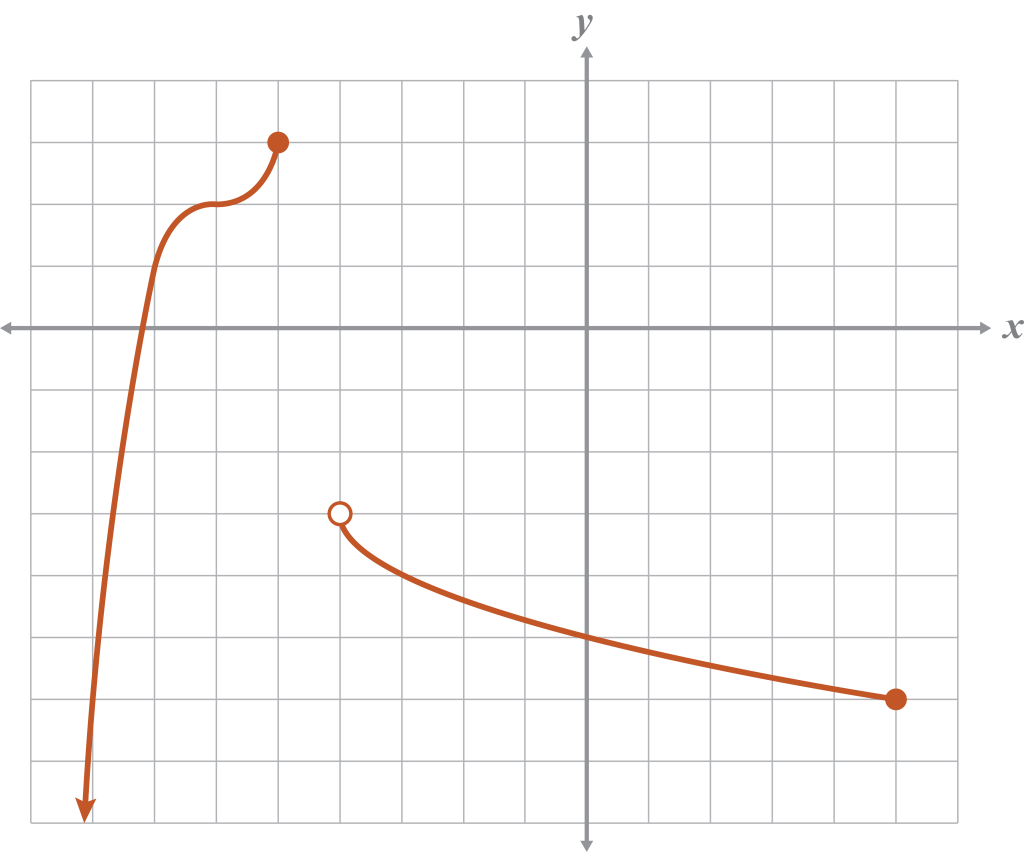
- Name the types of graphs and the domain and range from the piecewise function.
- Algebraically determine the inverse to each expression in the piecewise function.
- Explain whether or not the inverse of will also be a function.
Sample: The inverse of the piecewise function will not also be a function because:
- there will be repeated domain values.
- the graph would not pass the vertical line test (VLT).
- when the inverse of the domain and range values are taken, it results in repeated domain values. And, the domain cannot repeat in a function.
Note
You should have one or more of the responses listed above.
You may also sketch the inverse on the graph to help see the results.
- Complete each part of the problem.
- Write the quadratic equation in standard form containing the points
- Calculate the x-intercepts of the parabola using the equation from part A. Write the answer in simplified radical form.
- Write the quadratic equation from part A in vertex form.
- Describe the transformation of the quadratic equation from its parent equation.
Sample: The equation is stretched by a factor of 3. The vertex is translated 2 spaces to the right and 1 space up from the origin.
Multiple Choice
A
- When a region is unbounded for linear programming, it means:
-
the region will not be completely enclosed and will continue infinitely in at least one direction.
-
the region does not exist.
-
the region will be enclosed in all directions.
-
nothing is known about the problem.
Note
B, C, and D do not correctly describe an unbounded region.
B
- Determine the expression that, when set equal to would form a polynomial identity.
-
This is the polynomial identity for the sum of cubes.
Note
- The signs in the second expression are incorrect.
- The coefficients a and b also need to be squared.
- This option represents the difference of cubes. The formula for the sum of cubes is .
D
- State the restrictions on the denominator:
Note
A, C) These options ignore that both the numerator and denominator of the divisor are part of the restrictions.
- These values have the opposite signs.
B
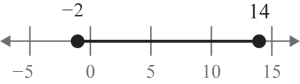
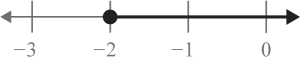
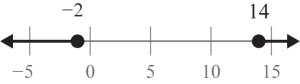
- Solve:
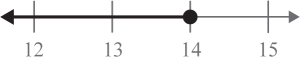
Note
- This option does not consider the restrictions to the solution.
- This option only represents the values that make the radical greater than or equal to zero.
- This option is the solution if the restriction inequality symbol is a less than or equal to sign.
C
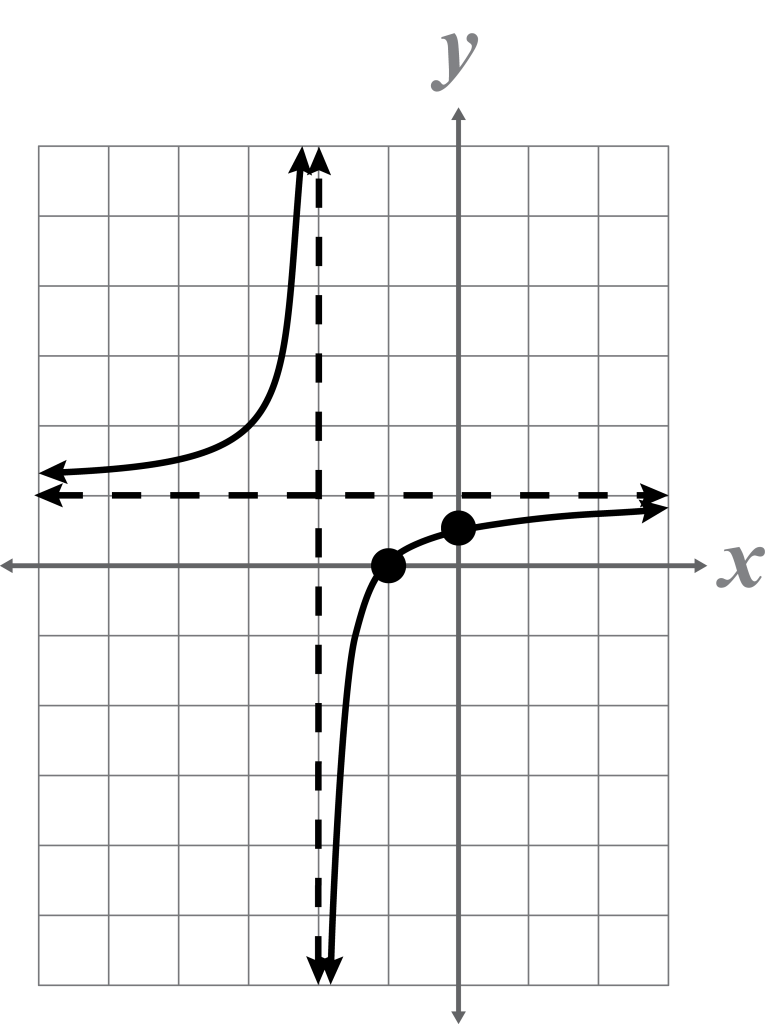
- Select the equation that best matches the graph.
-
Vertical asymptote: x = –2
Horizontal asymptote: y = 1
Note
A, B) When the value of a is positive, the graph of a rational function is in quadrants 1 and 3 (using the asymptotes to determine quadrants).
B, D) With the vertical asymptote is
A
- Simplify:
Note
- This option replaces with 1 rather than –1.
- This option only multiplies the denominator by the conjugate.
- This option has in the denominator.
C
- Determine the classification of the solutions to the quadratic equation:
-
Two rational solutions
-
One rational solution
-
Two complex solutions
-
No solution
Note
- The discriminant is > 0 when there are two rational solutions.
- The discriminant is = 0 when there is one rational solution.
- When a quadratic has no real solutions, there are two complex solutions.
C
- Calculate the distance between and
-
6.3
-
11.8
-
12.2
-
148
Note
- Subtraction is not used in the formula.
- The squared ‐ and y‐values are subtracted rather than added.
- This option is the value before the square root is taken.
B
- Divide
Note
- This option results when only the first term of each expression is subtracted.
- The first step is completed correctly, but only the first terms are subtracted in the second step.
- This option has a sign error for the constant.
D
- Select the equation that best matches the graph.
-
Cubic equation,
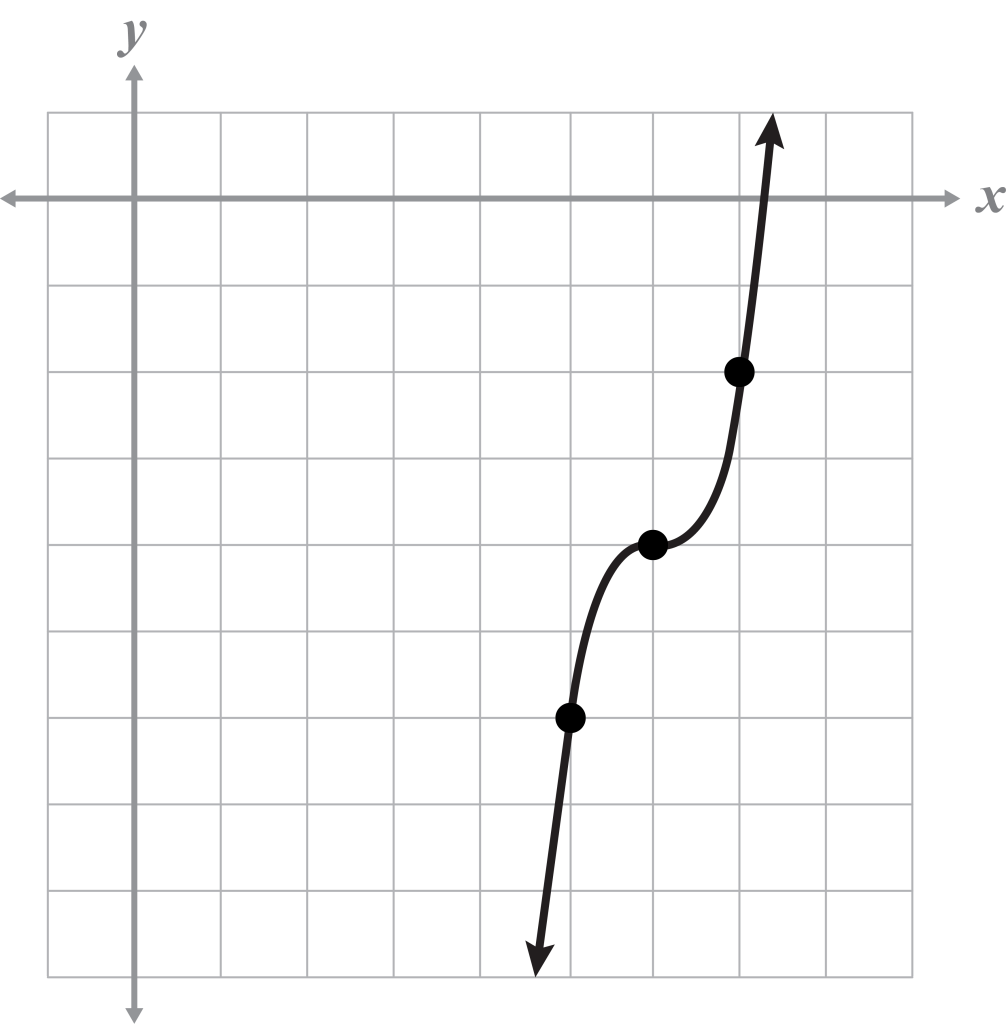
Note
A, C) The equation is not a cube root.
A, B) The value of h is not –6.
C
- Solve:
-
3
-
± 3
-
–13, 3
-
61
Note
- Case 2 is missing.
- Five is added to –8 rather than subtracted.
- The square root of both sides is not taken in Case 1.
A
- Select the graph that represents the inverse of the function:
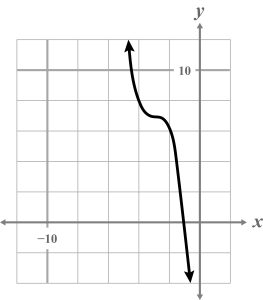
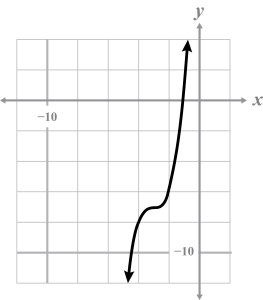
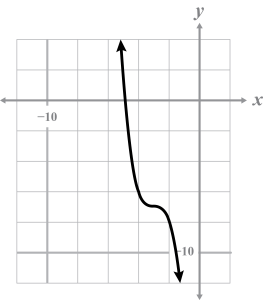
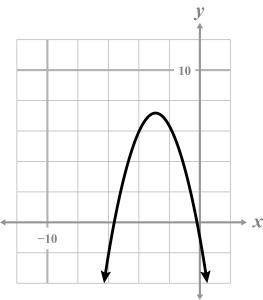
Note
B, C) Both options incorrectly have because the negative is not distributed correctly.
- A parabola is the inverse of a square root, not a cube root.
A
- Select the parabola in the form , reflected over the y-axis and translated right eight spaces.
Note
- This option shifts the graph down eight spaces.
- This option shifts the graph up eight spaces.
- This option shifts the graph left eight spaces.
C
- Solve the system. Then calculate the product of x and the sum of y and z for the system:
-
16
-
8
-
–16
-
–2
Note
- This option is the value of 2x.
- This option is the value of x.
- This option is the value of (y + z).
D
- Determine the system that best represents the graph.
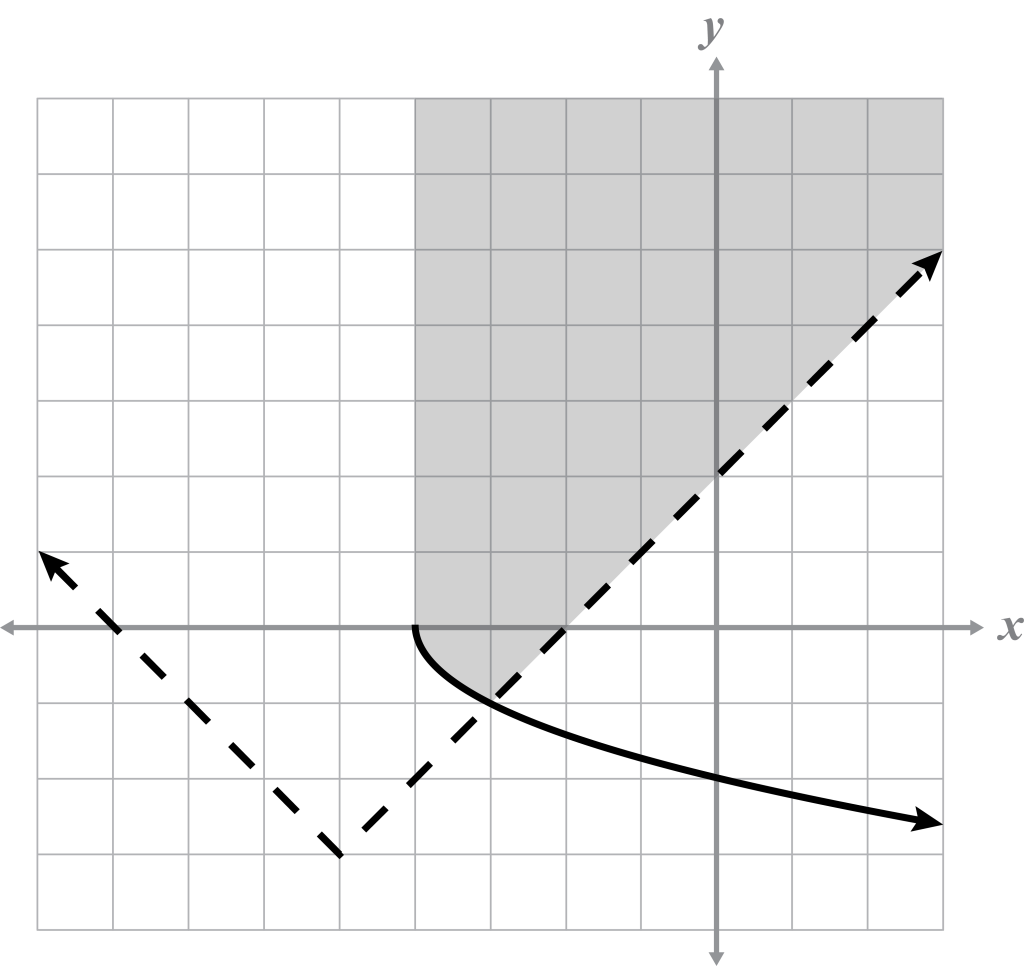
Note
- The graph represents a system of inequalities.
- The absolute value inequality symbol is incorrect.
- The negative sign belongs outside of the radical for this graph.
B
- Write the conic section equation
in standard form.
Note
A, C) The values of h, k, a, and b are substituted into the standard form incorrectly.
- This option is an equation of an ellipse, and the given equation is a hyperbola.
B
- Solve:
-
–12
-
–12, 1
-
1
-
–1, 12
Note
A, C) These options are partially correct, but neither includes the entire solution.
- This option is not factored correctly because the signs are switched.
A
- Name the range for the inverse of the graph in interval notation.
-
Given point (1, 2)
Inverse (2, 1)
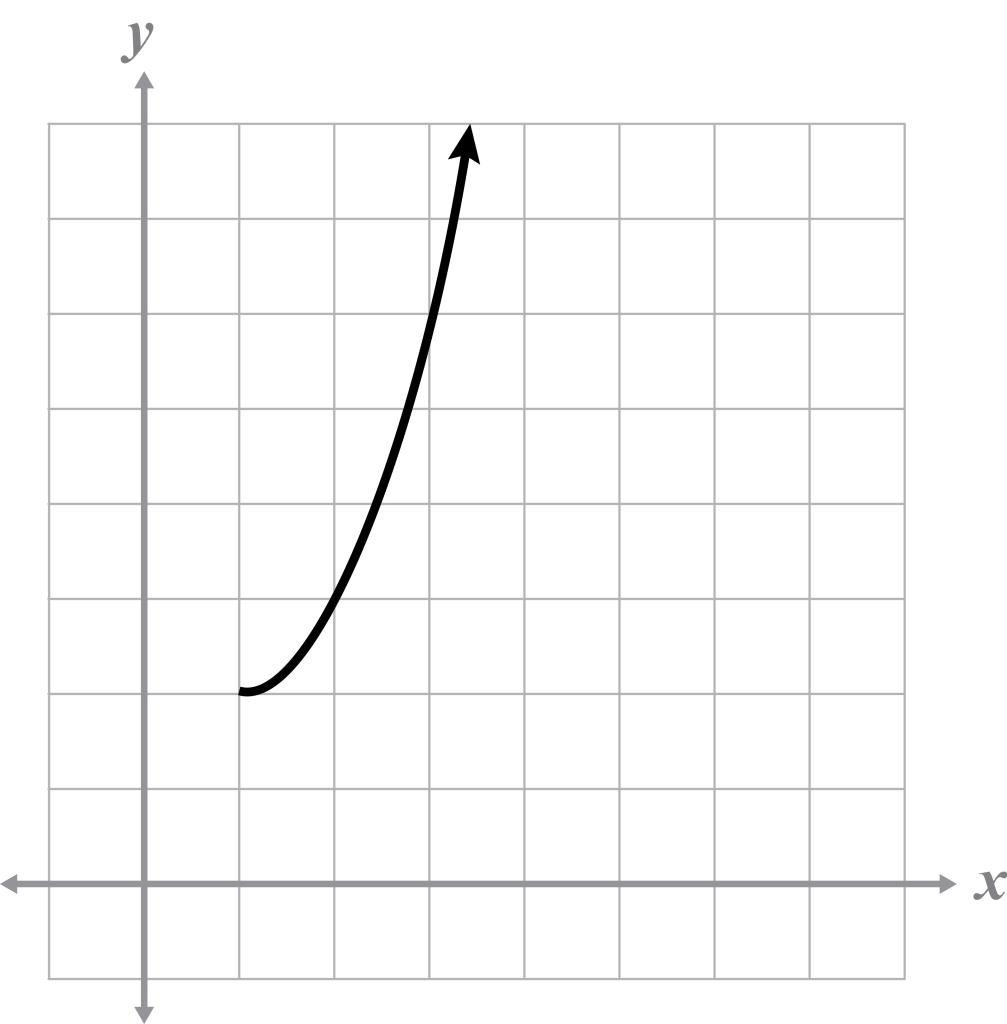
Note
- This option is the range of the given graph, or the domain of the inverse.
C, D) Because the graph starts at a point, a left parenthesis is not correct notation.
D
- The area of a rectangle is square yards. The length of the rectangle is yards. Find the width of the rectangle.
Note
- The negative symbol is dropped when multiplying by the conjugate.
- The negative is not distributed to all terms.
- The numerator is not multiplied by the conjugate.
D
- Determine the value of if
-
P(–2) = –28
-
P(–2) = 80
-
P(–2) = 88
-
P(–2) = –4
Note
A, B) The third degree term is missing when synthetic division is used.
B, C) Two is used in synthetic division rather than –2.
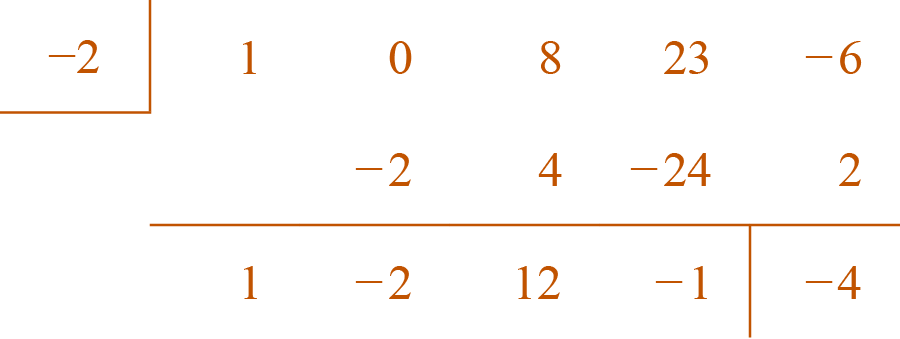
C
- Determine the equation of the conic section from the given graph.
-
Center (2, –2)
r = 5
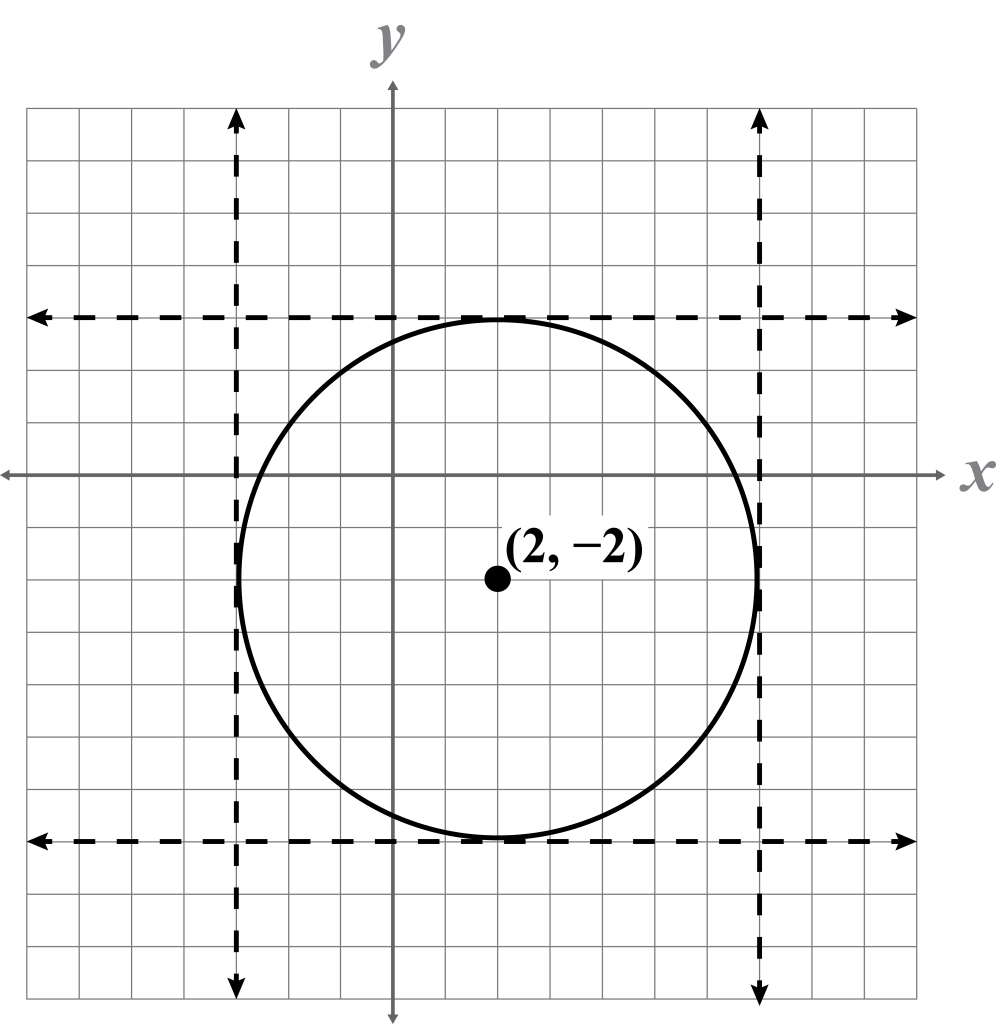
Note
A, B) , not 10
B, D) The values of h and k have the incorrect signs.
B
- The sum of the reciprocals of two numbers is equal to . The difference between the two numbers is 4. Determine the solution if all values are whole numbers.
-
1, 6
-
2, 6
-
–3, 1
-
0, 4
Note
- These options are the values of x when the equation is factored, but together they do not make the equation true.
- This option is a solution, but –1 is not a natural number.
- These options are the domain restrictions.
C
- Simplify:
Note
- This option shows the coefficient multiplied by one-half.
- The denominator is missing from the expression.
- The absolute value bars are missing around the terms with odd exponents.
B
- Use the objective function to determine the maximum for the graphed system.
-
(0, 0)
-
(0, 6)
-
(3, 4)
-
(7, 0)
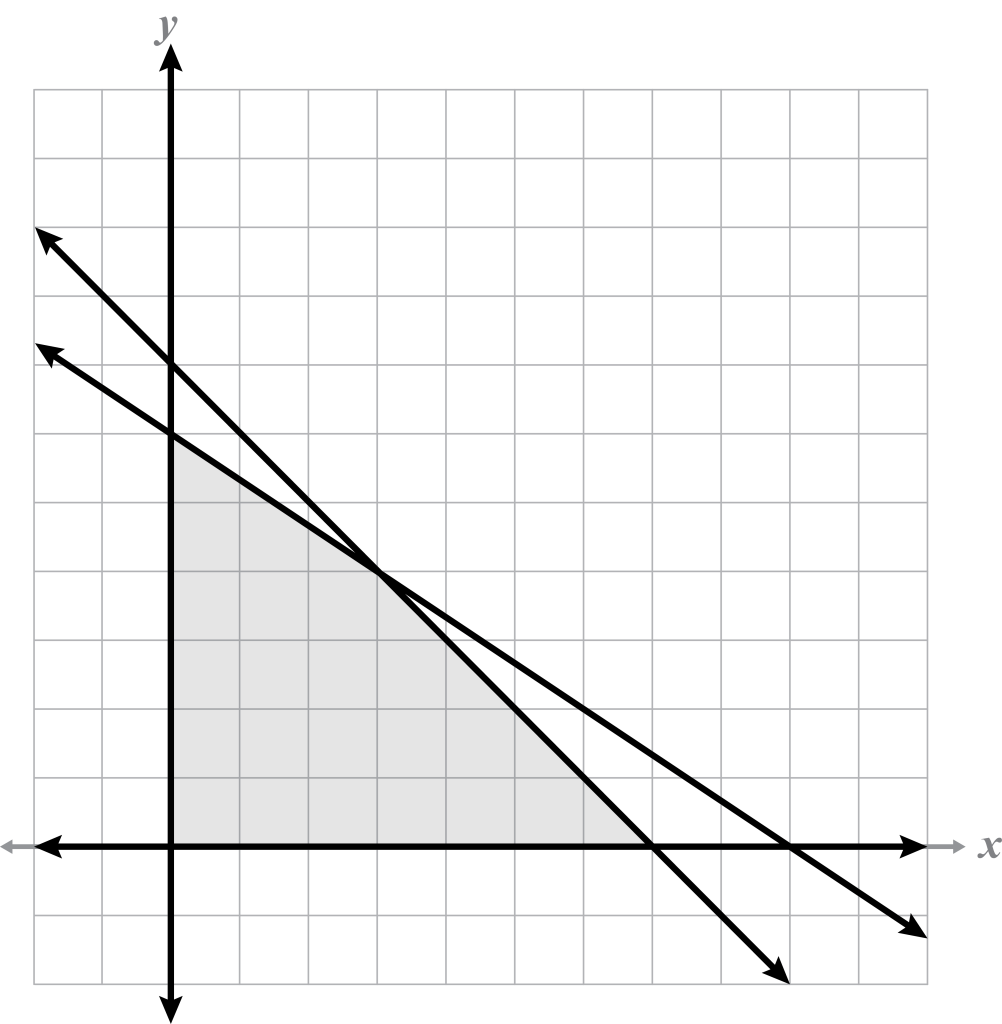
Note
A, C, D) These options are vertices of the system but do not result in the maximum.
A
- Determine the midpoint between the centers of the conic sections:
-
(0.45, 8.4)
-
(2.95, 8.4)
-
(–0.45, –8.4)
-
(8, 7.5)
Note
- The value 2.5 was used instead of –2.5.
- The signs for the centers of both conics are reversed.
- The values of a and b were used as center points.
A
- Factor:
Note
B, C) These options have an error in factoring the difference of cubes.
- This option is the sum of cubes.
C
- Select the rational function with a domain of all real numbers except 3 and a range of all real numbers except –2.
-
Domain: x ≠ 3
Range: y ≠ –2
Note
- Domain: x ≠ –3, Range: y ≠ –2
- Domain: x ≠ 0, Range: y ≠ 2
- Domain: x ≠ 3, Range: y ≠ 2
C
- Solve under the set of complex numbers.
-
no solution
Note
A, B) These options are missing part of the solution.
- A solution is possible because you are working with complex numbers.
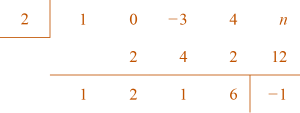
A
- Calculate the value of n when and
-
–13
-
8
-
–5
-
11
Note
- This option is the value of n for
- This option occurs when the coefficient 0 is not placed in the problem.
- This option occurs when 12 and –1 are added.
Select all that apply.
- Select the expressions that, when multiplied, will form a polynomial identity to .
Note
The first and last options are expressions in the given problem, but the product does not result in a polynomial identity with the given expression.
- The process of completing the square can be used to write the equations for ____ in standard form.
-
circle
-
ellipse
-
parabola
-
rational
Note
A rational equation uses long division to write the equation in standard form.
- Name all possible roots for the equation: .
Note
The second option did not factor out the GCF from the first set of parentheses.
The last option subtracted 4 and 16 inside of the radical rather than adding.
- Select all vertices for the solution to the system of inequalities.
-
(2, 3)
-
(0, 9)
-
(3, 0)
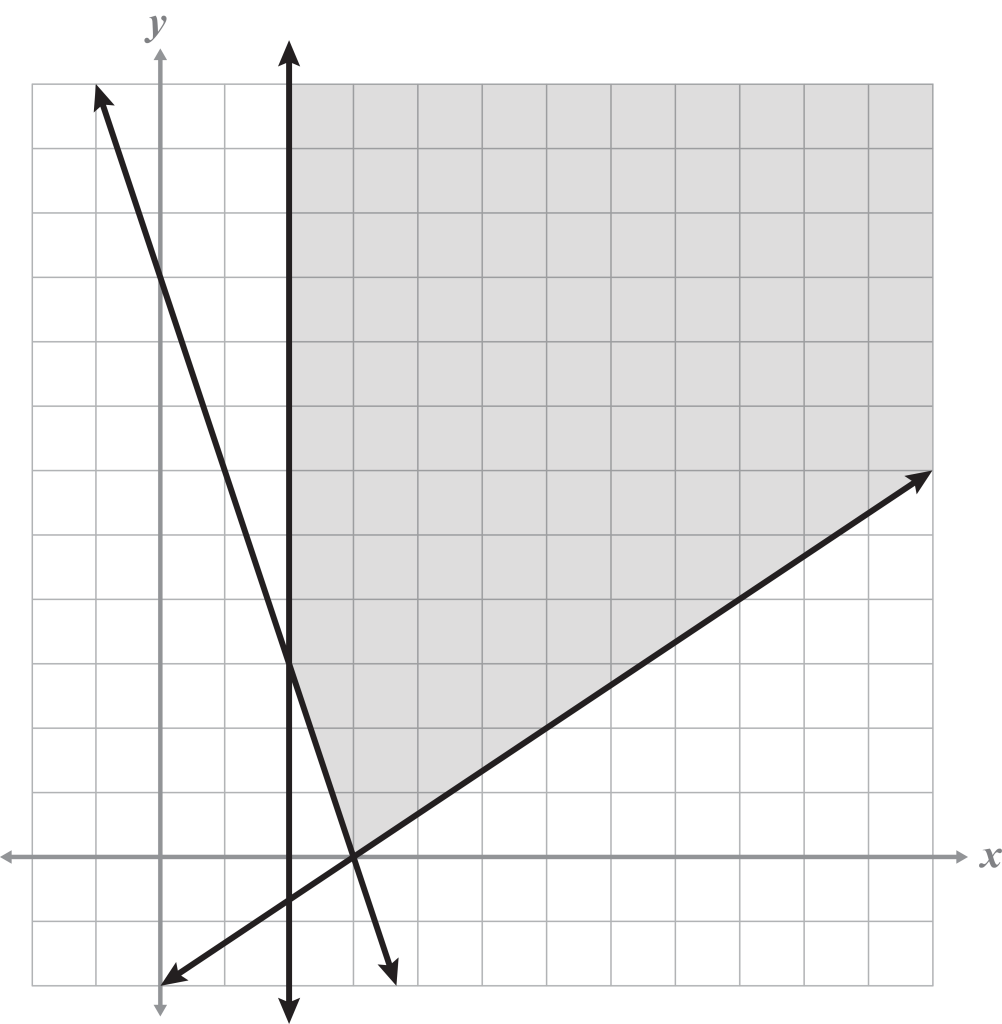
Note
The remaining ordered pairs are intersection points but not part of the region that represents the solution.