
Mastery Check
Show What You Know
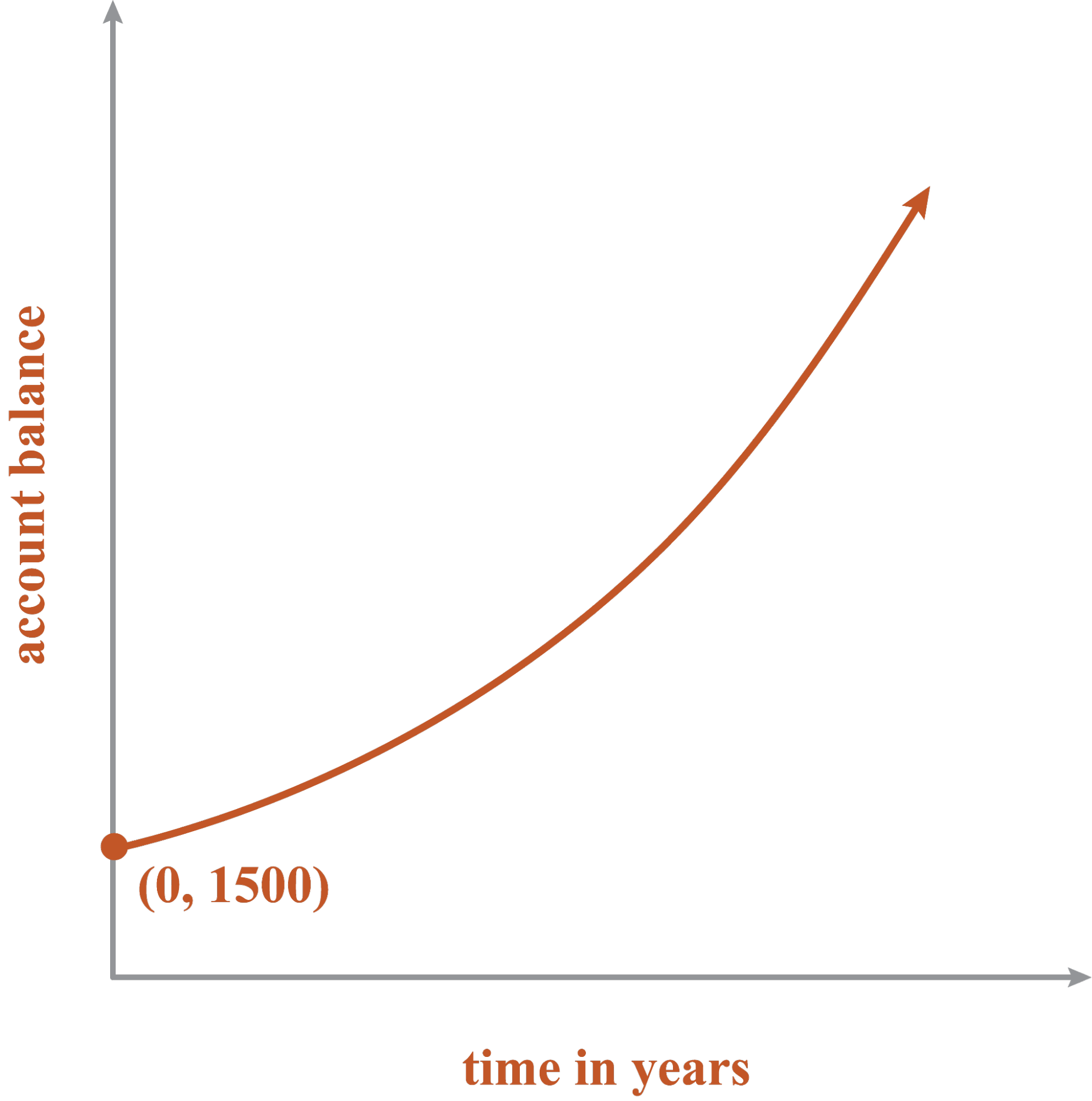
Sara invests $1500 into a savings account earning 7% compound interest every quarter and a second account that compounds continuously. Determine how long it would take for each account to reach $3000.
P: Initial amount
r: Annual interest rate
n: Compounding number
t: Time in years
A: Final amount with interest
P: Initial amount
r: Rate
t: Time
y: Final amount
Determine the time it will take to earn $3000 for each scenario.
- Quarterly
- Continuously
Note
Q: If given the option, which formula would you choose when investing your own money? Explain.
A: Continuously compounding because the investment grows more quickly.
- Sketch a graph to approximate the savings account for continuous growth. Include labels on the graph.
Note
To extend your learning about compound and continuous growth, you can change the time the money is invested.
Say What You Know
In your own words, talk about what you have learned using the objectives for this lesson and your work on this page.
Note
Restate the objectives of the lesson in your own words. If you are unable to restate the lesson objectives, go back and reread the objectives and then explain them.
- Apply the properties of exponents and logarithms.
- Apply exponential and logarithmic formulas to real-life scenarios.