
Practice 2 Solutions
- Explain if it is possible for any polynomial to have an odd number of non-real, complex roots.
Because non-real, complex roots come in conjugate pairs it is not possible to have an odd-number.
- Describe what is happening to the x- and y-values when the function decreases across an interval.
As the x-values increase, the y-values decrease.
- Explain why it is important to identify the turning points on the graph of a polynomial function.
Turning points are used to find the relative minimum and maximum across an interval. Turning points are also used to identify increasing and decreasing intervals.
- Describe the Fundamental Theorem of Algebra.
The Fundamental Theorem of Algebra says that an degree polynomial will have n complex roots.
Sketch a graph that matches the given information.
- A seventh degree polynomial function where , with five real roots
Sample sketches:
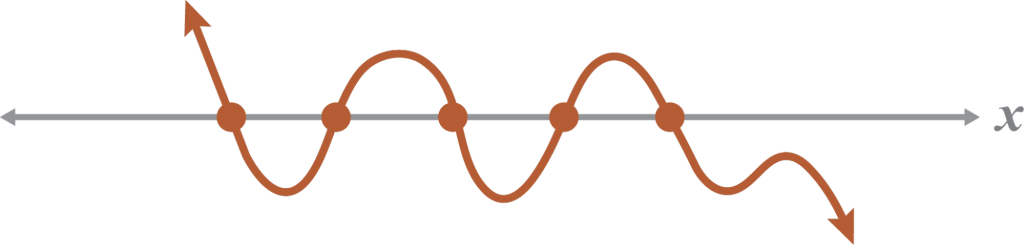
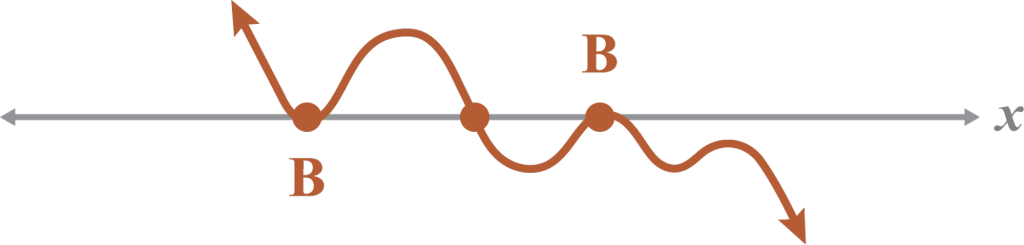

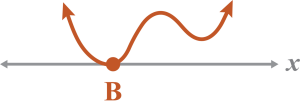
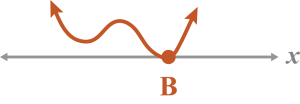
- A fourth degree polynomial function where and a real root with a multiplicity of two
Sample sketches:
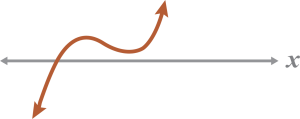
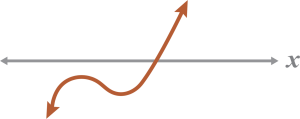
- A third degree polynomial with a positive leading coefficient, and a non-real, complex conjugate pair
Sample sketches:
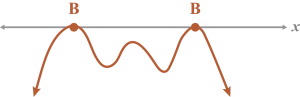
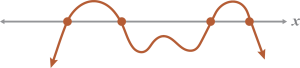
- A sixth degree polynomial with a negative leading coefficient, and four real roots
Sample sketches:
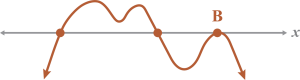
For problems 9–10:
-
- Sketch a graph that matches the equation.
- Name all real and non-real, complex roots.
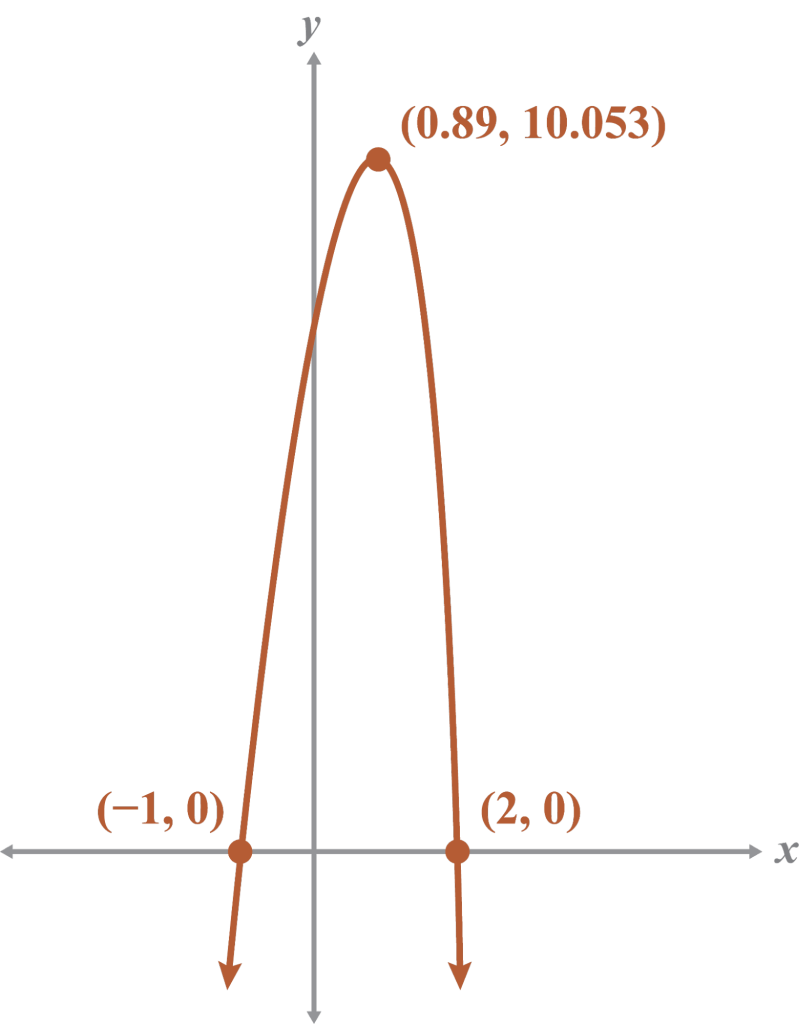
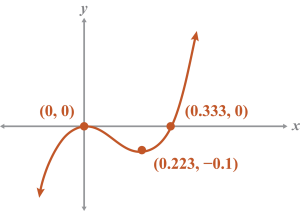
For problems 11–14:
-
- Sketch the equation. Include roots and turning points.
- Name the interval(s) in which the function is increasing and decreasing.
- Name the relative minimum and maximum across the given interval.
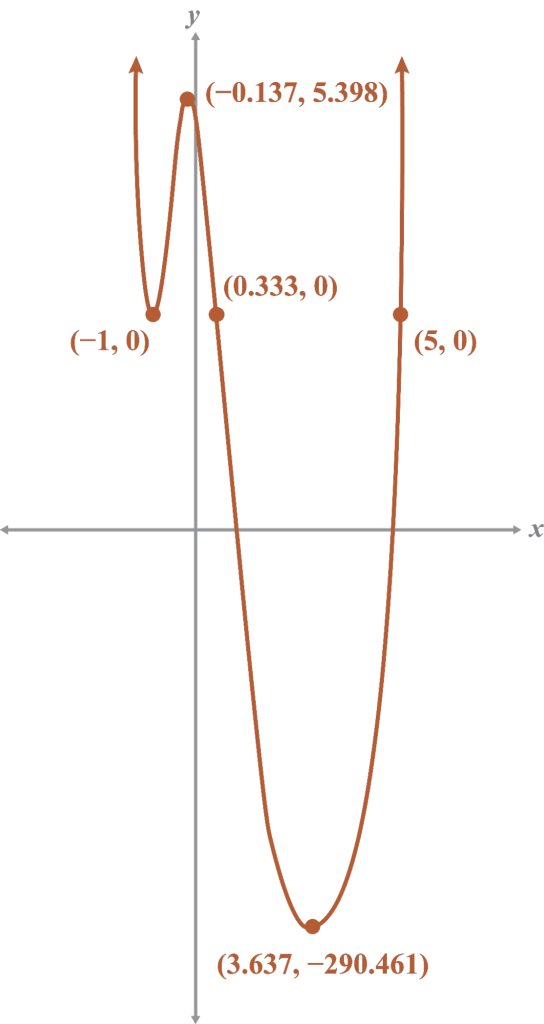
- Increasing intervals: (–1, –0.137), (3.637, +∞)
Decreasing intervals: (–∞, –1), (–0.137, 3.637) - Relative minimum: (–1, 0)
Relative maximum: (–0.137, 5.398)
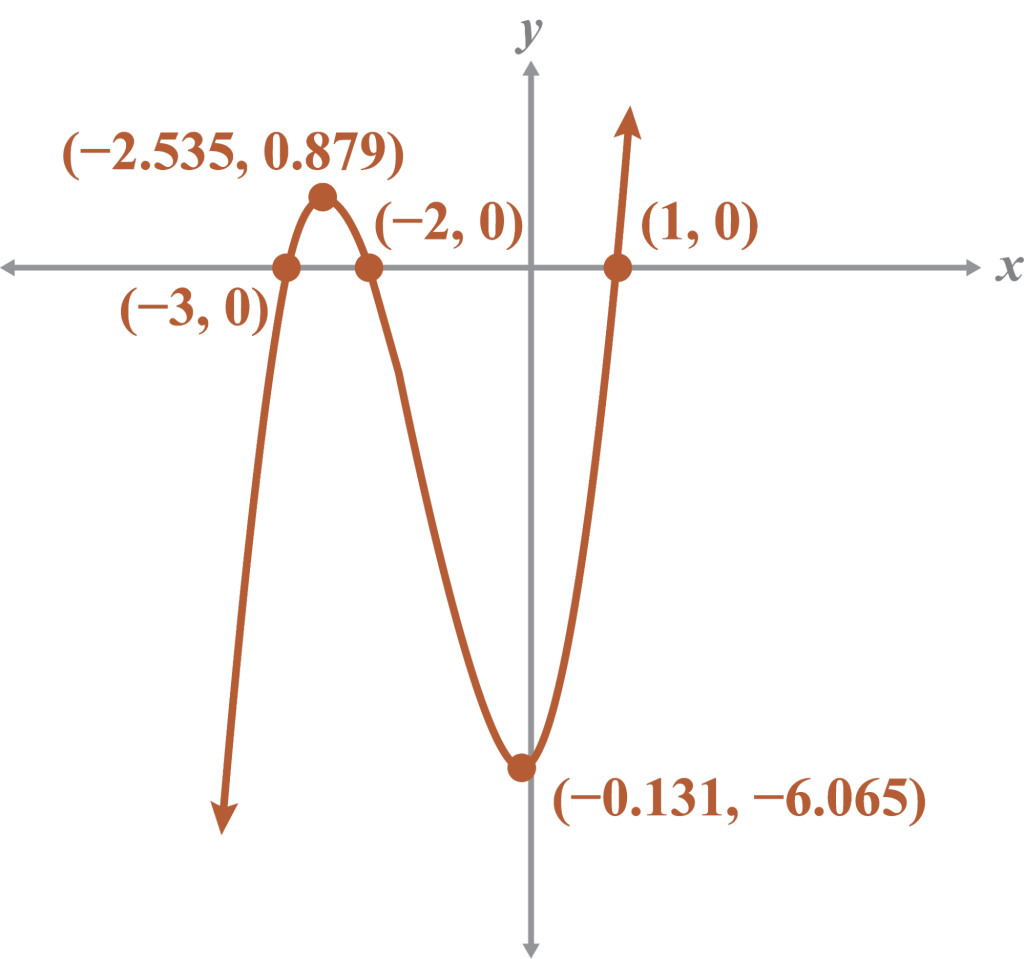
- Increasing intervals: (–∞, –2.535), (–0.131, +∞)
Decreasing intervals: (–2.535, –0.131) - Relative minimum: (–0.131, –6.065)
Relative maximum: none
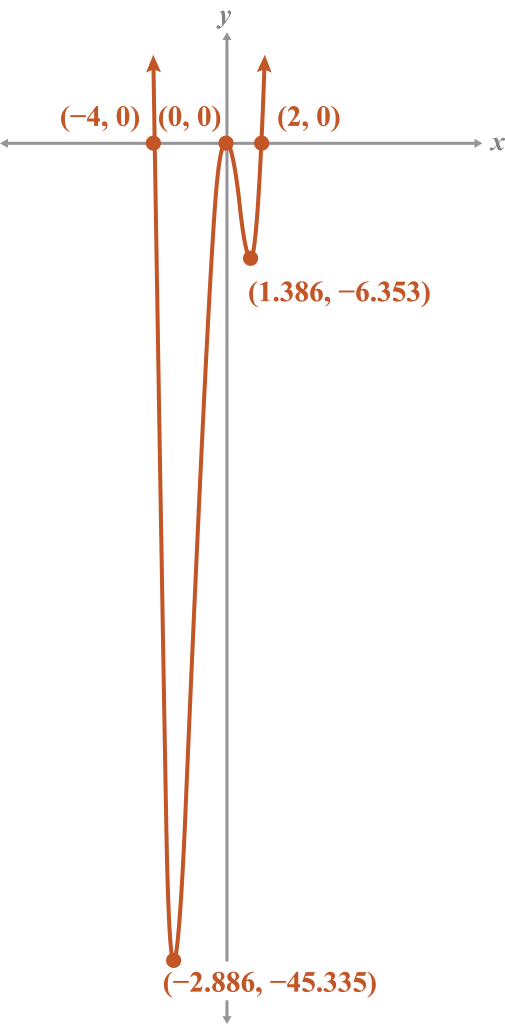
- Increasing intervals: (–2.886, 0), (1.386, +∞)
Decreasing intervals: (–∞, –2.886), (0, 1.386) - Relative minimum: (–2.886, –45.335)
Relative maximum: (0, 0)
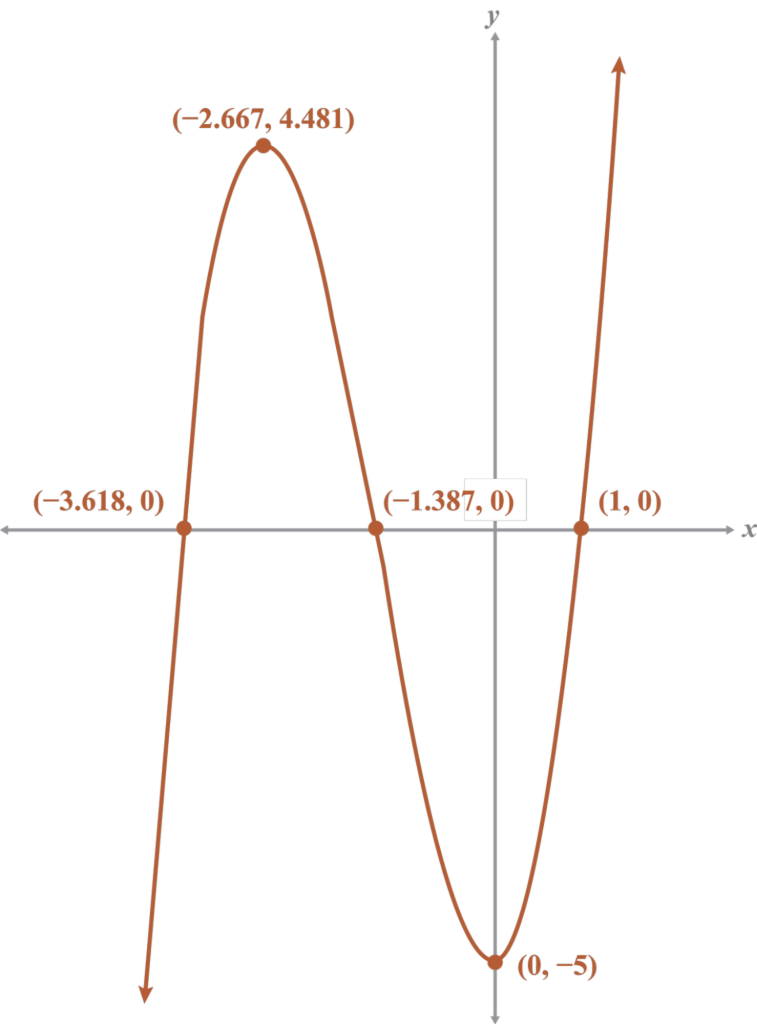
- Increasing intervals: (–∞, –2.667), (0, +∞)
Decreasing intervals: (–2.667, 0) - Relative minimum: (0, –5)
Relative maximum: (–2.667, 4.481)