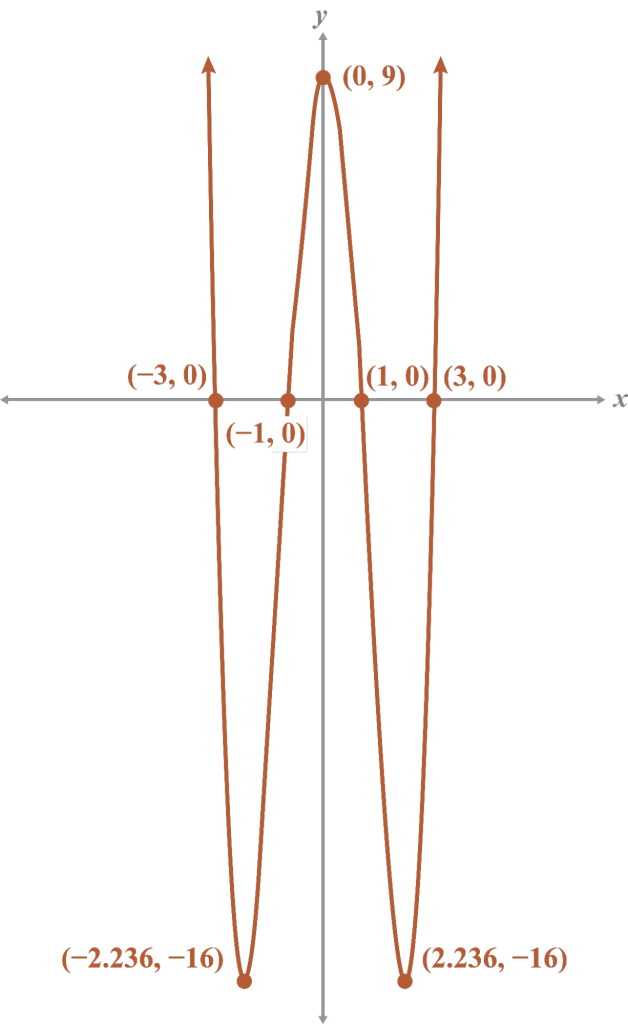
Practice 1 Solutions
- Explain the number of complex roots that can occur for a ninth degree polynomial.
A ninth degree polynomial will have nine complex roots according to the Fundamental Theorem of Algebra.
- Explain if it is possible for a tenth degree polynomial to have three non-real, complex roots.
It is not possible to have three non-real, complex roots because they occur in conjugate pairs.
Sketch a graph that matches the given information.
Note
Remember a sketch does not reflect the exact scale of a graph. It is used to give a general idea of what is happening at key points on the graph.
- A fifth degree polynomial function with a positive leading coefficient, with a single and a double real root.
Sample sketches:
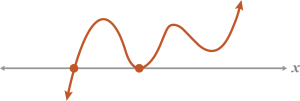
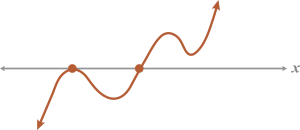
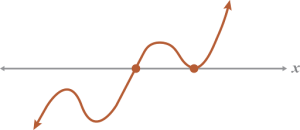
- A sixth degree polynomial function where , and no real roots
Sample sketches:
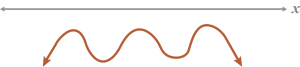
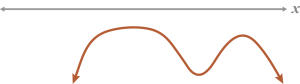
- A fourth degree polynomial function where , and one real root
non-real, complex
This is not possible because non-real, complex roots occur in conjugate pairs.
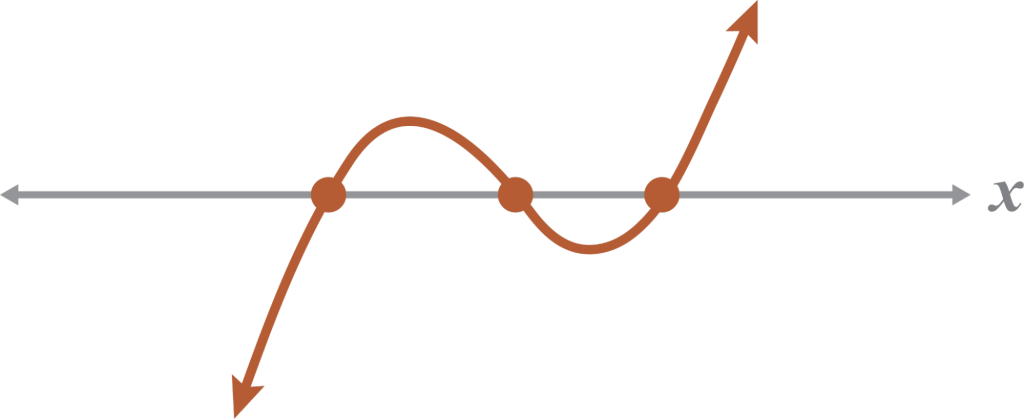
- A third degree polynomial function with a positive leading coefficient, with three real roots
Sample sketch:
- What is the maximum number of turning points that can occur in a polynomial graph?
When n = the degree of the polynomial, represents the maximum number of turning points.
- Explain why a polynomial graph will not always have the maximum number of turning points.
A polynomial graph may not have the maximum number of turning points when a root has a multiplicity greater than one.
Note
Remember, a polynomial with degree two or higher will have at least one turning point, even with multiplicities. (i.e., The parent function of a quadratic, x2.)
For problems 9–12:
-
- Sketch the equation. Include roots and turning points.
- Name the interval(s) in which the function is increasing and decreasing.
- Name the relative minimum and maximum across the given interval.
Note
Students should use technology to help create a sketch of the graph and include the roots and turning points.
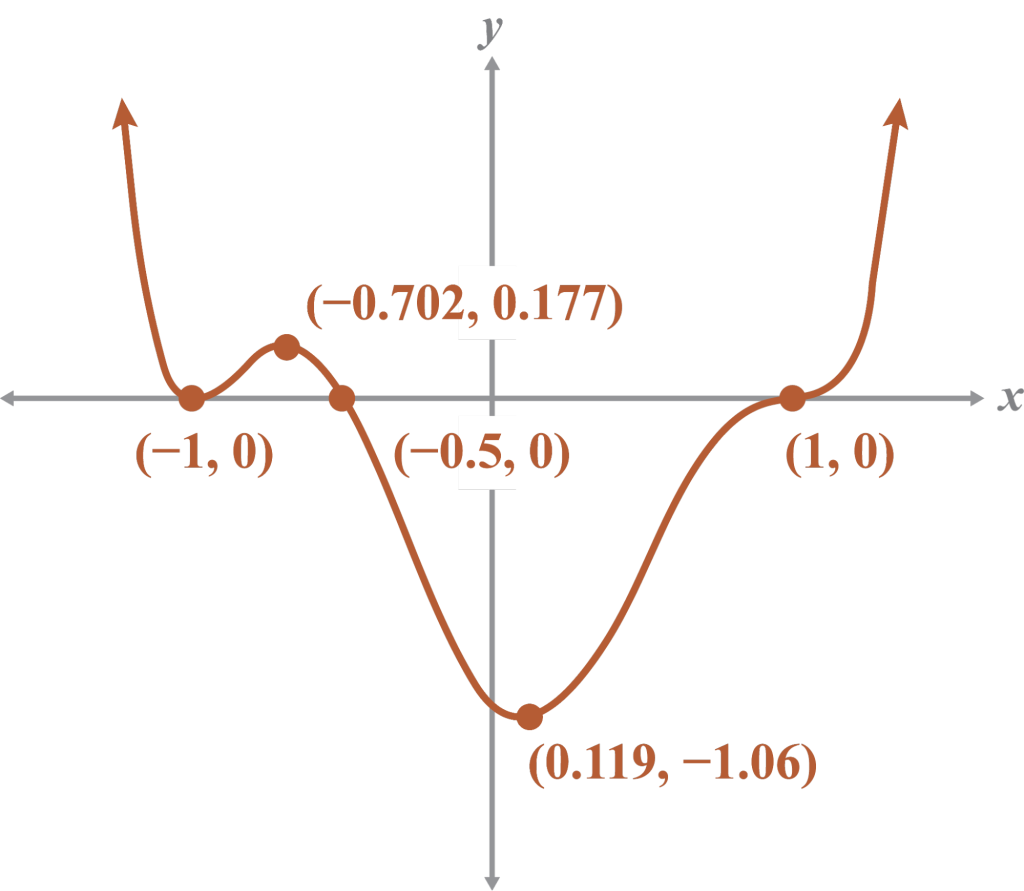
- Increasing intervals: (–1, –0.702), (0.119, 1), (1, +∞)
Decreasing intervals: (–∞, –1), (–0.702, 0.119) - Relative minimum: (0.119, –1.06)
Relative maximum: (–0.702, 0.177)
Note
You could also write the single interval since the graph continues toward positive infinity over the entire interval.
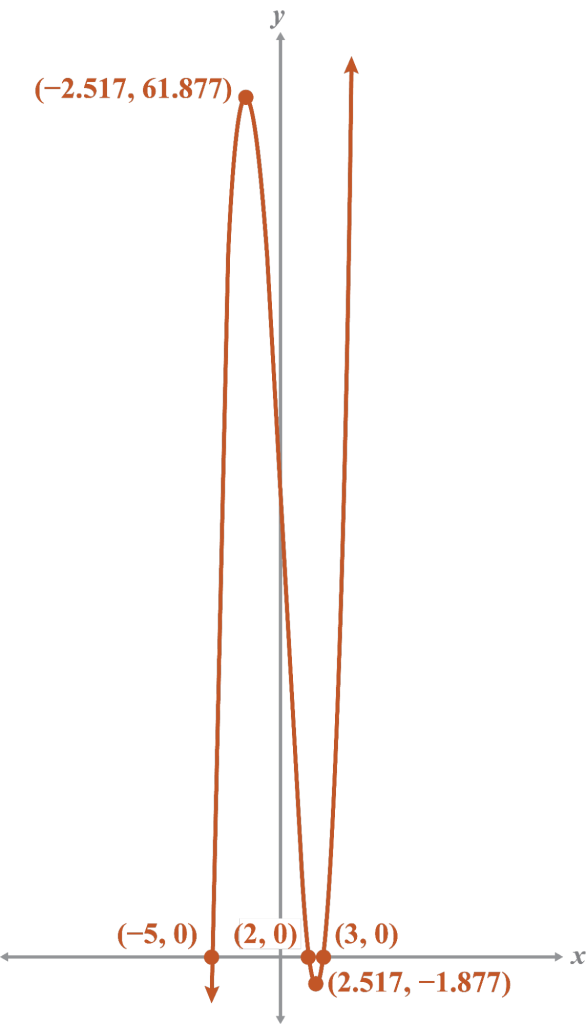
- Increasing intervals: (–∞, –2.517), (2.517, +∞)
Decreasing intervals: (–2.517, 2.517) - Relative minimum: none
Relative maximum: (–2.517, 61.877)
Note
There is no relative minimum over the given interval. However, if the interval was extended to , the relative minimum would be .
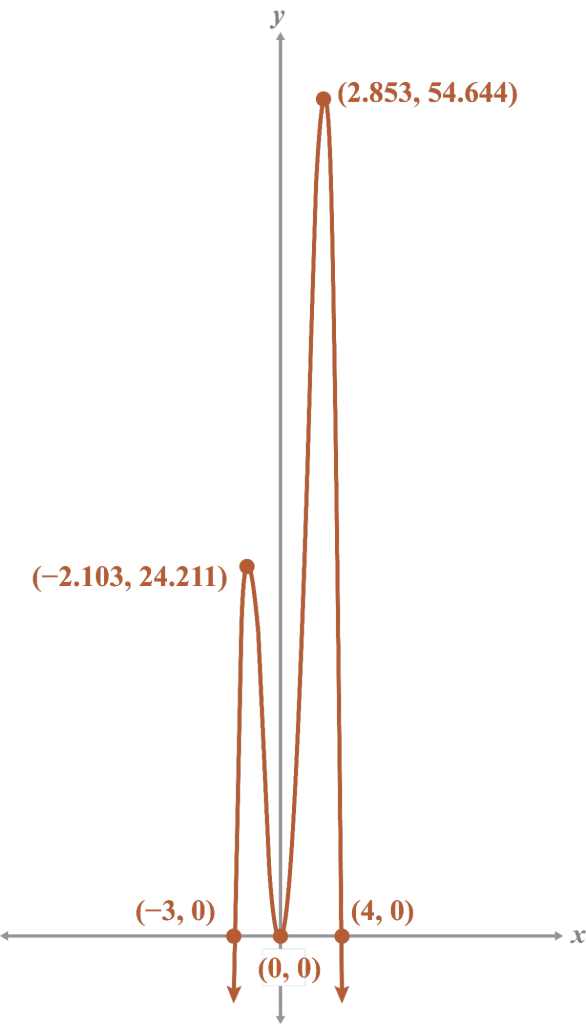
- Increasing intervals: (–∞, –2.103), (0, 2.853)
Decreasing intervals: (–2.103, 0), (2.853, +∞) - Relative minimum: (0, 0)
Relative maximum: (2.853, 54.644)
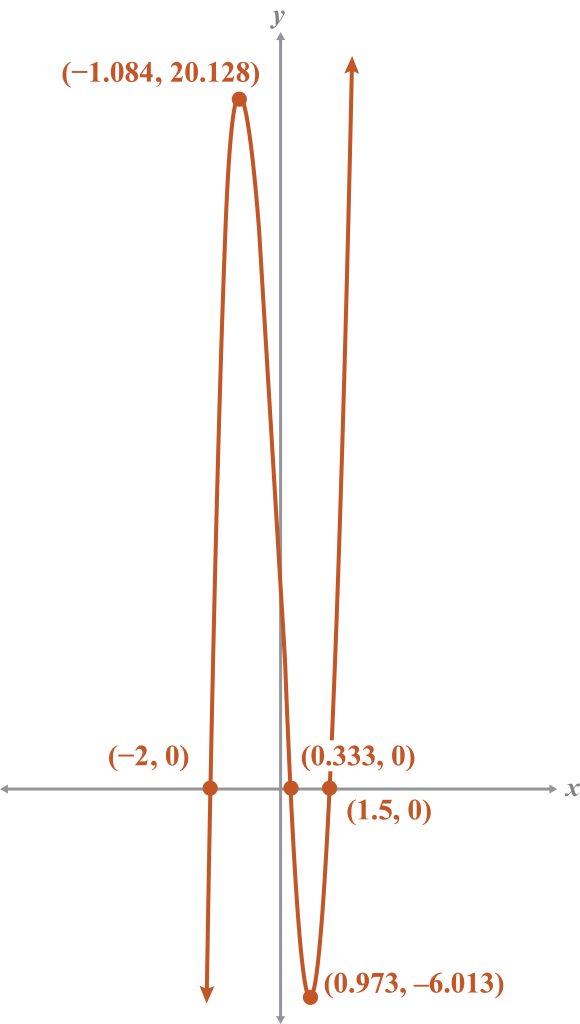
- Increasing intervals: (–∞, –1.084), (0.973, +∞)
Decreasing intervals: (–1.084, 0.973) - Relative minimum: (0.973, –6.013)
Relative maximum: (–1.084, 20.128)
For problems 13–14:
-
- Sketch a graph that matches the equation.
- Name all real and non-real, complex roots.
Note
This problem has a third degree polynomial with one real root. You need to solve for the non-real, complex roots.
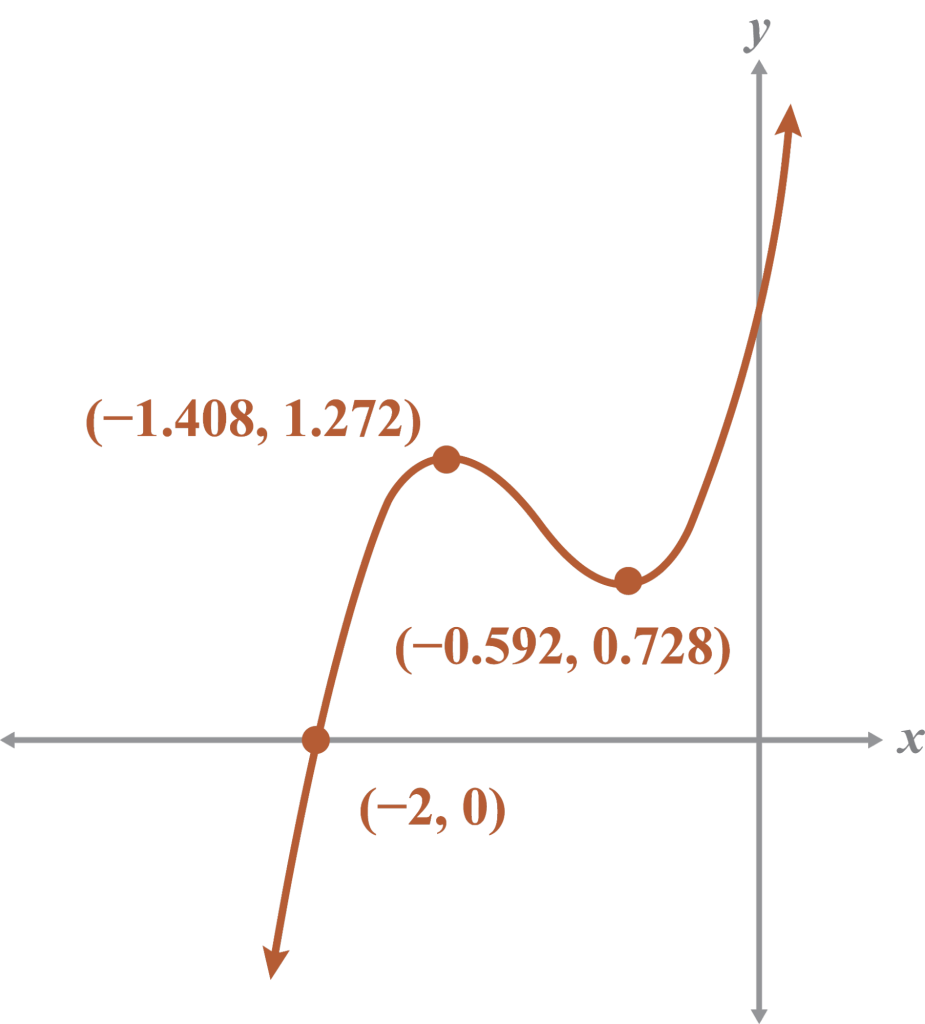
Note
This problem has a fourth degree polynomial with all real roots that can be determined from the graph using technology or by factoring the given function.