
Mastery Check Solutions
Show What You Know
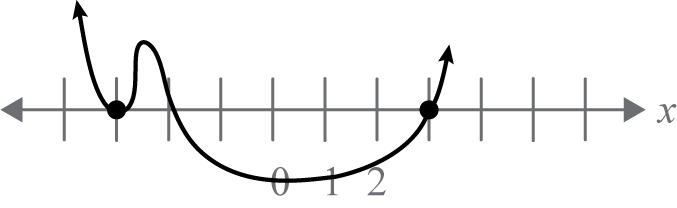
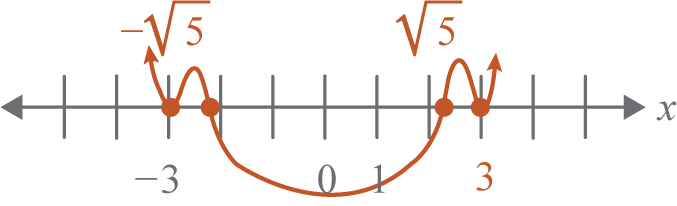
- A student was given the polynomial function h(x) and asked to sketch the roots. Explain why only some of the roots are represented. (Note: This function only contains real roots.)
Sample: There is a double root (multiplicity 2) at –3 and a single root close to –2 and 2, but because the degree is 6, there should be two more roots indicated on the graph that this student needs to add.
Student sketch:
Note
Recall that when there is a bounce on a graph, the multiplicity is two.
- Determine all roots of h(x).
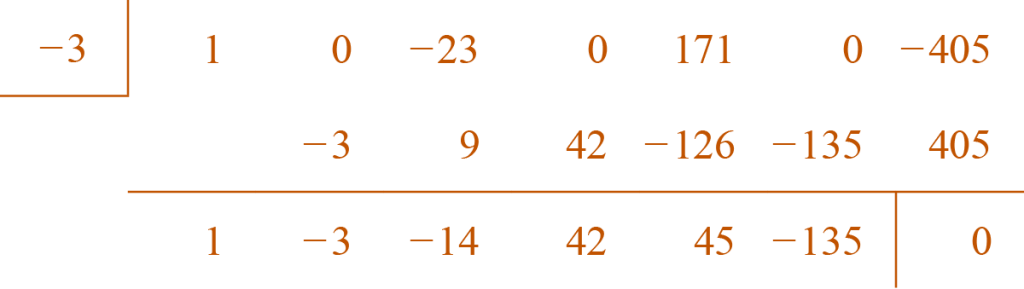
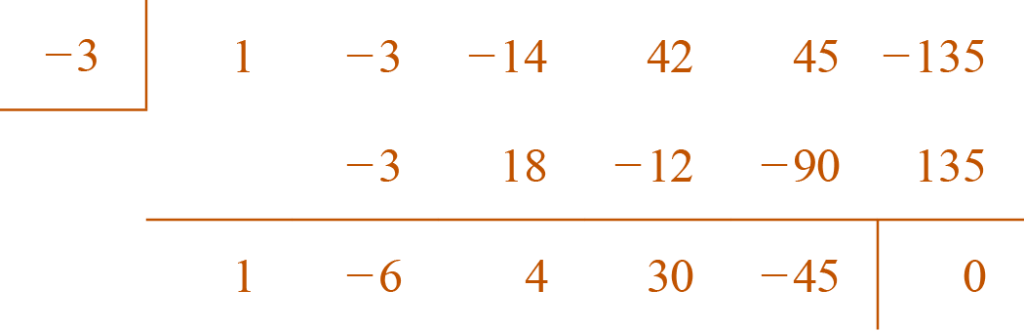
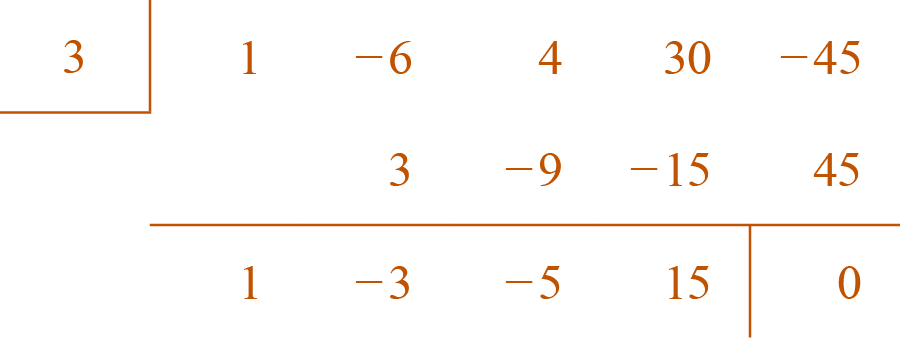
The roots of h(x) are –3, –3, –2.24, 2.24, 3, 3.
Note
You can use the incomplete sketch and the double root at –3 to begin synthetic division. Technology can be used to complete this problem.
- Write h(x) as the product of its factors using only rational numbers. Explain the multiplicities.
There is a double root at –3 and a double root at 3. There is a single multiplicity at
Note
A coefficient of “a” is not needed for this product of factors because h(x) is given.
- Sketch the complete graph of h(x).
Name the end behavior.
Say What You Know
In your own words, talk about what you have learned using the objectives for this lesson and your work on this page.
Note
Restate the objectives of the lesson in your own words. If you are unable to restate the lesson objectives, go back and reread the objectives and then explain them.
- State the possible number of real zeros that exist from the graph of a polynomial function.
- Sketch a graph using the roots and leading coefficient also considering the multiplicity (exact x-axis values only).
- Determine all roots of a polynomial expression algebraically, expressed as a product of factors or solutions.
- Determine multiplicities in a polynomial function and the number of occurrences.