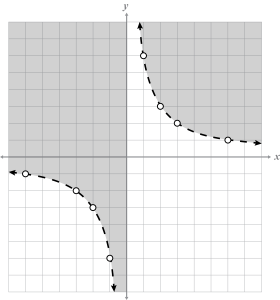
Practice 1 Solutions
Note
An online or physical graphing calculator can be used to confirm the graphs.
It may also be helpful to verbalize the transformations (a, h, and k) from the parent graph that occur.
- Write the inequality for the given graph.
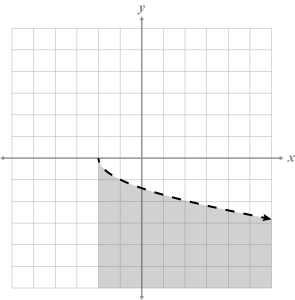
- Determine if are solutions to the inequality in problem 1.
Sample: D is a solution to the inequality. A, B, and C are not solutions.
Note
You can plot points A–D to see where they lie in relationship to the shaded region of the graph.
- Graph the inequality.
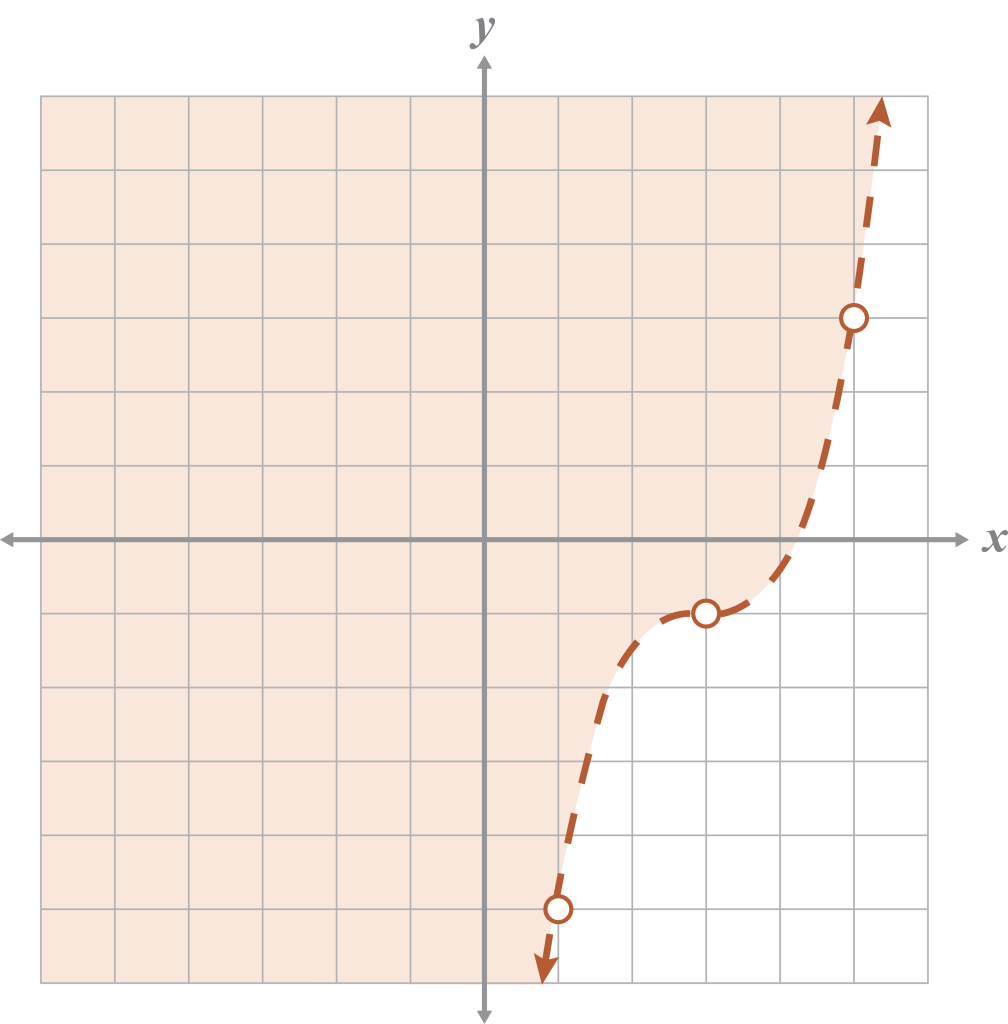
Note
Q: What are the values of a, h, and k for the graph?
A:
- Write the system of inequalities for the given graph.
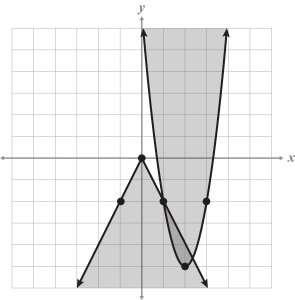
- How would the solution of the system of inequalities in problem 4 change if the absolute value graph was translated left 4 spaces?
Sample: The system would have no solution because the shaded regions would no longer overlap.
- Graph the system of inequalities.

- In which quadrant(s) would the solutions occur if the inequality on the absolute value in problem 6 was flipped?
Quadrants I, II
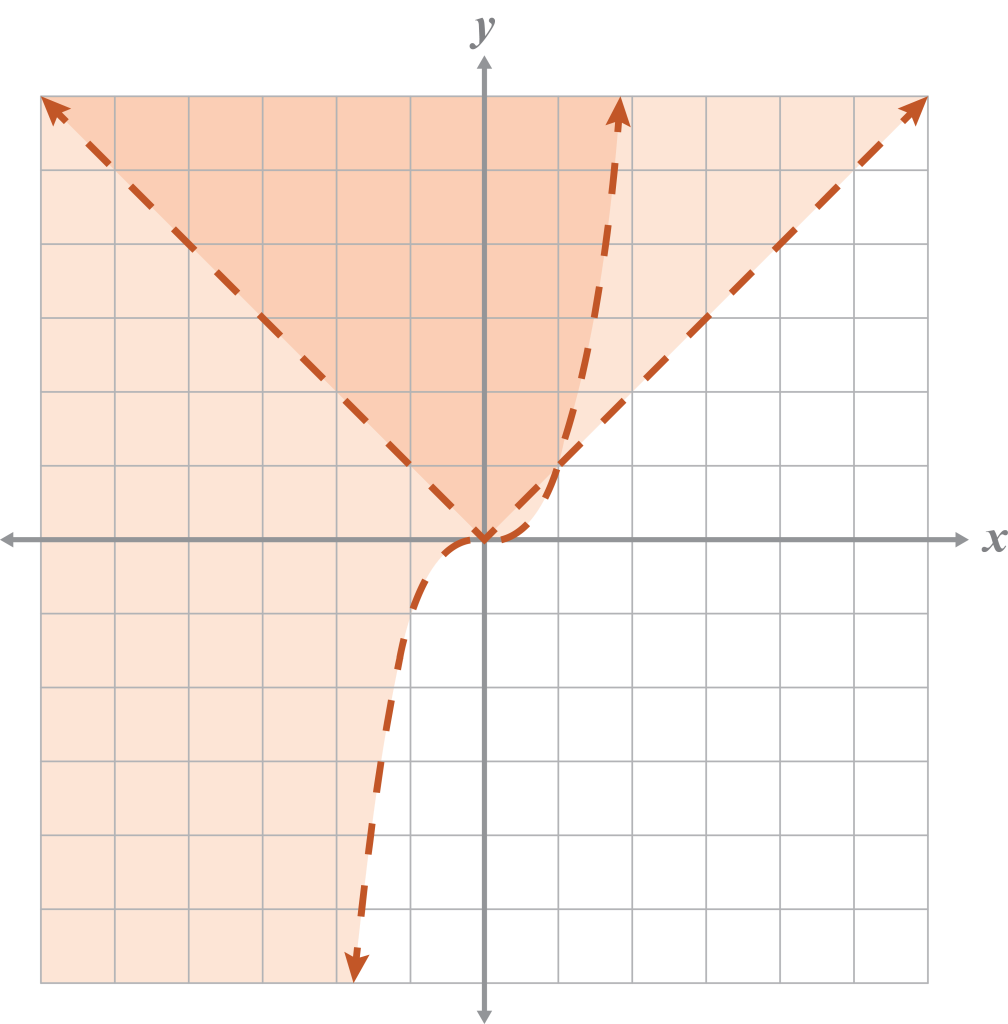
Note
Recall the quadrants of the coordinate plane are labeled in a counter-clockwise order, starting where x- and y-values are positive.
For problems 8–11, use these inequalities:
- Graph the inequalities and determine the solutions.
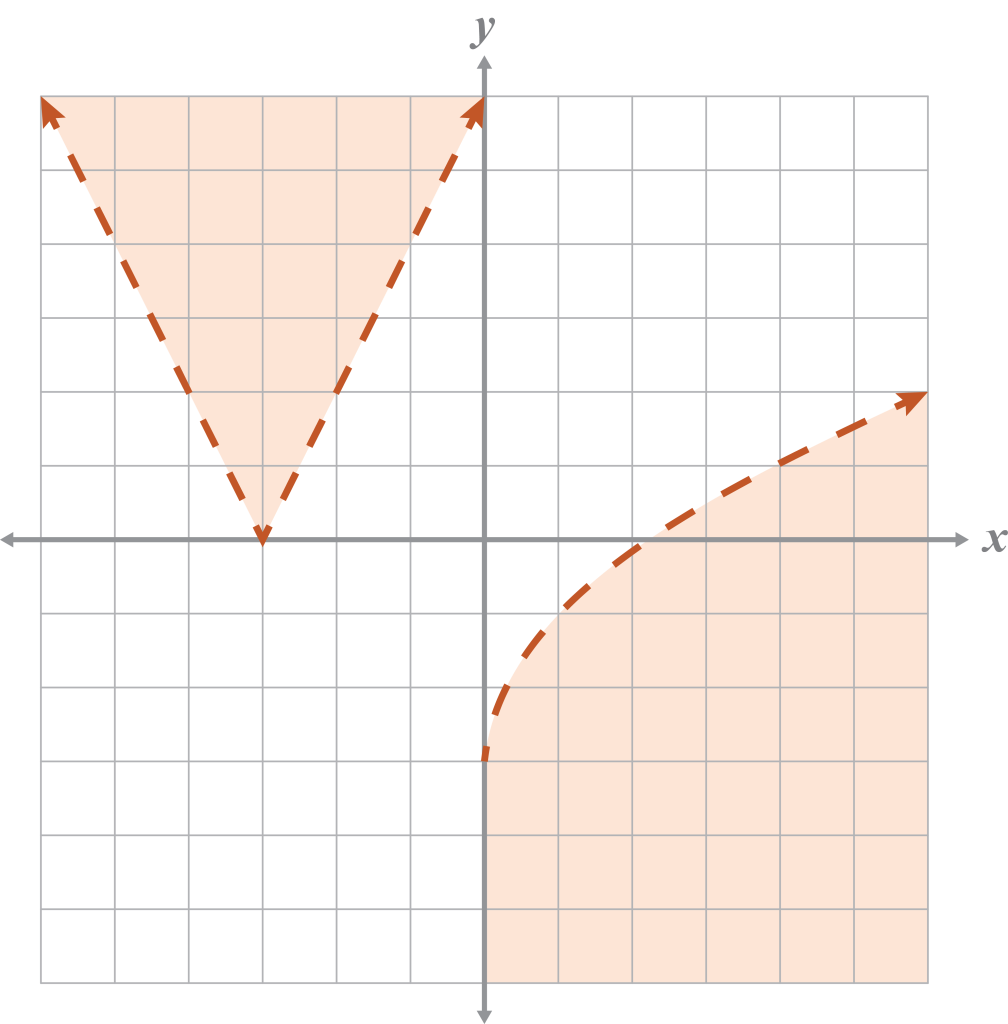
No solution
- Name any asymptotes in the system. Explain why this occurs.
Sample: There is a vertical asymptote at because the radicand of the square root inequality, the value of x, must be greater than or equal to zero.
- Reference problem 8 to write a transformed system of inequalities and graph.
Translate the absolute value inequality right 2 spaces and down 5 spaces from its current location. Reflect the square root inequality across the y-axis.
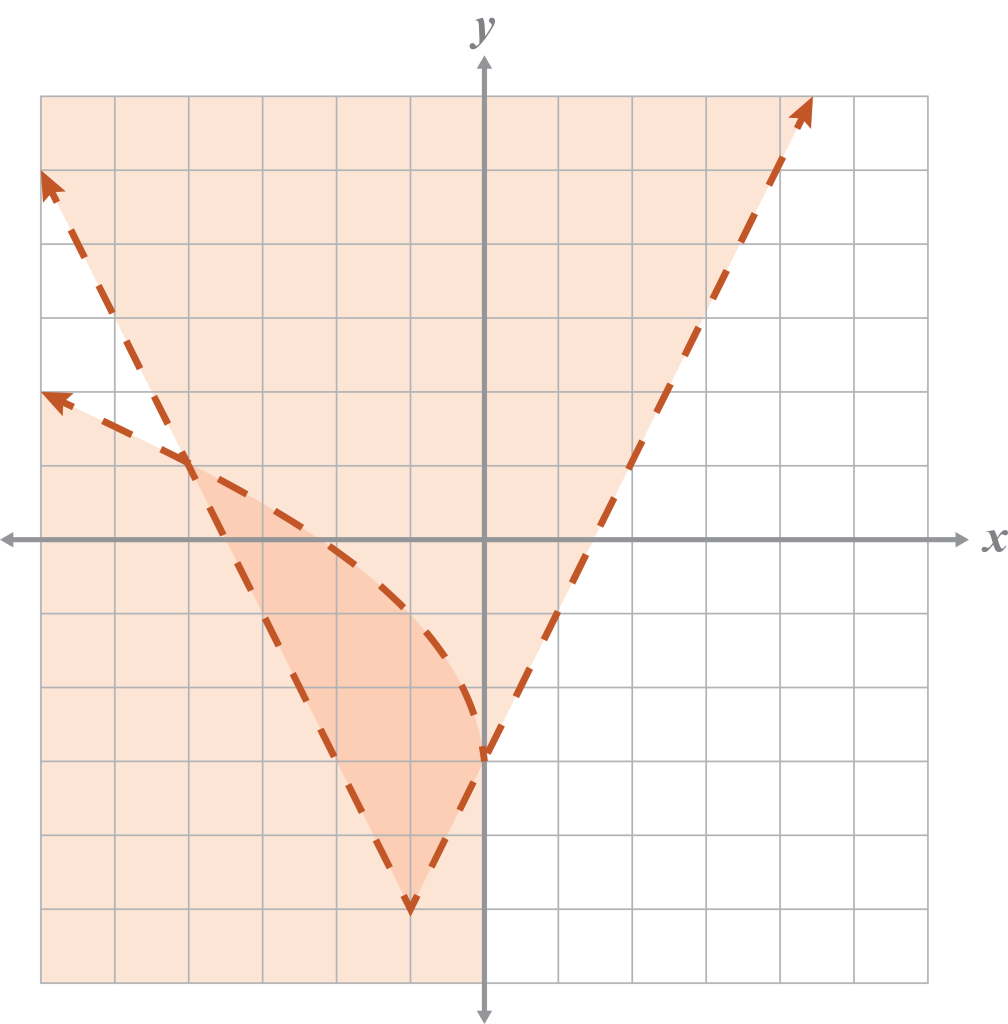
- Explain why the point is or is not a solution to the translated graph.
Sample: The point is an intersection point, but it is not a solution because it lies on the dashed curve of both inequalities. Any point on the dashed curve is excluded from the solution.
- Write the inequality for the given graph.