
Domain, Range, and End Behavior of Transformations Solutions
Example 4
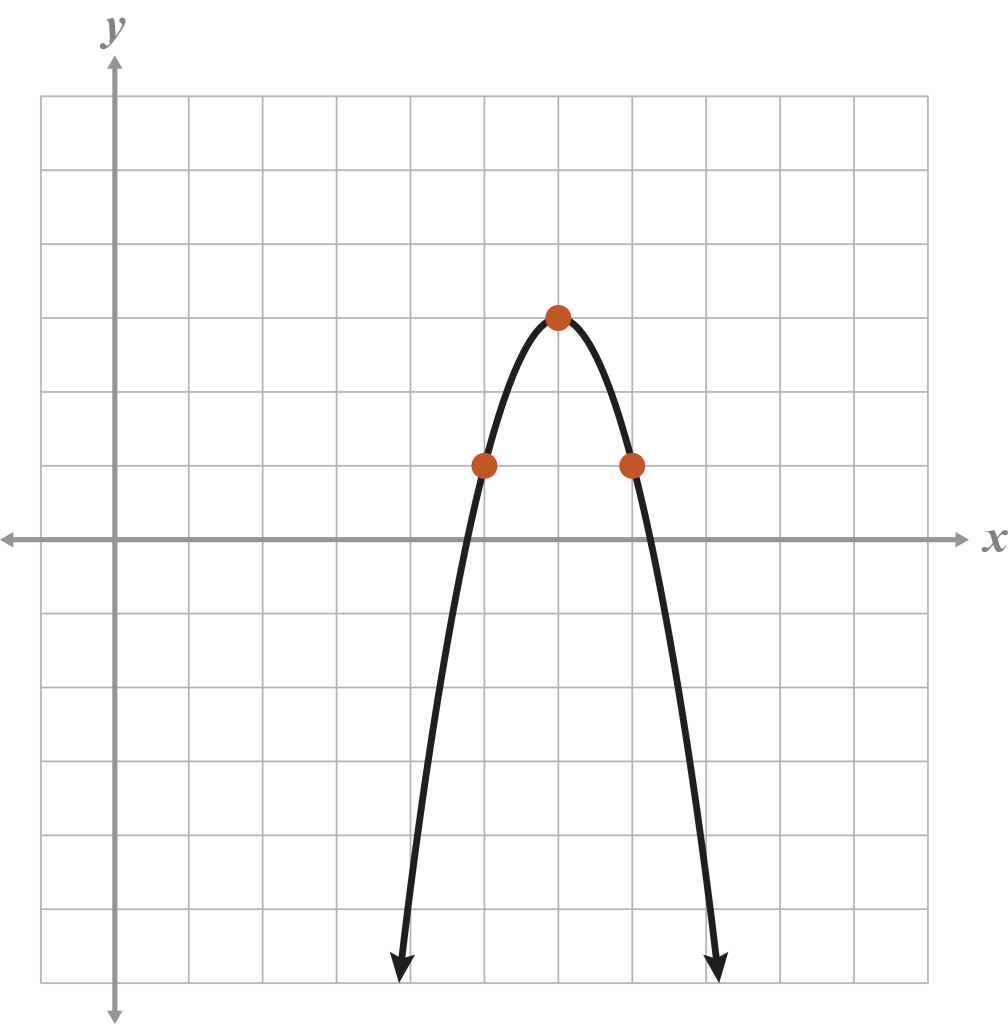
Name the domain and range in set-builder notation. Then name the end behavior.
Type of function: quadratic
Identify a, h, k:
Domain:
Range:
As and as
Note
The k-value of the parabola’s vertex determines the range value.
Example 5
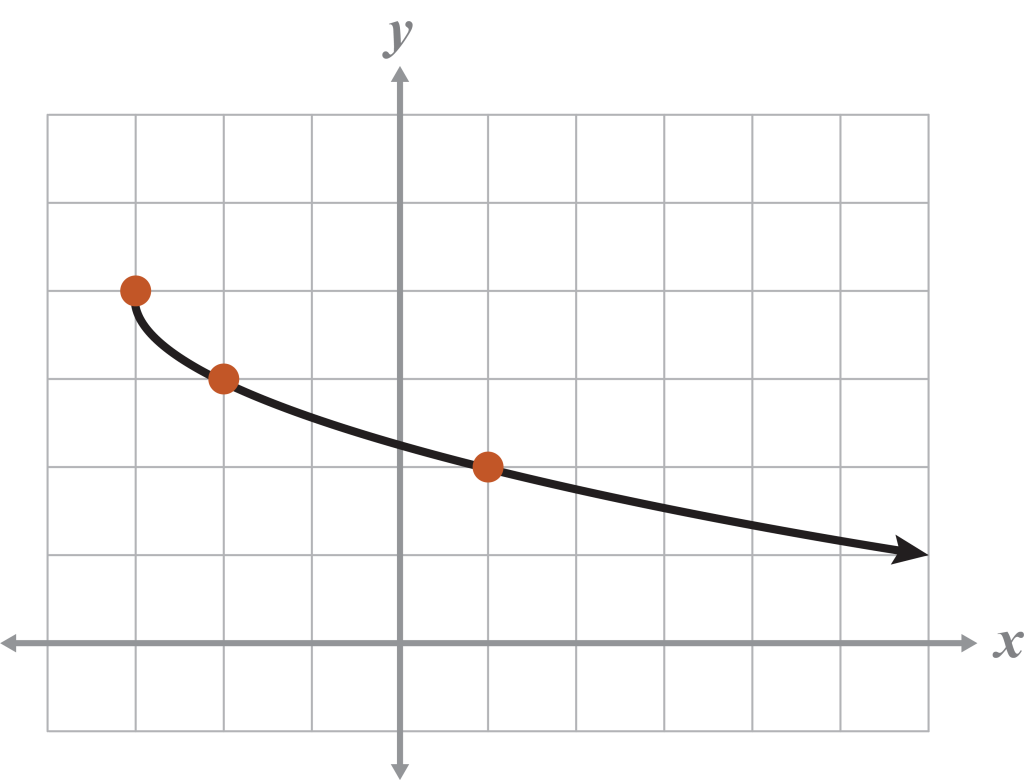
Write the equation of the given function. Then name the domain and range in set-builder notation and the end behavior.
Square root
domain:
range:
As and as
Note
For the square root function, determines the start/end point and what x and approach for the end behavior.
Example 6
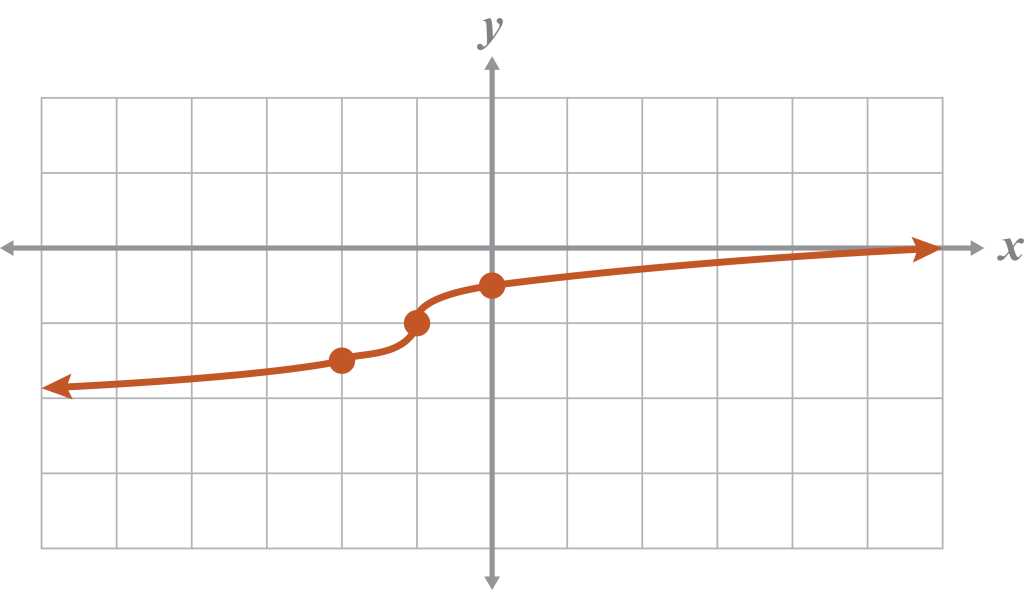
Sketch the transformation from the parent graph. Then name the domain and range in set-builder notation and the end behavior.
domain:
range:
As and as
Example 7
Given the equation, name the domain and range in set-builder notation and the end behavior.
Absolute value
domain:
range:
As and as