
Transforming Reciprocal Functions Solutions
Reflections, Stretches, and Compressions
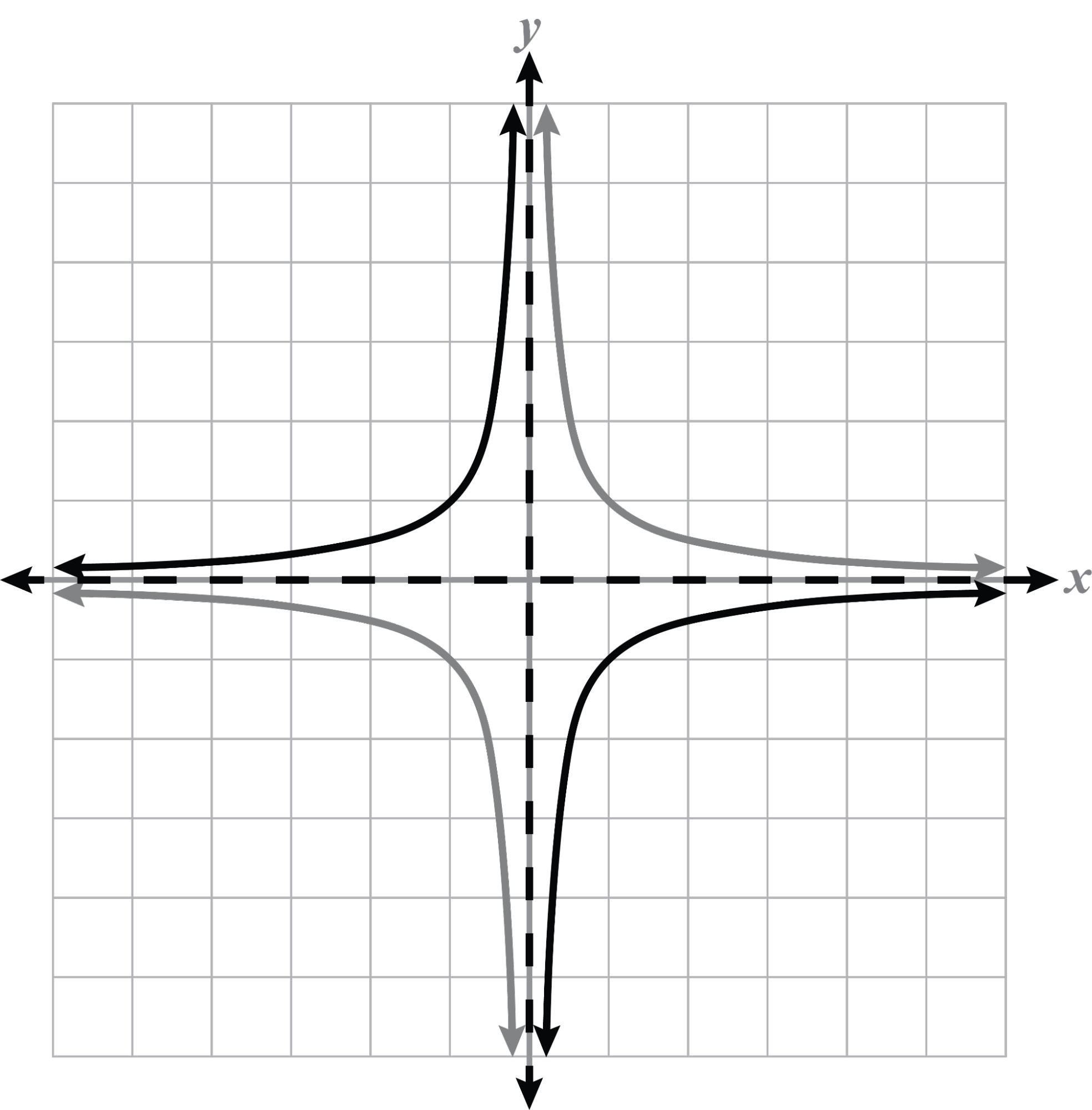
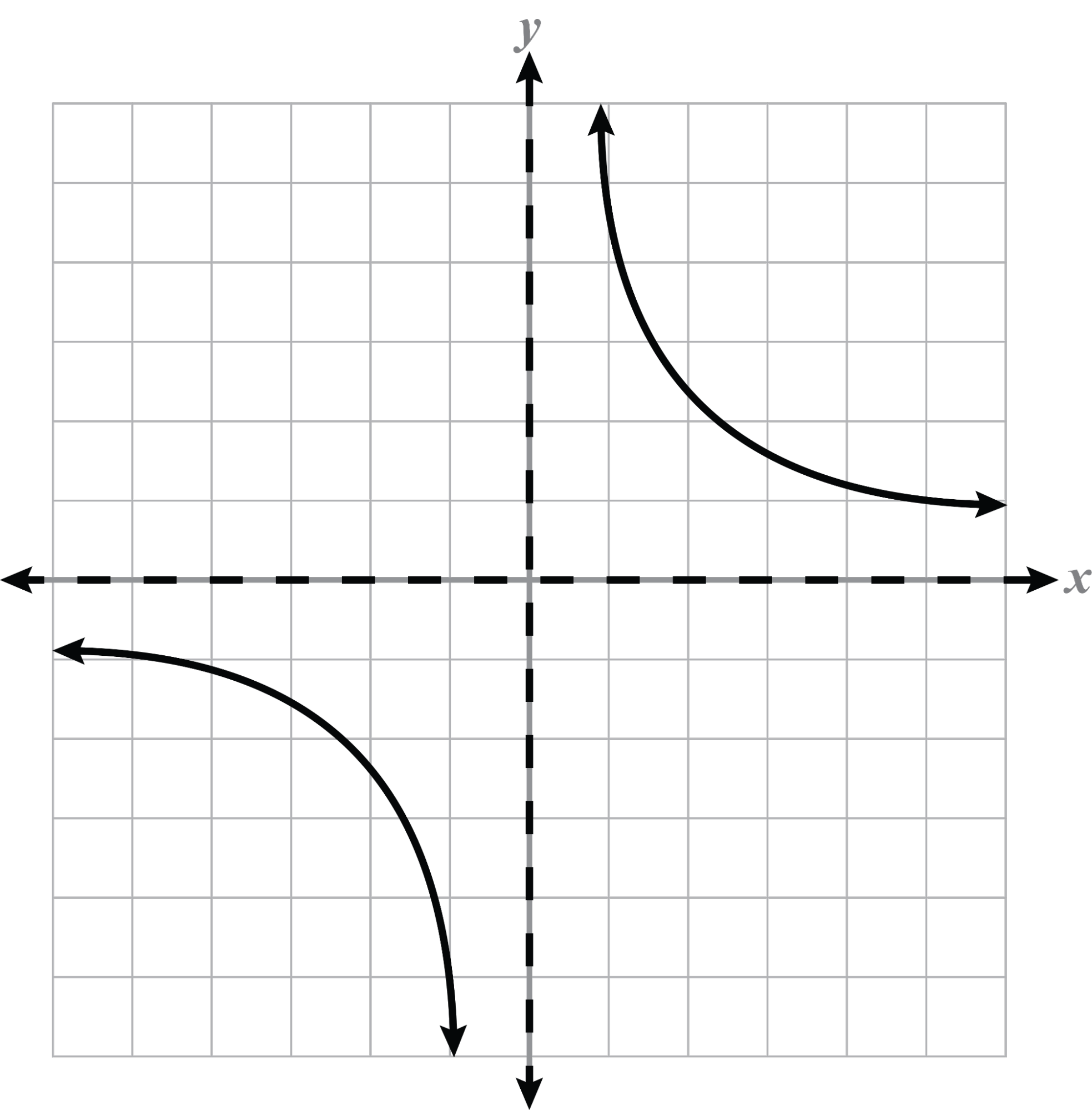
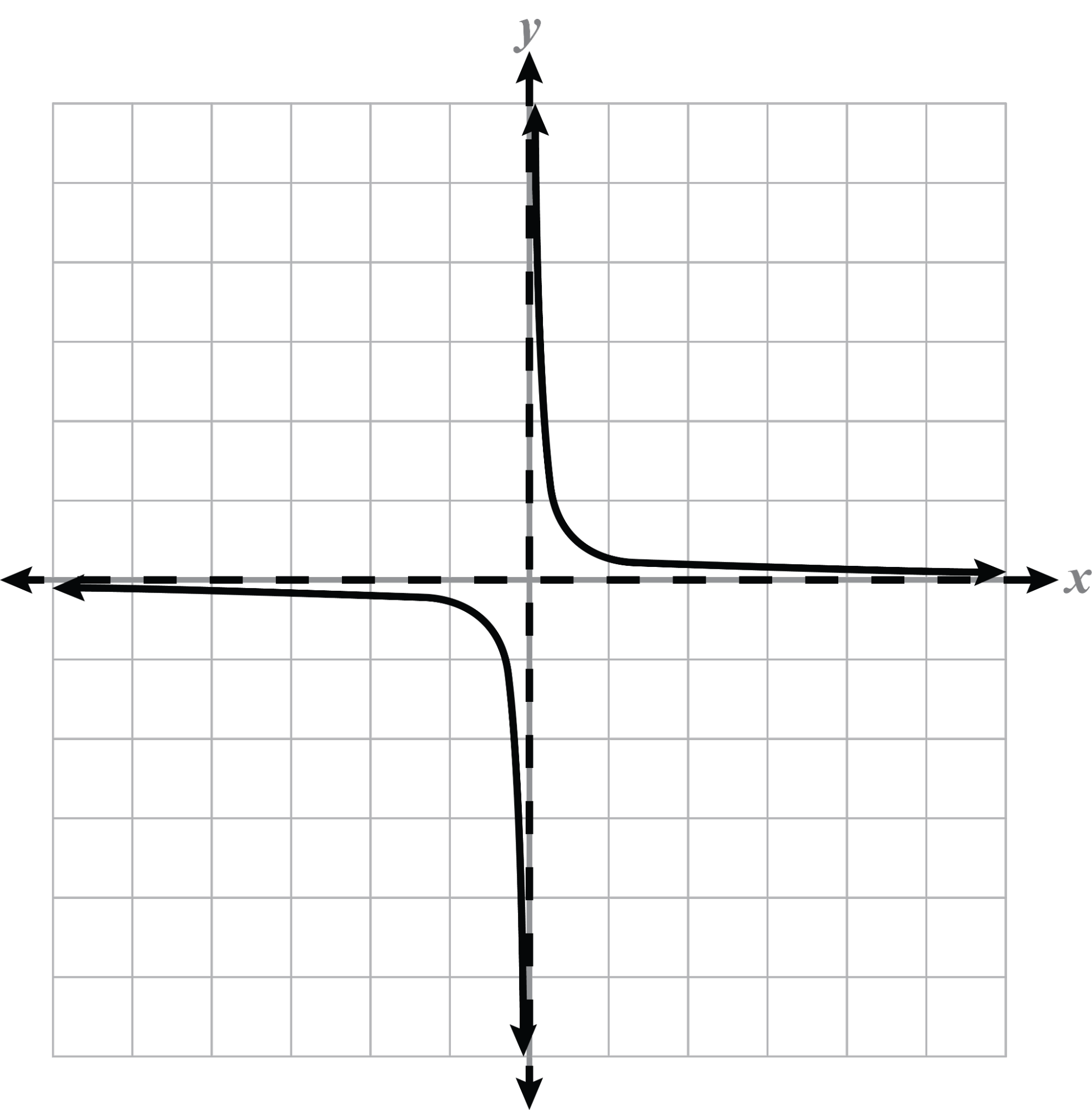
Note
Use the More to Explore activity to go deeper with technology.
Horizontal and Vertical Shifts
Example 1
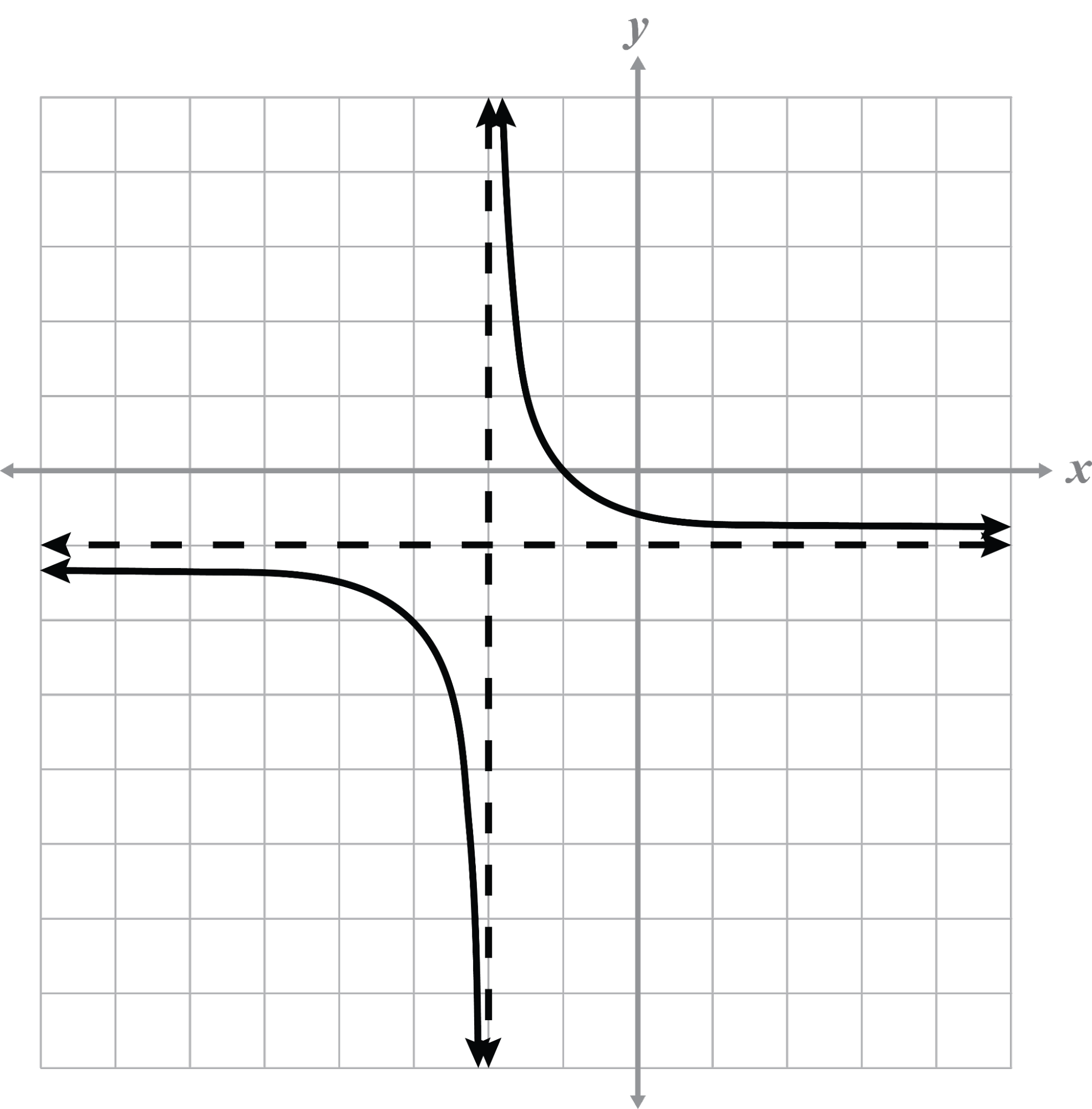
Name any asymptotes and intercepts from the given graph. Describe the transformation from the parent graph.
Plan
Name a, h, k
Name the equations for the asymptotes
Calculate the intercepts algebraically
Describe the transformation of the graph
Implement
Note
The directions do not explicitly state to identify a, h, k; however, it is good practice for working with any reciprocal function, as it helps determine the characteristics of the graph.
Asymptotes: (read from the graph)
Intercepts: (estimate from graph, confirm algebraically)
x-intercept:
y-intercept:
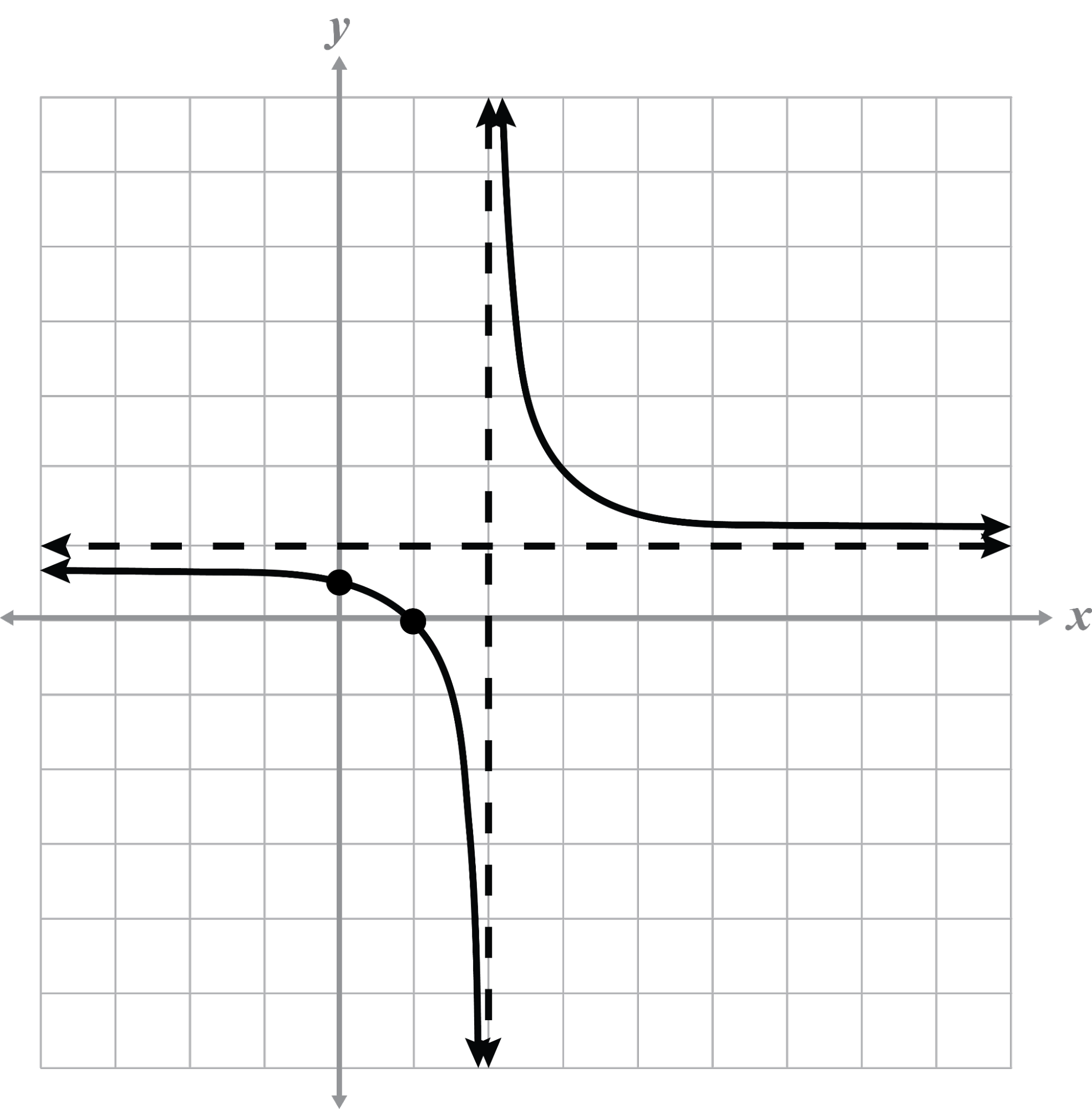
Some graphs will not have intercepts because the graph does not cross either axis.
Note
Determine intercepts algebraically because the result is often a fraction or decimal value. It is too difficult to correctly identify the intercepts from only reading the graph.
Explain
g(x) is two spaces right and one space up from the parent graph because h = 2, k = 1, and a = 1.
Example 2
Name any asymptotes and intercepts from the given graph. Describe the transformation from the parent graph.
Asymptotes: (read from graph)
x = 0
y = 2
Intercepts: (estimate from graph, confirm algebraically)
x-intercept:
y-intercept:
none
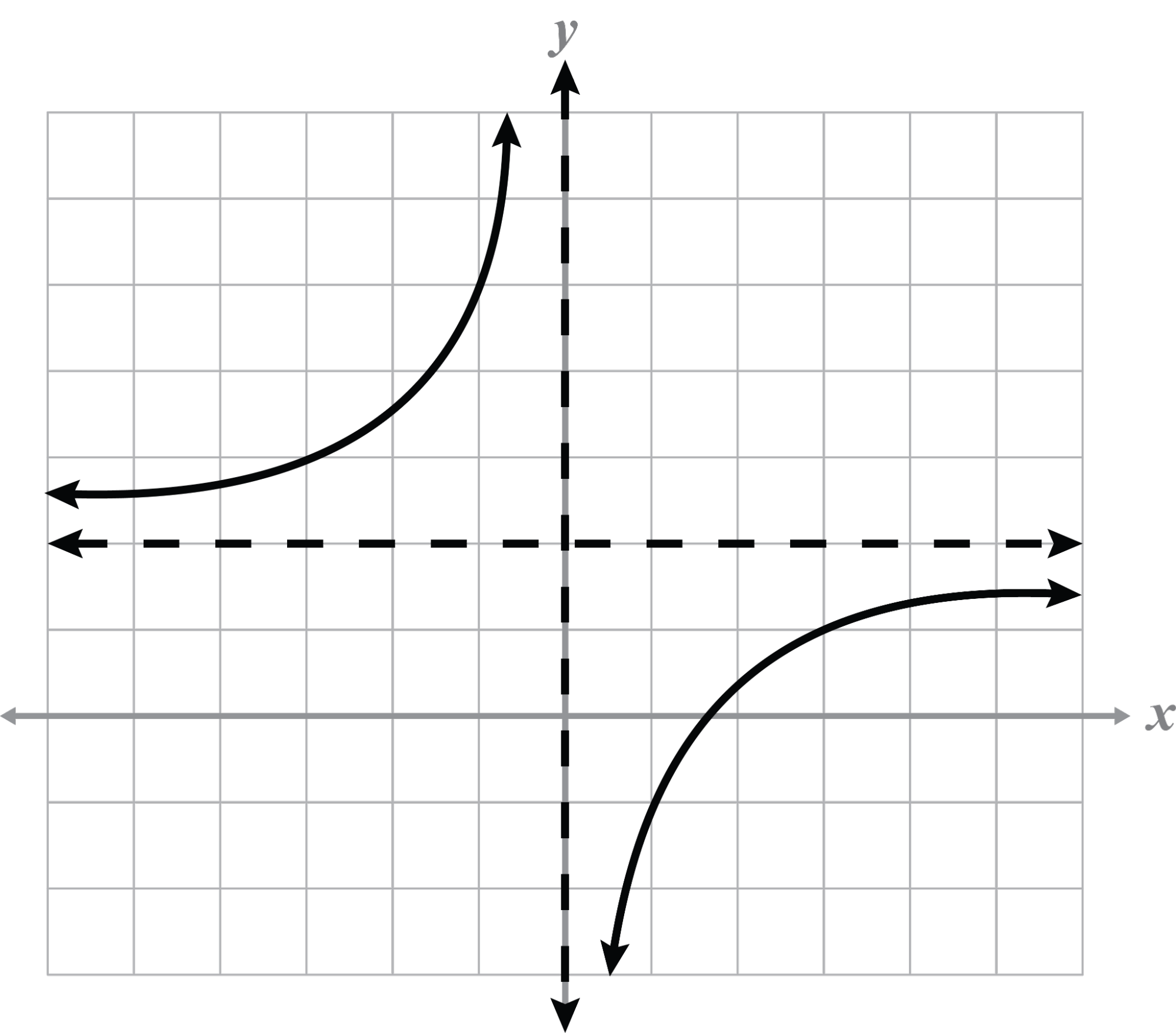
This graph is reflected and stretched vertically because The graph is shifted up two spaces because
Example 3
Name any asymptotes and intercepts from the given graph. Describe the transformation from the parent graph.
Asymptotes:
Note
You can either do the work or read from the graph.
x = –3
y = 0
Intercepts:
Note
You can estimate from a graph and/or confirm algebraically.
x-intercept:
none
y-intercept:
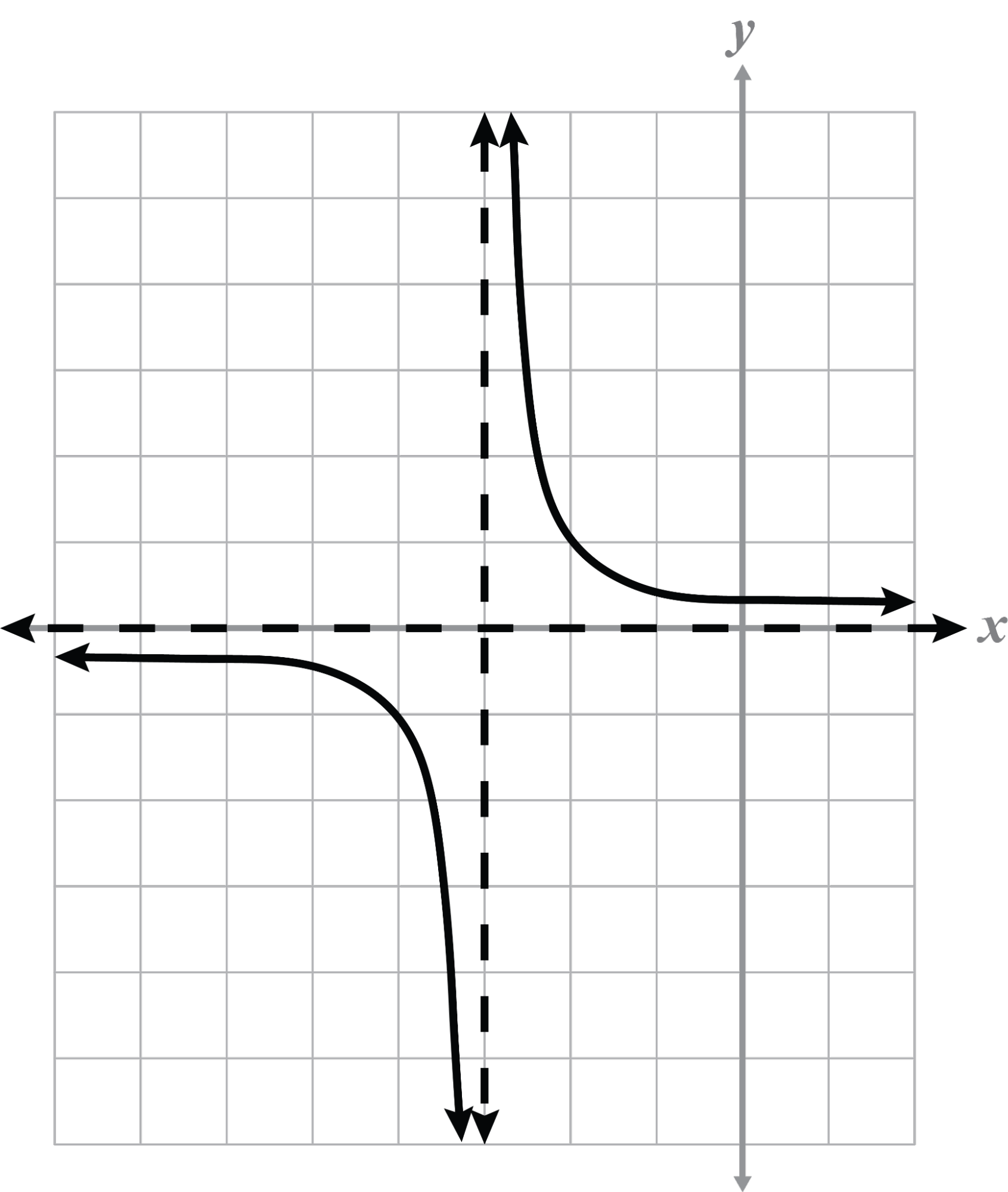
The graph h(x) shifts 3 spaces left compared to the parent function because and