
Practice 2 Solutions
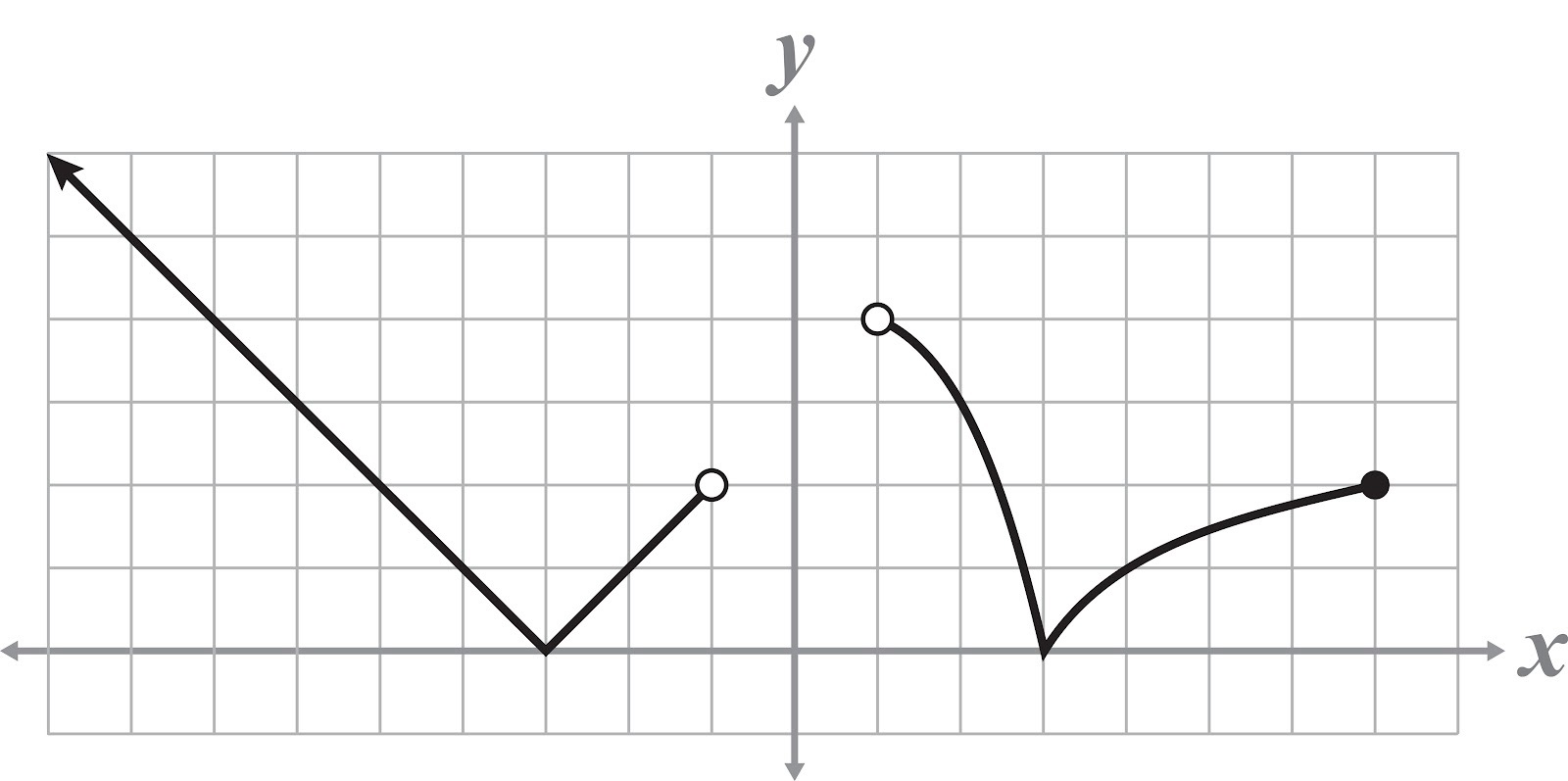
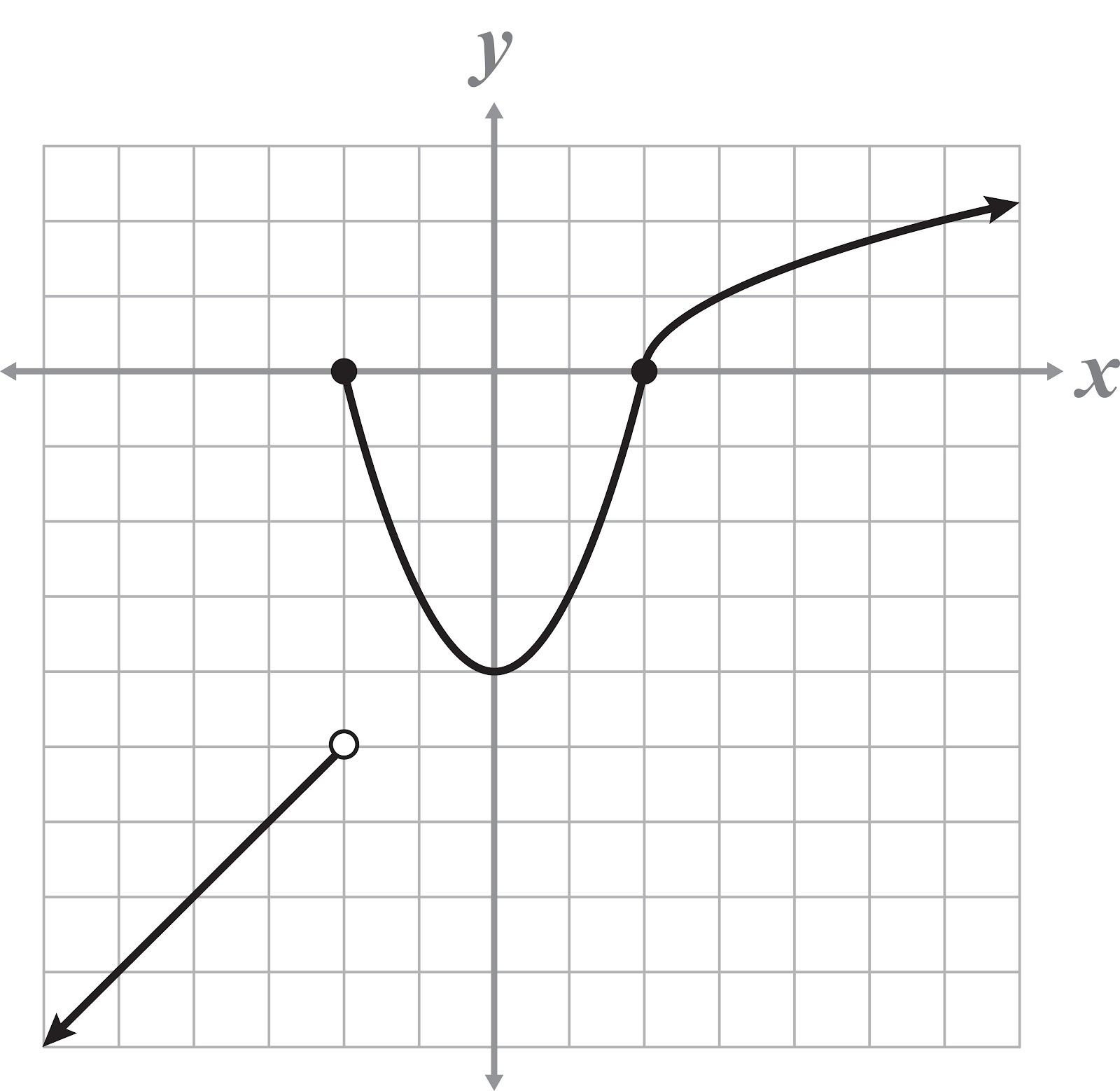
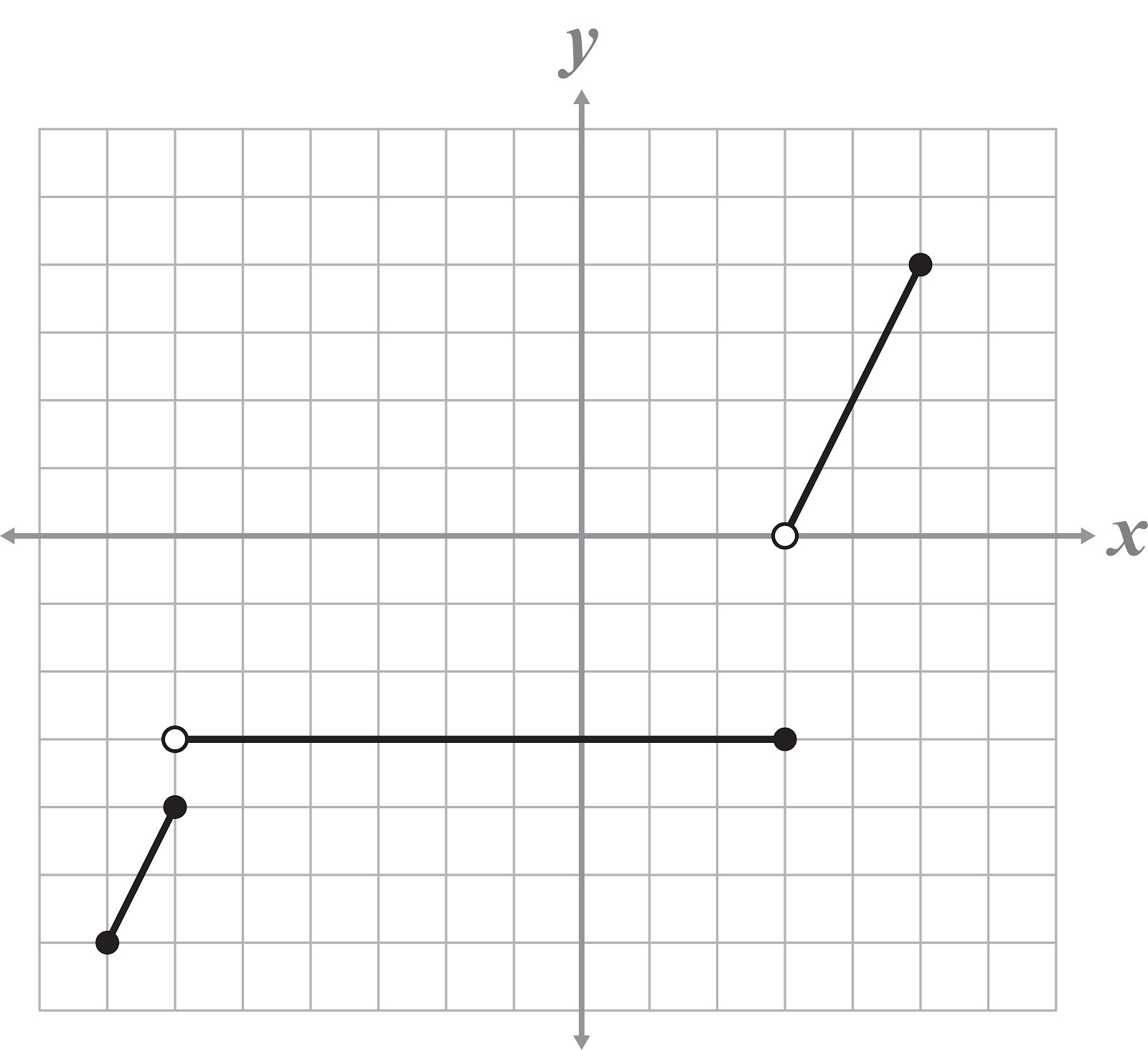
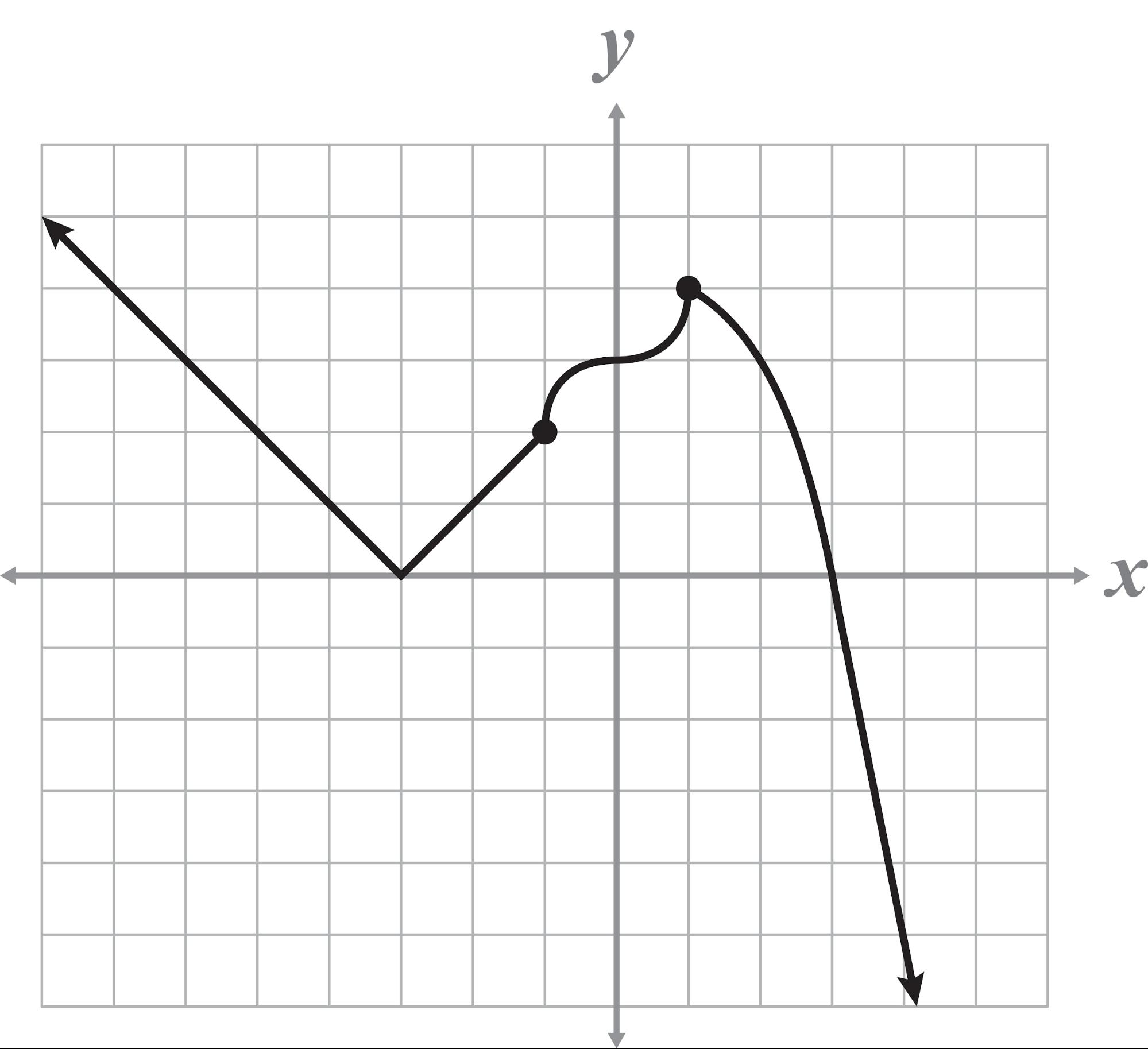
Match the piecewise functions (numbered) with the correct intervals (letters).
|
F 1) |
 |
|
A 2) |
 |
|
E 3) |
 |
|
G 4) |
 |
Note
Though the domain for graph 4 is all real numbers, it is three different equations with different intervals.
|
C 5) |
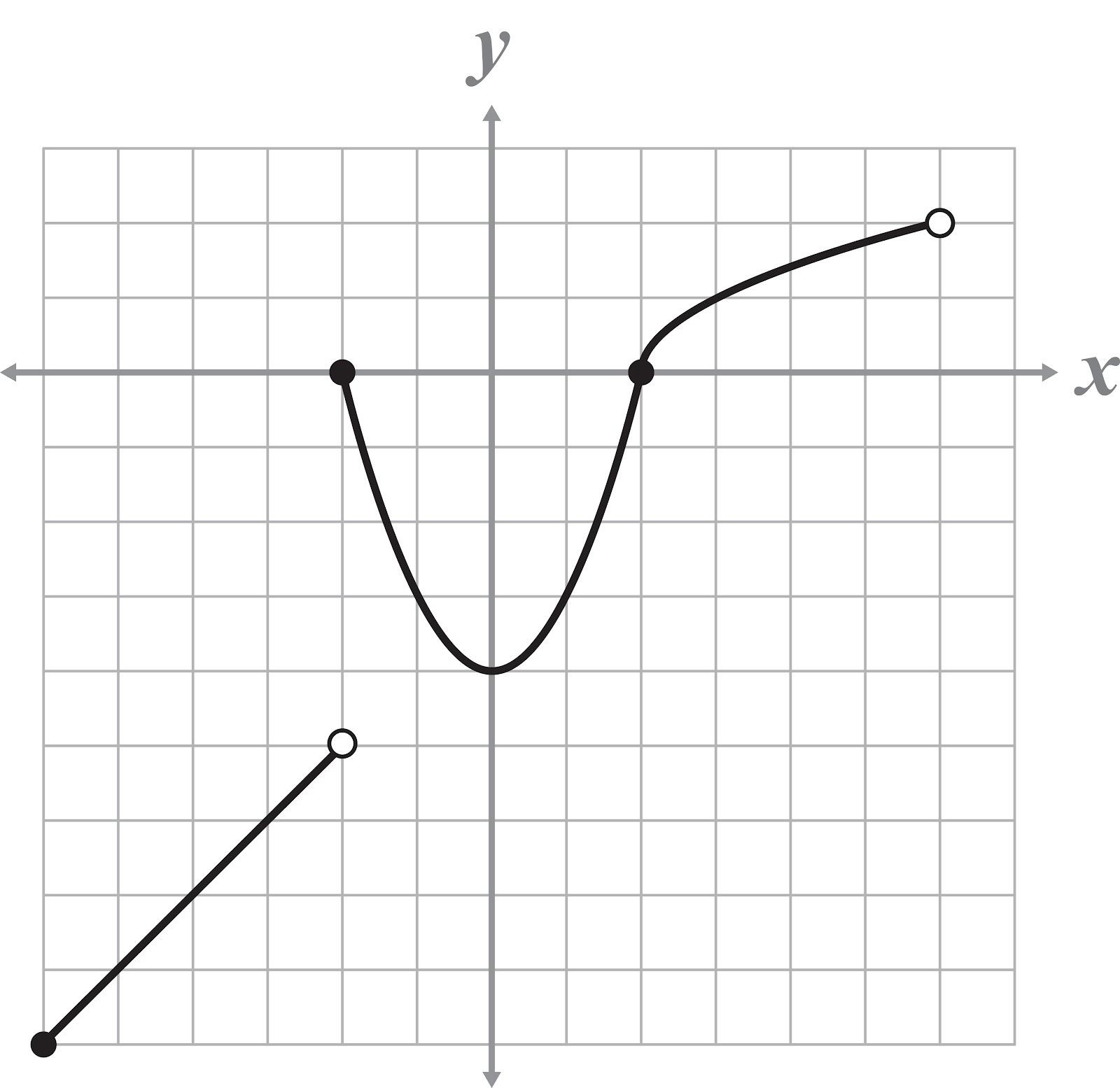 |
|
B 6) |
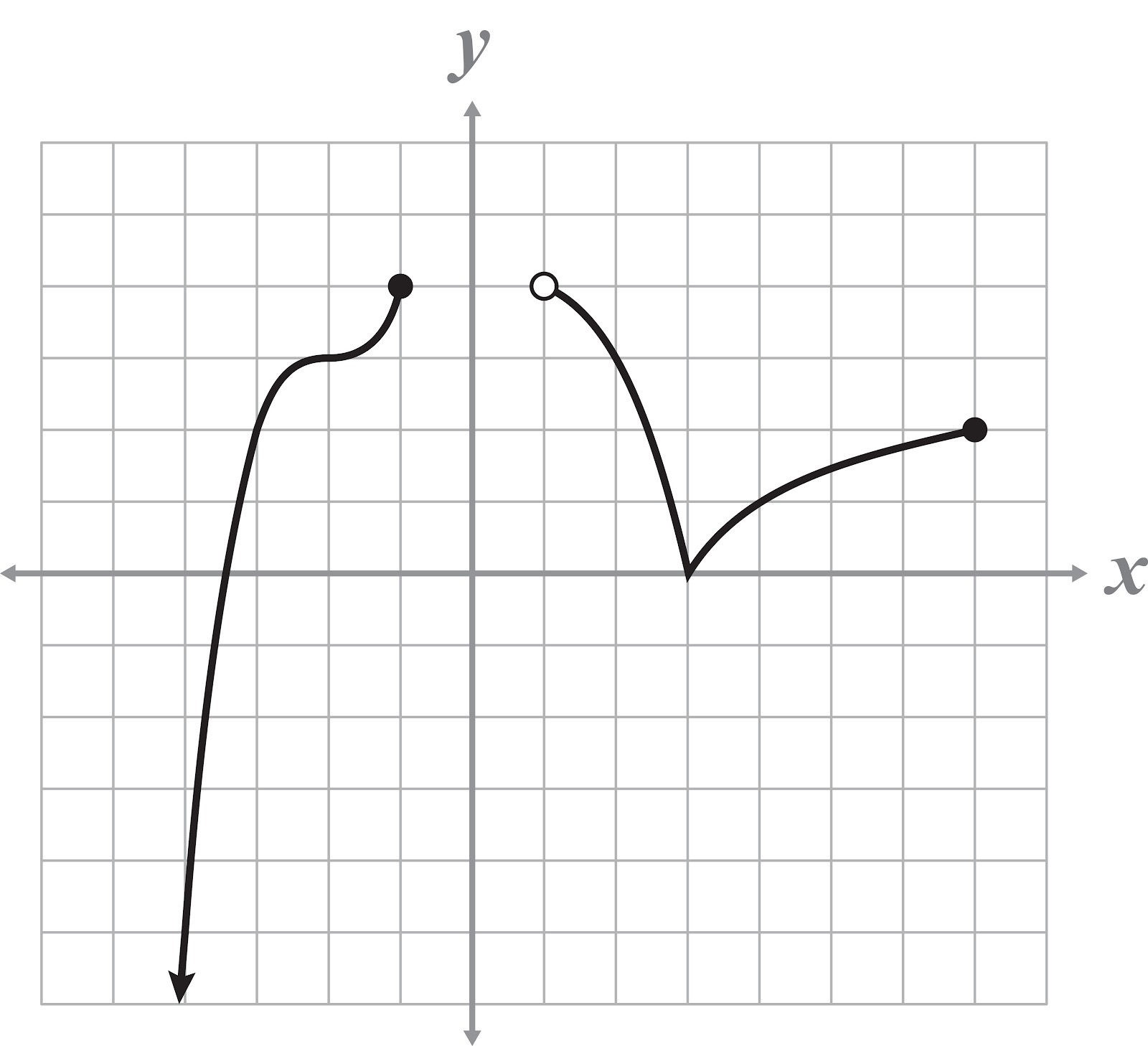 |
Graph the piecewise function.
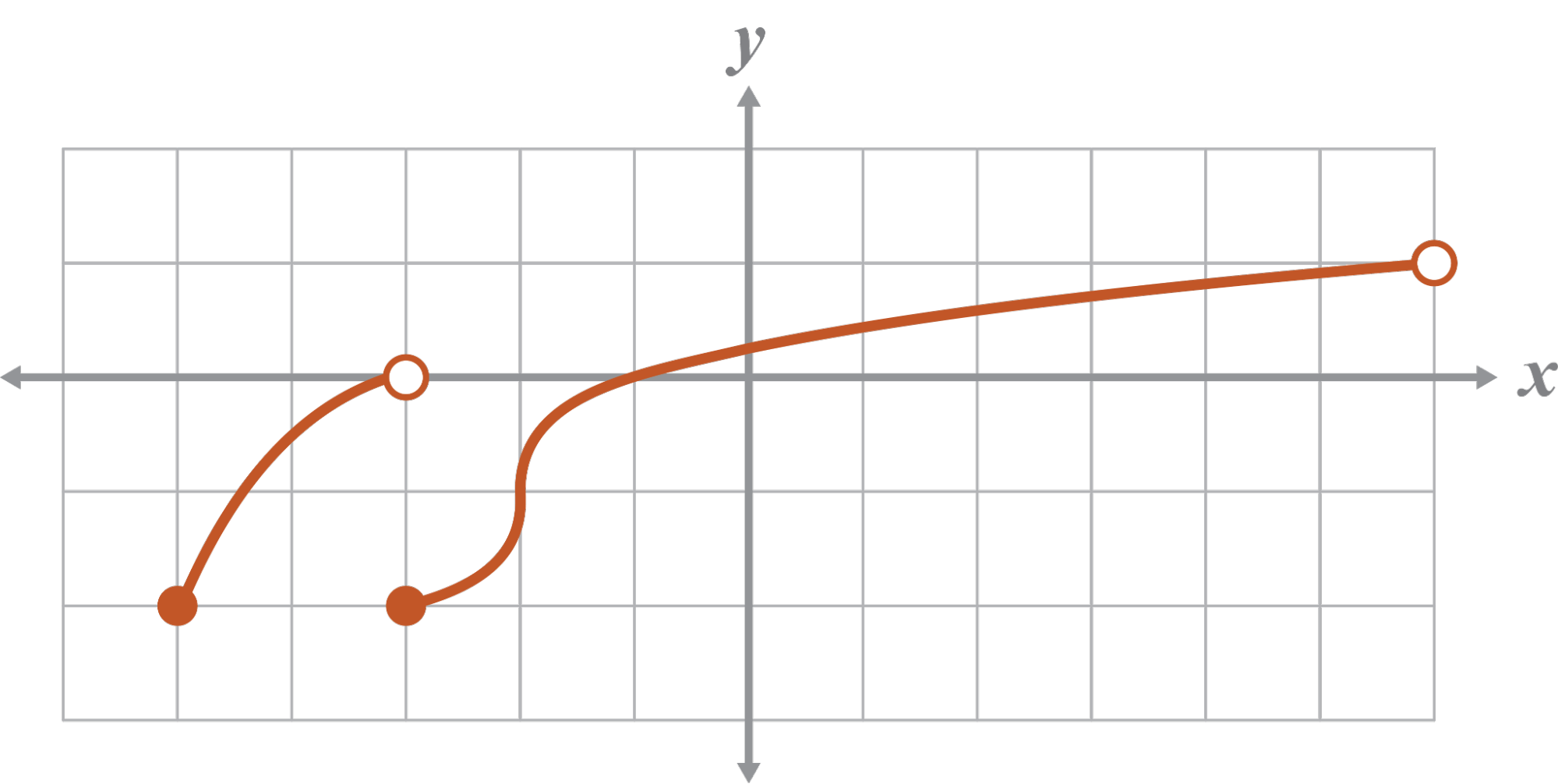
-
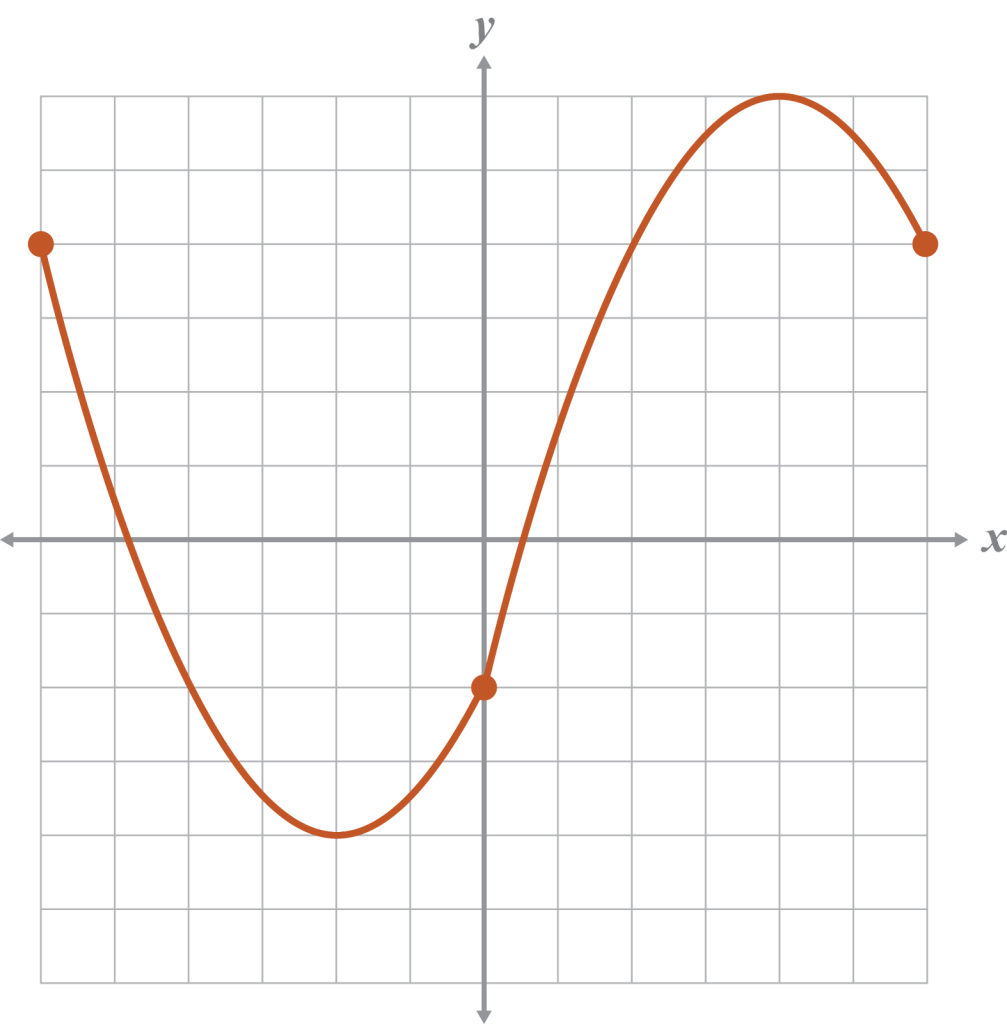
Find the domain and range of problem 7 using interval notation.
Domain:
Range:
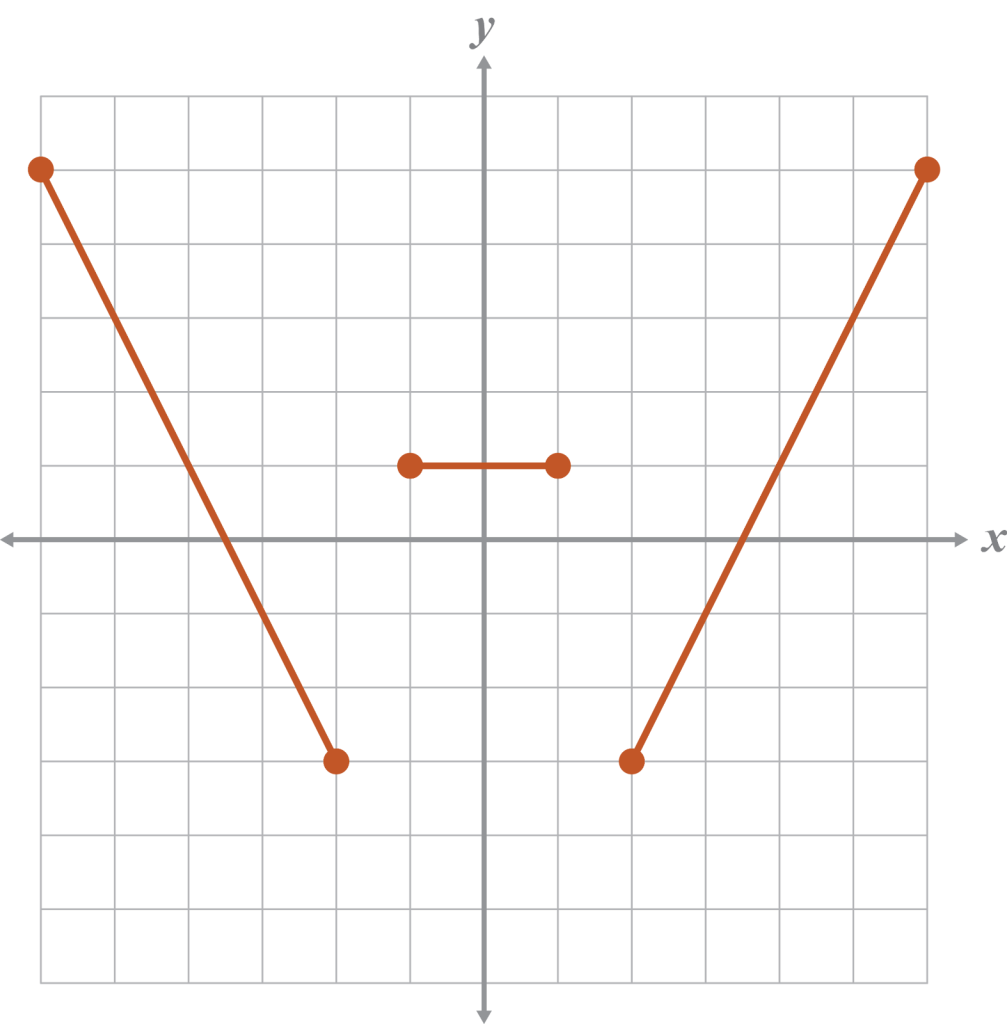
Note
Q: How is m(x) still a function when all points are closed?
A: m(x) passes the VLT since none of the points overlap.
-
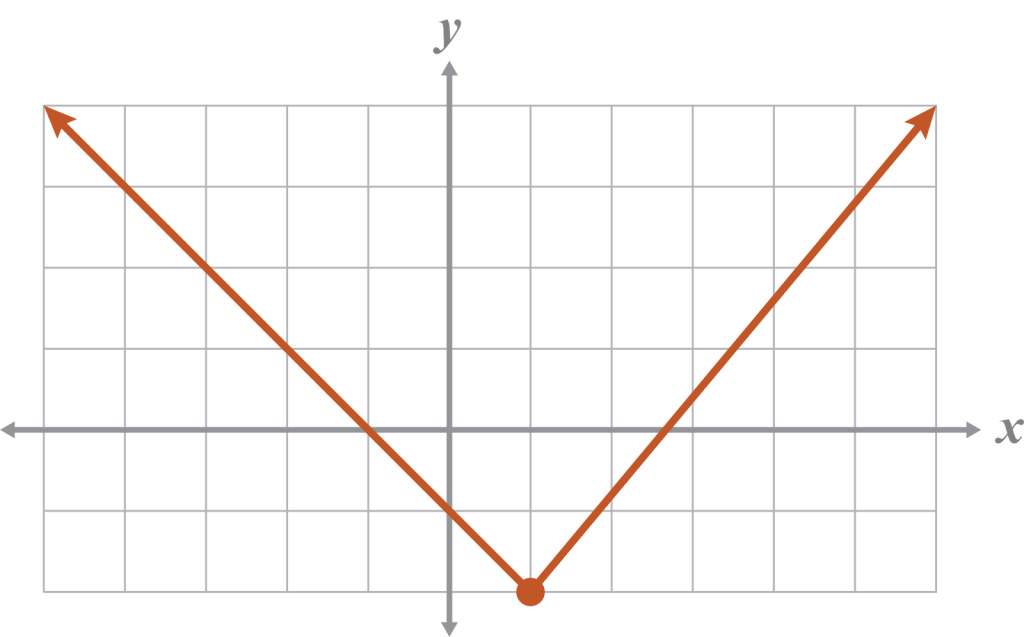
Find the domain and range of problem 10 in set notation.
Note
Q: How would you write the piecewise function as one equation?
A:
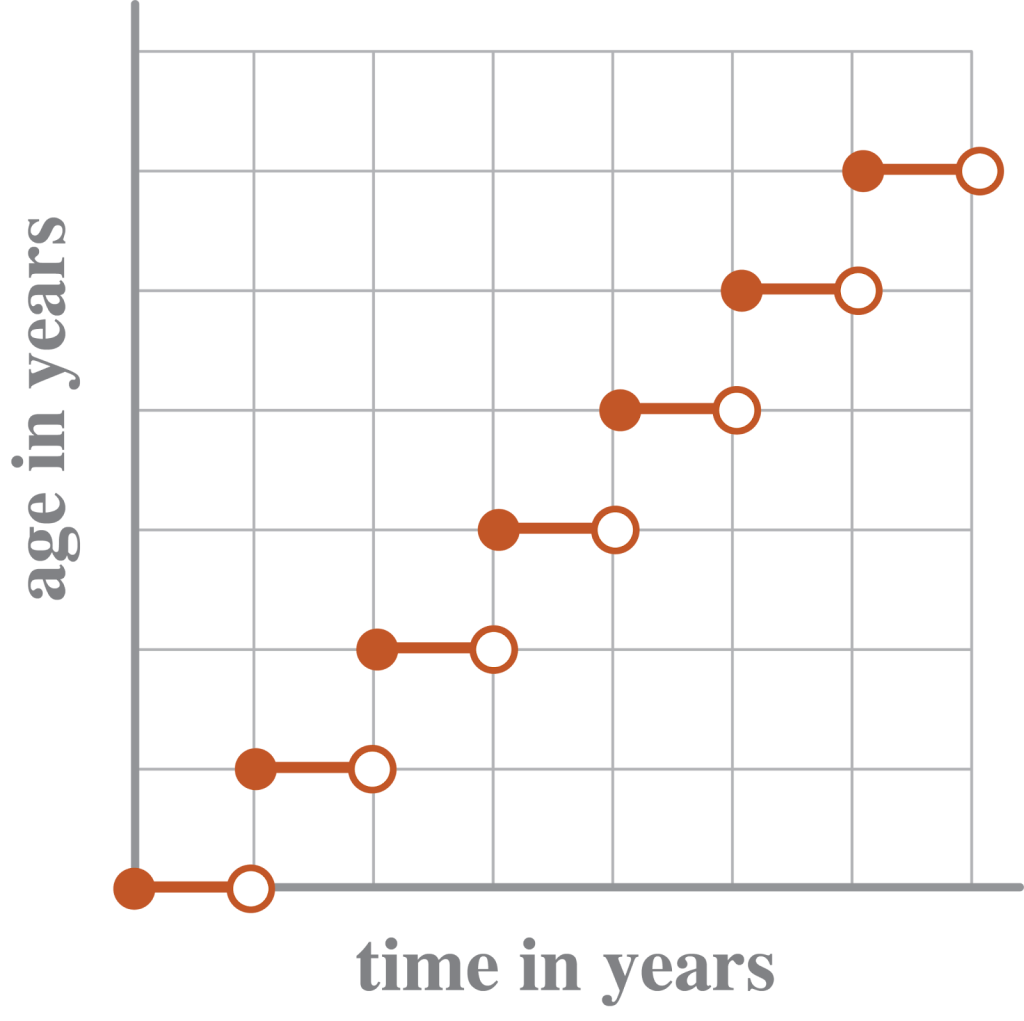
- Create a graph that represents a child’s age from 0 to 7 years old.
-
Describe and explain the type of function you graphed in the previous problem.
Sample: This is a floor or greatest integer function. A child is the previous age until their birthday. Then they are the same age for an entire year. At the next birthday, they are a year older for the entire next year.
Use the information below to complete problems 15–20.
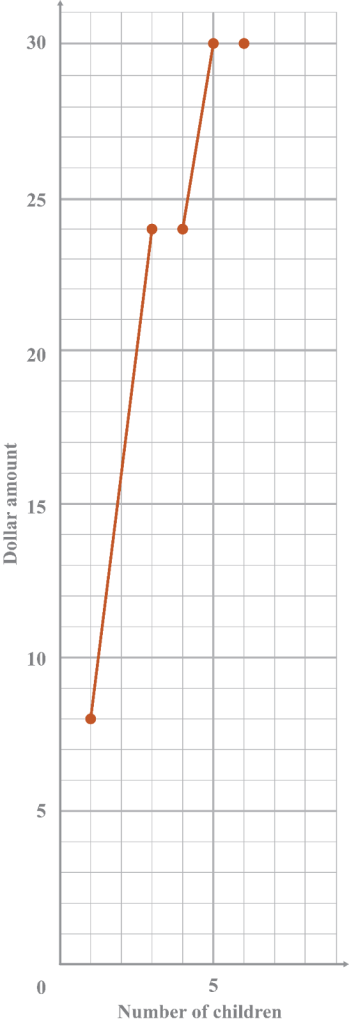
Gracie’s Babysitting charges different amounts depending on the number of children. She babysits for one hour. If there are 1–3 children, she charges $8 per child. If there are 4–5 children she charges $6 per child. If there are 6 children, she charges $5 per child.
- Create a piecewise function.
-
Graph the piecewise function.
-
How much will Gracie make to babysit 5 children for an hour?
Gracie would make $30.
-
How much will Gracie make to babysit 2 children for an hour?
Gracie would make $16.
-
Based on the information, does Gracie babysit 8 children?
No. The final price given was for 6 children.
-
The information was for one hour based on the number of children. How much would Gracie make if she babysat 3 children for 3 hours?
Gracie would make $72.