
Targeted Review Solutions
-
Write answers in simplified radical form. Use absolute value bars when necessary.
-
Rationalize the denominator.
-
Solve. Check your work.
-
Solve.
No solution.
Note
A solution cannot be both greater than or equal to and less than the same number.
-
Simplify. Then classify by all sets to which it belongs: real, pure imaginary, complex.
- Simplify.
–i
-
Write the equation for each parent function in vertex form.
-
a cubic
-
absolute value
-
square root
-
quadratic
-
rational
-
Two students were asked to describe the transformation from the parent function using a, h, and k. Explain the errors and if either student is correct. State the correct answer if both students are incorrect.
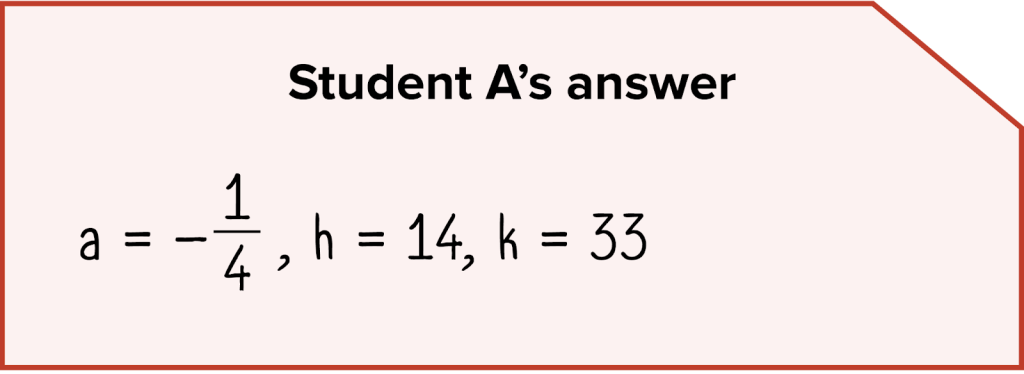
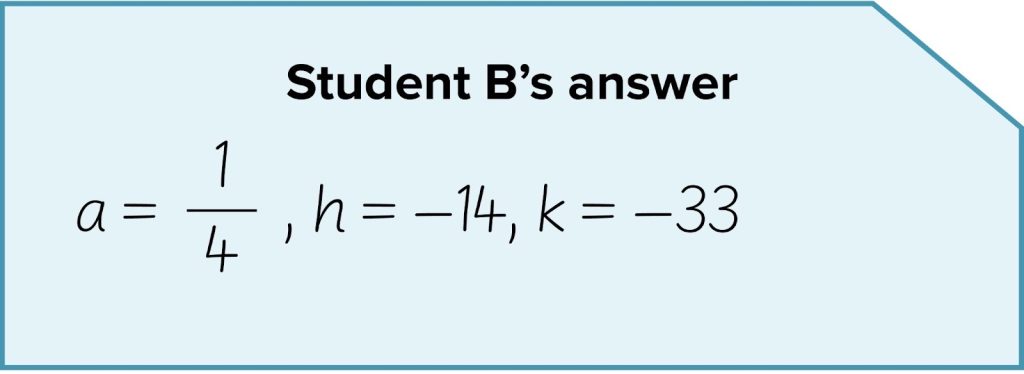
Sample: Student A did not correctly identify the value of h under the radical. Student B changed all of the signs of a, h, and k to the opposite. The correct values of a, h, and k are
B
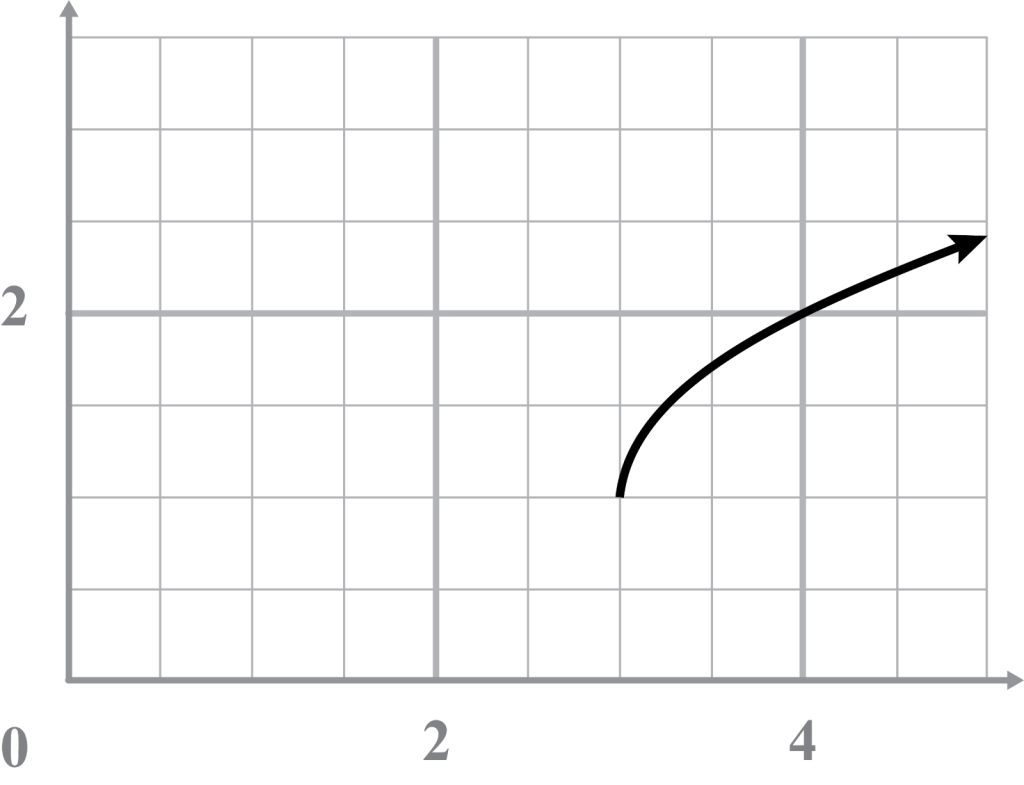
- Name domain restrictions to represent the function.
Note
- This option does not include the initial point at (3, 1).
- This option is the range restriction.
- This option is the value of the graph if the scale of the graph is ignored.
A
- Solve.
-
no solution
Note
- This option is the solution when the coefficient is not squared
- This option is the solution when the coefficient is not distributed across the terms on the right side of the equation
- This option is the solution if the terms are combined without adhering to order of operations
C
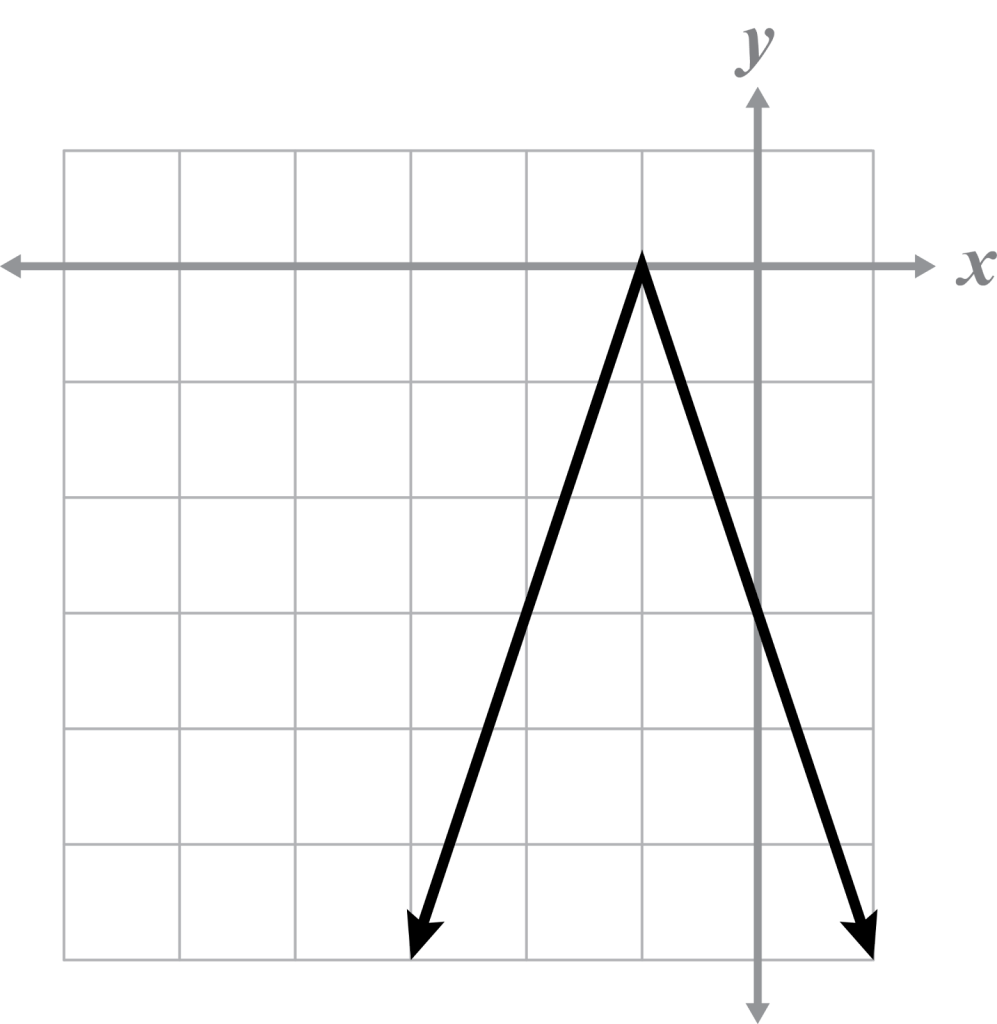
- Name the equation that represents the graph of the transformed parent function.
-
Vertex so
The next whole number point is so
Note
- on the graph, not –3
- This equation does not show a reflected absolute value graph
- The value of which represents but the graphs shows
D
- Select the graph that matches the description of the end behavior.
-
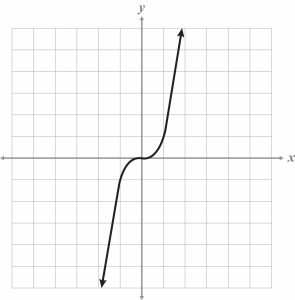
-
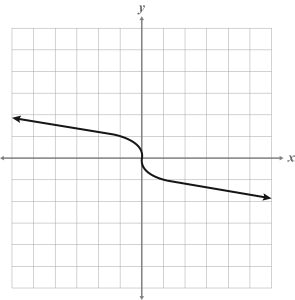
-
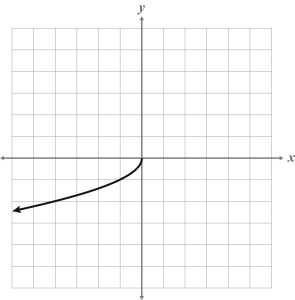
-
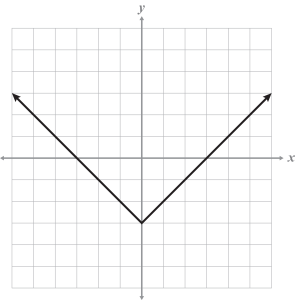
This graph shows that all values of y are increasing.
Note
- The y-values are negative when the x-values are negative.
- The y-values are negative when the x-values are positive.
- This graph only contains negative x-values.
| Problem | 1 | 2 | 3 | 4 | 5 | 6 | 7 | 8 | 9 | 10 | 11 | 12 |
| Origin | L11 | L12 | L13 | L14 | L16 | L15 | L17 | L18 | L18 | L13 | L18 | L18 |
L = Lesson in this level, A1 = Algebra 1: Principles of Secondary Mathematics, FD = Foundational Knowledge