
Practice 1 Solutions
Determine the end behavior for the graph.
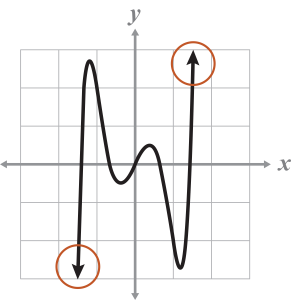
As and as
Note
This problem is an odd degree polynomial, and its end behavior is in opposite directions.
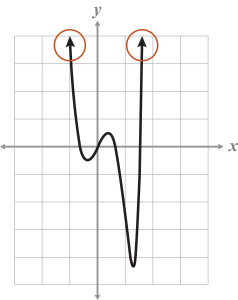
As and as
Note
This problem is an even degree polynomial, and its end behavior is in the same direction.
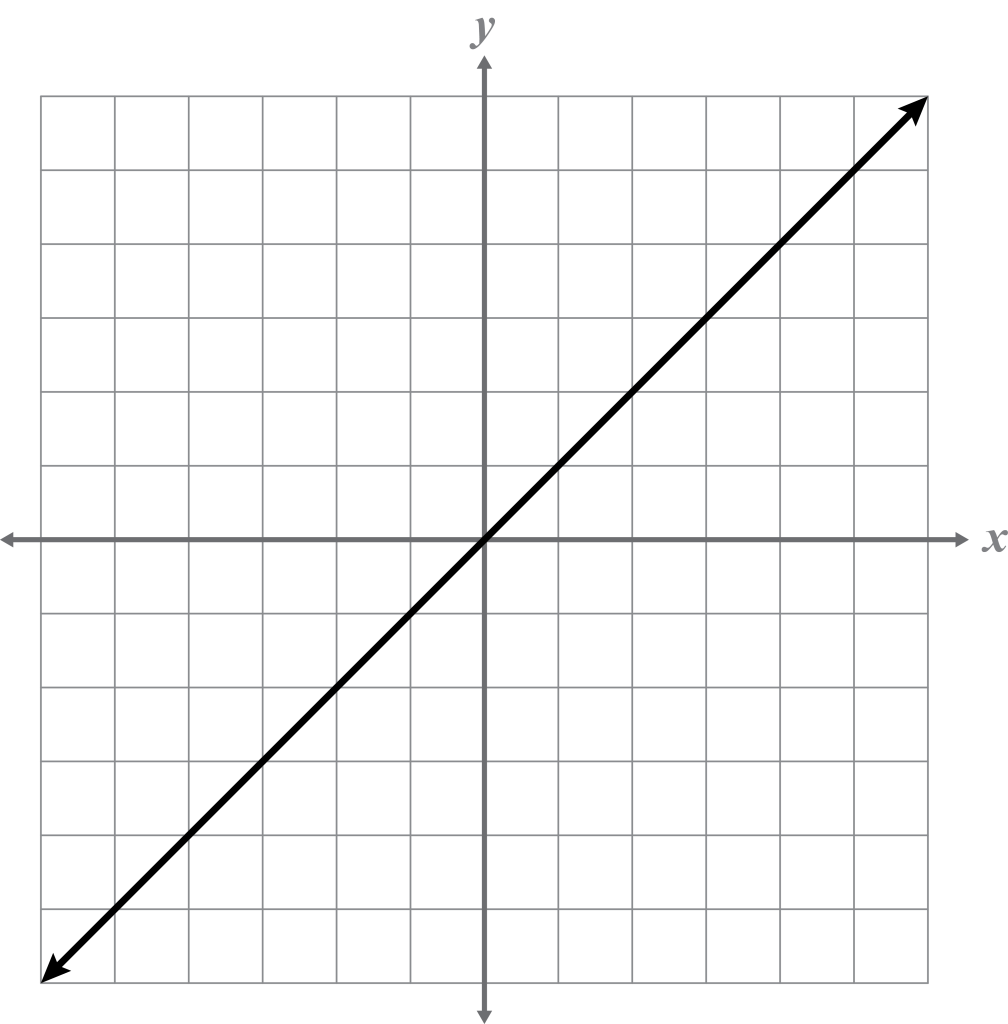
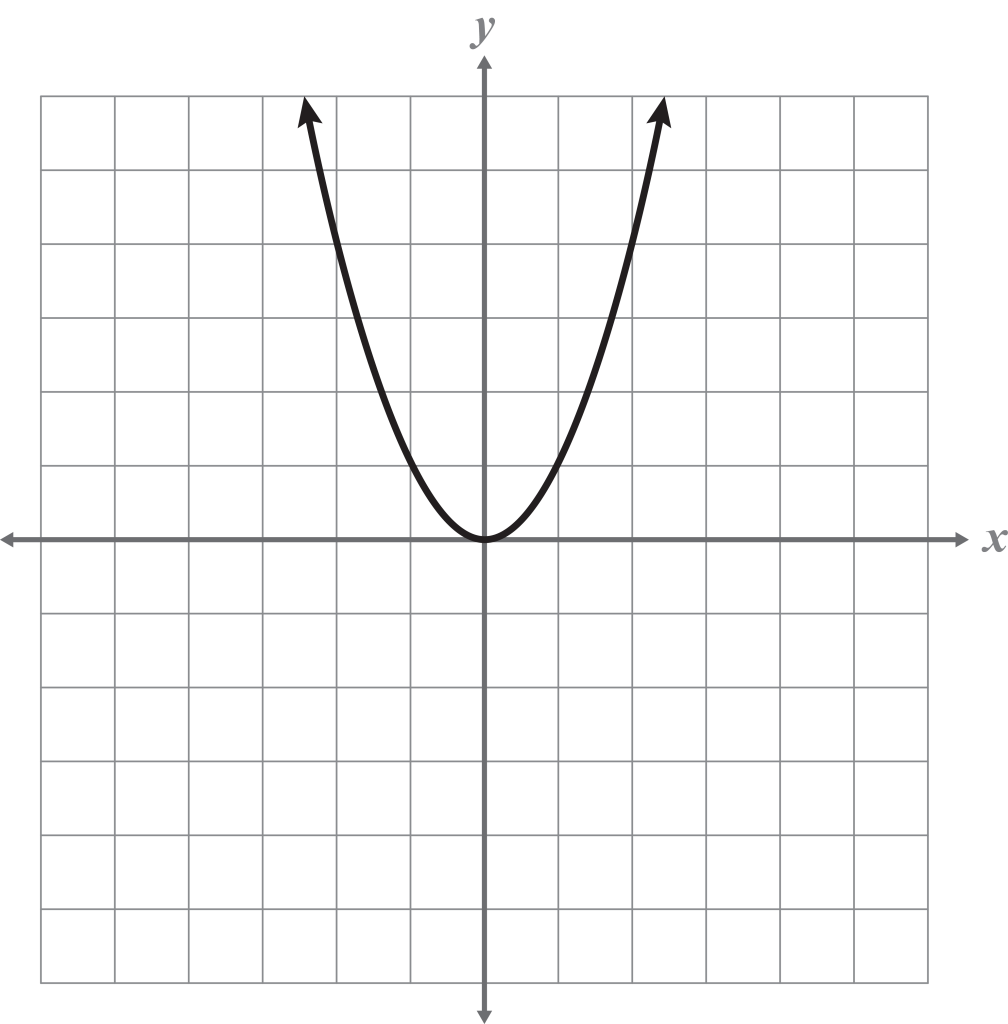
Match the given graph to its end behavior. Choices may be used more than once.
- As and as
- As and as
- As and as
- Quadrant I: As and as
Quadrant III: As and as
|
A 3) |
 |
|
C 4) |
 |
|
A 5) |
 |
|
B 6) |
 |
Name the parent function in the given graphs. Then name the domain and range.
- Graph of problem 3
linear
- Graph of problem 4
quadratic
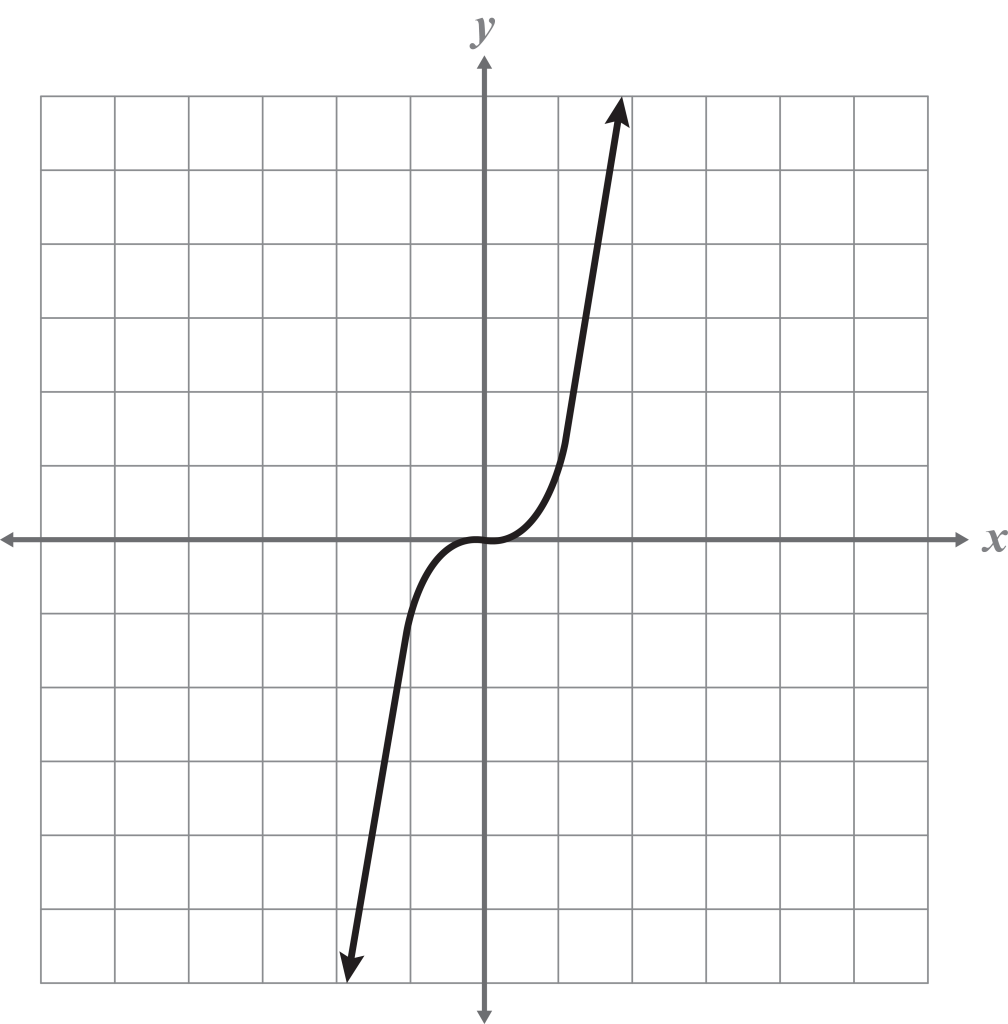
- Graph of problem 5
cubic
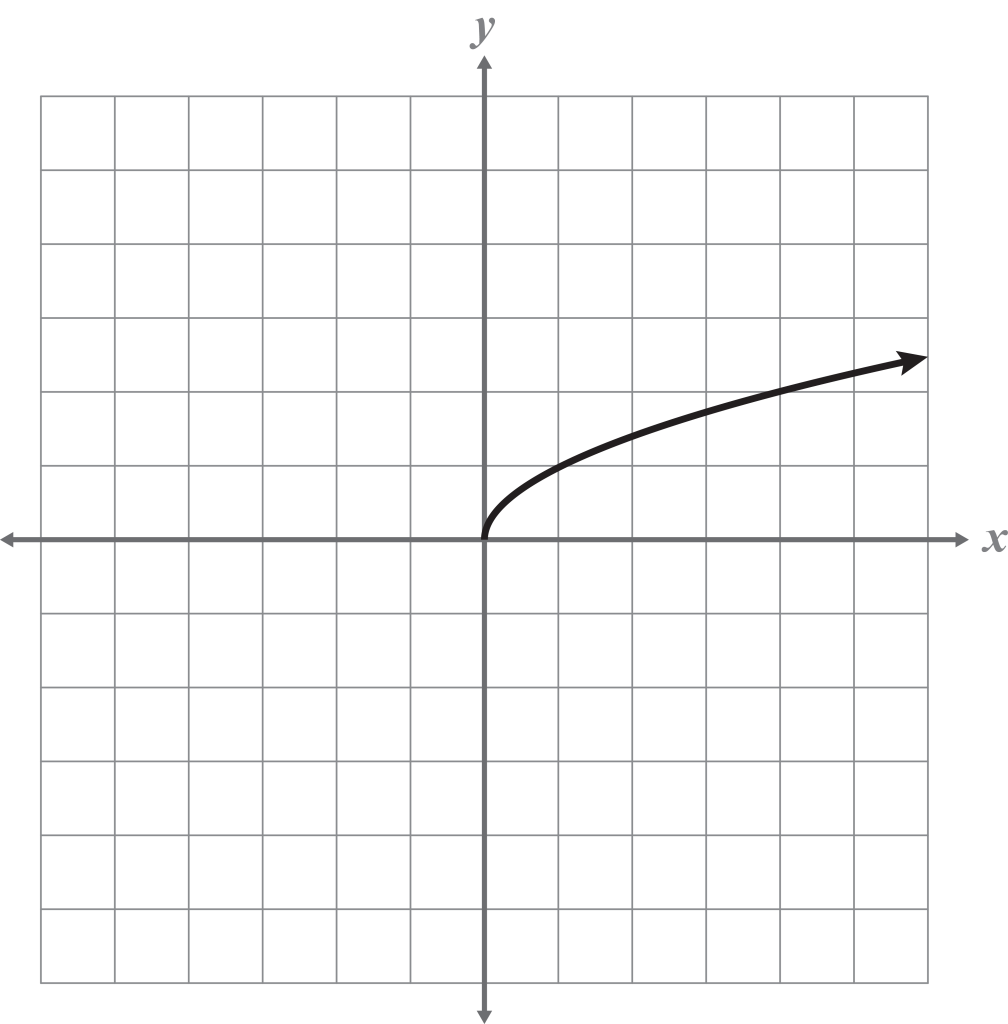
- Graph of problem 6
square root
Note
Q: Which are graphs of polynomial functions? Which are not?
A: Graphs 3–5 are polynomial functions. Graph 6 is not a polynomial function.
Given the equation of the parent function, sketch the graph. Then name the end behavior.
- square root
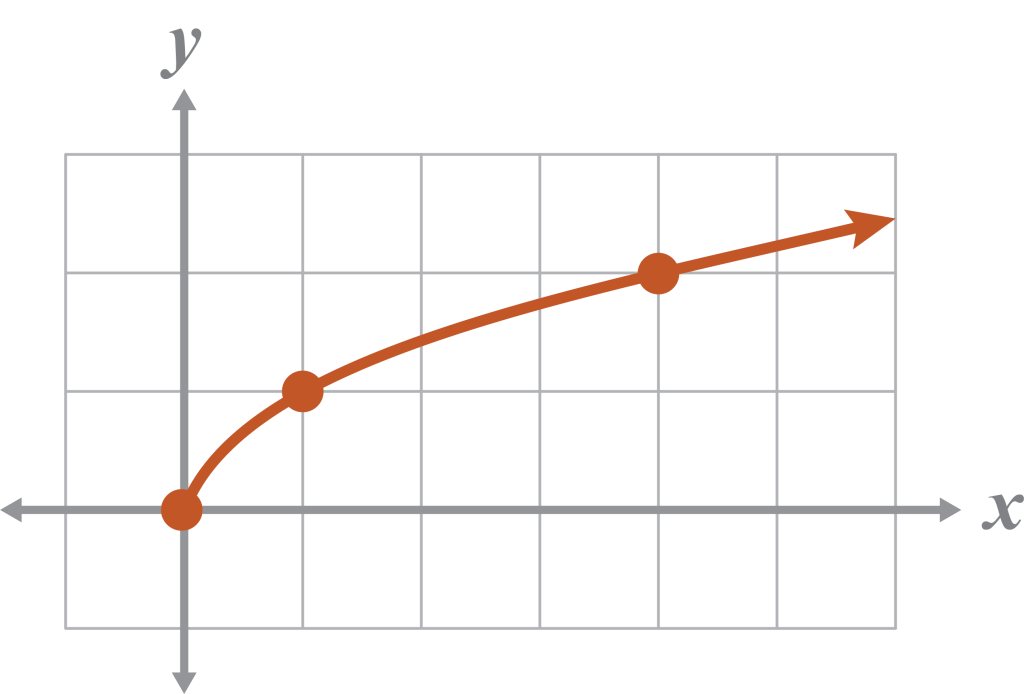
As and as
- cube root
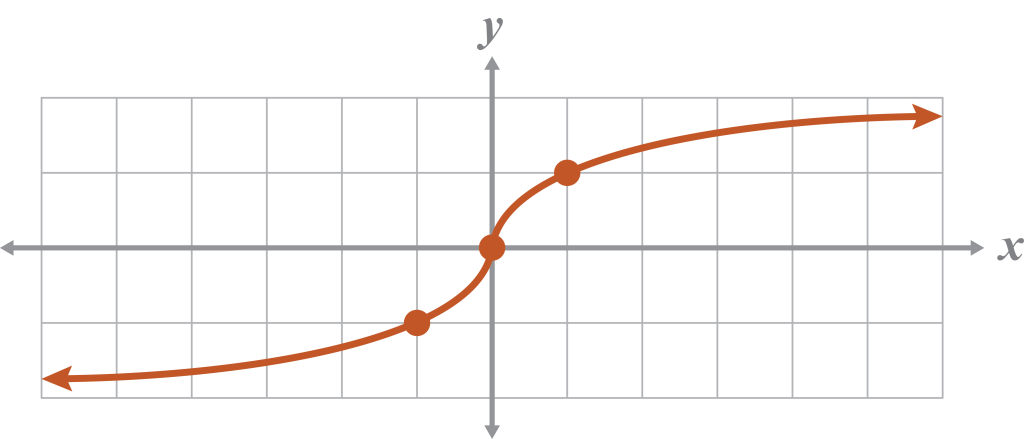
As , and as
- rational
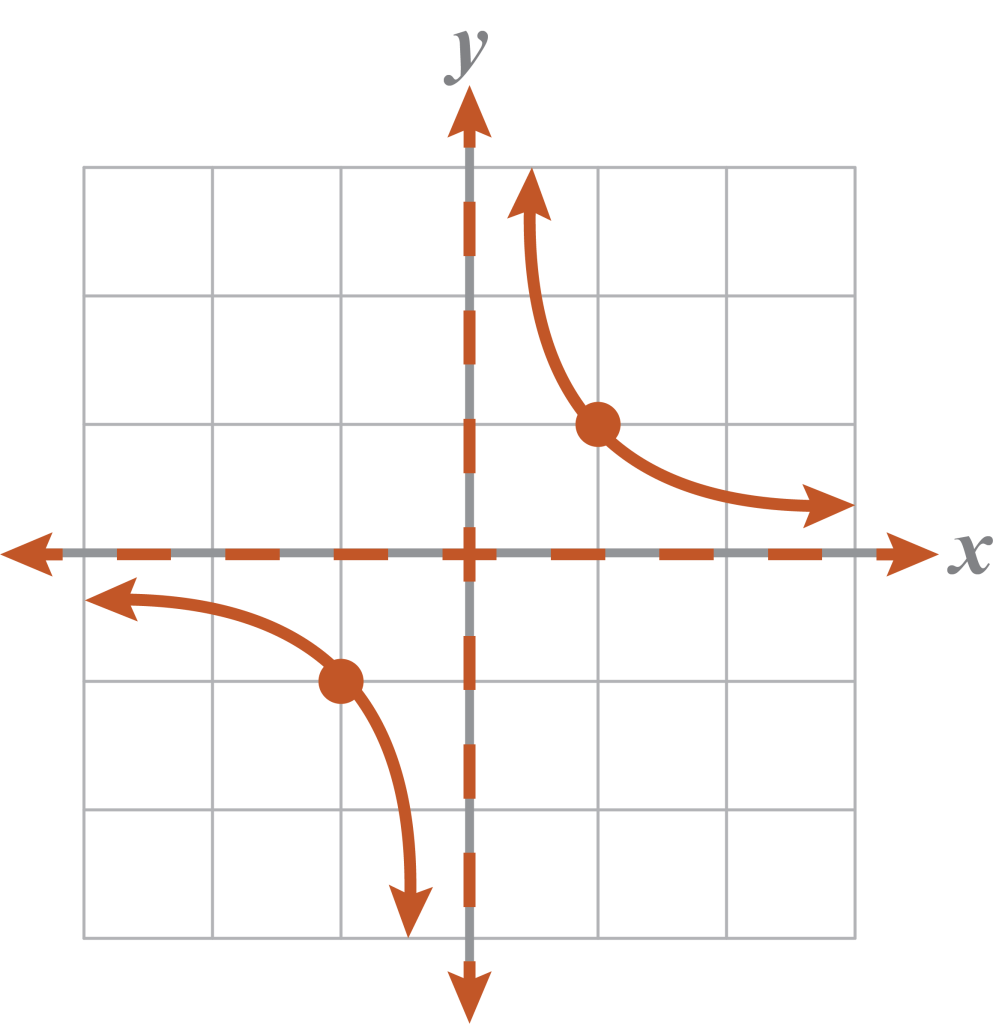
Quadrant I: As , and as
Quadrant III: As , and as
- absolute value
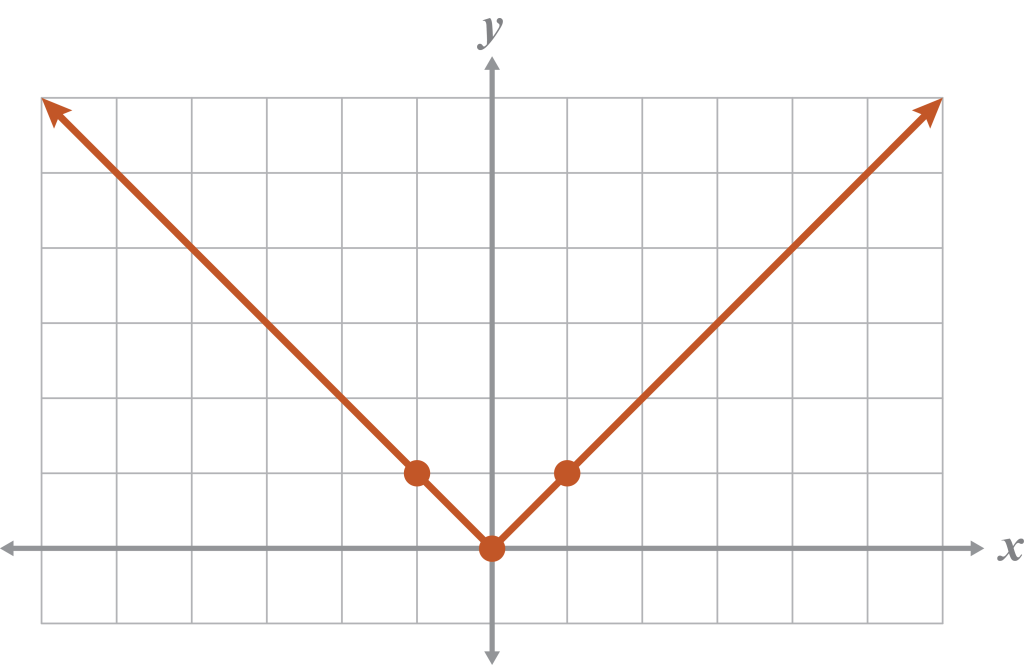
As , and as
Note
Problems 11–14
Q: Which are polynomial functions? Which are not?
A: None of these parent functions are polynomial functions.
- Explain end behavior in your own words.
Sample: The end behavior of a graph is what is happening when x approaches positive infinity (gets really big) and negative infinity (gets really small).
- How do the domain and range relate to the end behavior?
Sample: The domain is all values of x for a function. This will determine if the end behavior for x is , a specific value, or a restriction. The range is all values of y for a function. This will determine if the end behavior for y is , a specific value, or a restriction.